



Email is faster. Physical mail is remembered. In business, those aren’t the same thing.
Snail mail vs email is a comparison most businesses have already made — and most have drawn the wrong conclusion. The conventional wisdom is straightforward: email is faster, cheaper, more scalable, and easier to track. Snail mail is slow, expensive, and manual. For any organization trying to communicate at scale, the choice seems obvious.
Except the data tells a different story. And so does the experience of every person who has ever received a handwritten card from a business and remembered it months later — while the last fifty emails from that same business disappeared without a trace.
The snail mail vs email debate isn’t actually about speed or cost. It’s about what communication is trying to accomplish. If the goal is to transmit information efficiently to a large audience, email wins — unambiguously. If the goal is to create a genuine emotional impression, build individual relationships, and generate the loyalty and referral behavior that sustains long-term business growth, physical mail wins — just as unambiguously.
Most businesses need both. But almost no business is investing in physical mail at the level its outcomes justify — because the comparison has been made on the wrong terms.
Before the comparison, a framework. The most useful way to think about snail mail vs email isn’t as competing channels but as tools designed for different jobs — and the mistake most organizations make is using the cheaper, faster tool for jobs that require the more impactful one.
Email does these things well:
Physical mail does these things well:
The snail mail vs email question most businesses are asking is: which channel should we use? The better question is: which job are we trying to do, and which channel does that job best?
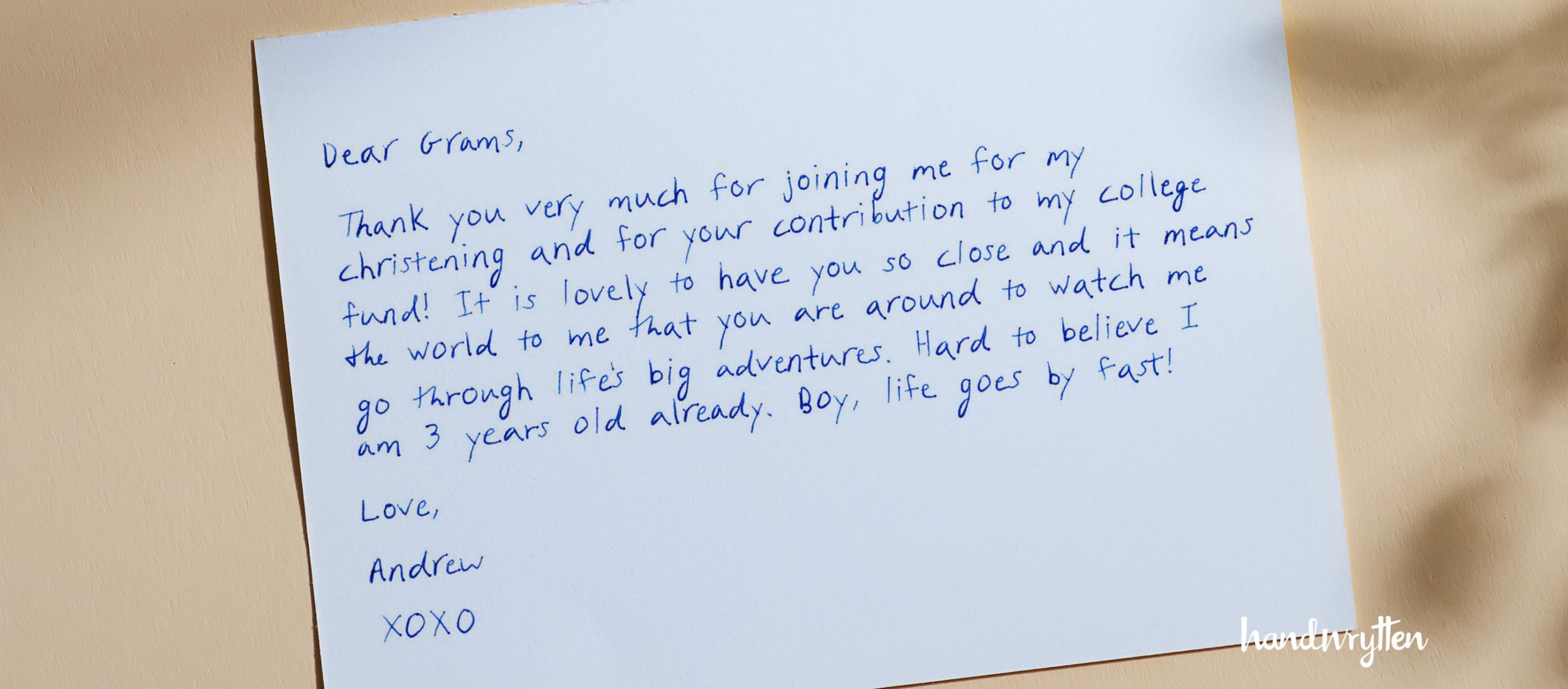
The most commonly cited snail mail vs email statistic is email’s open rate — and it tells the story more clearly than almost any other data point. The average business email open rate across industries hovers between 20 and 30% for opted-in lists. For cold outreach, it drops significantly lower — often into single digits for unsegmented campaigns.
Physical mail has a near-100% open rate. People open envelopes. Not always immediately, not always enthusiastically — but the physical act of receiving something in a mailbox and opening it is one that almost every recipient completes. The filtering that kills email before it’s read simply doesn’t apply to physical mail.
That distinction matters more than the raw numbers suggest. A 25% email open rate means 75% of your communication investment never reaches its intended audience at all. A near-100% physical mail open rate means your message reaches every recipient — and is processed with the quality of attention that physical, tangible communication commands.
The snail mail vs email comparison on open rates alone makes a compelling case for physical mail. The comparison on what happens after opening makes an even stronger one.
The cognitive science of snail mail vs email reveals why physical mail creates stronger impressions — and why those impressions persist in memory in ways that digital communications almost never do.
When a person reads an email, their brain is operating in a filtering mode — scanning for relevance, categorizing the message, deciding within seconds whether it warrants attention. This mode is efficient and entirely appropriate for the volume of digital communication most people process daily. It’s also the mode that makes most business email forgettable — because filtered, scanned information doesn’t encode in memory with the same strength as information processed with genuine attention.
When a person receives and reads physical mail — particularly handwritten physical mail — their brain activates differently. The visual processing of handwriting engages motor recognition centers. The tactile experience of holding something physical engages sensory processing. The implicit recognition that the object required effort to create engages emotional processing. The result is multi-channel cognitive engagement that creates significantly stronger memory encoding than single-channel digital communication.
This neurological difference is why people remember handwritten cards for months and forget emails within hours — and why the snail mail vs email comparison on emotional impact and memory persistence consistently favors physical mail.
The snail mail vs email comparison produces its starkest results in cold outreach — where the channel difference translates most directly into measurable response rate differentials.
Cold email response rates for well-optimized campaigns typically range from 1 to 5%. Even highly personalized, carefully targeted cold email sequences from strong senders rarely exceed 10% response rates in competitive verticals.
Handwritten physical mail in cold outreach contexts consistently produces response rates of 20 to 30%. The differential isn’t marginal — it’s order-of-magnitude — and it persists across industries and use cases because it’s driven by a fundamental difference in how the brain processes the two formats rather than by any tactical advantage of one over the other.
The cost comparison between snail mail vs email in cold outreach frequently surprises organizations that do the math. A handwritten card costs several dollars per piece — significantly more than the fraction of a cent that an email costs to send. But if a handwritten card generates a 25% response rate versus a cold email’s 3%, the cost per response favors the handwritten card by a significant margin — even before accounting for the qualitative difference in the relationship impression each format creates.
Email deliverability has become one of the most significant challenges in digital marketing — and one that is getting worse, not better. Spam filters have grown more sophisticated. Gmail’s promotional tab effectively buries marketing emails before recipients ever see them. iOS privacy updates have fundamentally changed how email engagement is tracked. And the sheer volume of email competing for attention in every professional’s inbox makes meaningful engagement increasingly difficult to achieve.
Physical mail doesn’t have a deliverability problem. A handwritten card addressed to a specific recipient at a verified address arrives at its destination — physically, reliably, and without competing with fifty other pieces of outreach for the first three seconds of attention.
In the snail mail vs email comparison on deliverability and guaranteed reach, physical mail wins without qualification. The filtering that intercepts email before it reaches its intended audience simply doesn’t exist in the physical mail channel.
The most important dimension of the snail mail vs email comparison — and the one most relevant to the business outcomes that matter most — is relationship quality. Not reach, not cost, not speed. The quality of the relational impression each channel creates and the business outcomes that impression drives.
Email builds awareness. It maintains presence. It transmits information efficiently. What it doesn’t do — reliably, consistently, at scale — is make individual recipients feel genuinely seen and specifically valued. The format communicates mass communication regardless of how personalized the content is — because recipients know, implicitly, that the personalization fields were populated by software rather than written by a person.
Physical mail builds relationships. A handwritten card arriving in a client’s home communicates that a specific person took specific time for this specific individual — and that communication happens before the envelope is opened. It creates the emotional impression of genuine individual attention that email reaches for and rarely achieves.
That impression — of being genuinely seen by a business that thought specifically about you — is what drives the loyalty, referral activity, and retention outcomes that distinguish the most successful businesses from their competitors. And physical mail creates it more reliably than any other channel available.
Winner: Physical mail
A handwritten card arriving at a client’s home or office at a meaningful moment in the relationship — a closing anniversary, a milestone, a seasonal acknowledgment — creates an impression that no email campaign produces with the same reliability. For client retention specifically, physical mail vs email isn’t a close comparison.
Winner: Email
When an organization needs to reach a large audience immediately — a product launch, a campaign announcement, an event invitation — email’s speed and scale advantages make it the right choice. Physical mail is too slow for time-critical mass communications.
Winner: Physical mail
Response rate differentials in cold outreach consistently favor physical mail by a factor of five to ten times. For reaching high-value prospects who have learned to filter digital outreach, a handwritten card arriving in a physical mailbox creates a completely different and significantly more effective first impression.
Winner: Email
Confirmations, receipts, shipping updates, appointment reminders, and other operational communications belong in email — they’re informational rather than relational, and email’s speed and scalability are genuine advantages here.
Winner: Physical mail
Donor retention research consistently shows that handwritten acknowledgment cards produce higher second-gift conversion rates, better long-term retention, and more active upgrade behavior than digital-only donor communication. For nonprofit organizations, the physical mail vs email comparison in stewardship contexts is unambiguous.
Winner: Physical mail
A handwritten recognition card from leadership arriving at an employee’s home creates an impression that no Slack message, email, or digital recognition platform produces with the same emotional weight. Foremploye e recognition specifically, physical mail consistently outperforms every digital alternative.
The snail mail vs email comparison on environmental impact favors email — and it’s worth acknowledging directly. Physical mail uses paper, ink, and fuel for delivery. Email uses server energy but produces no physical waste. For organizations with strong environmental commitments, this is a genuine consideration.
That said, the scale of physical mail usage in a thoughtful handwritten outreach program is a fraction of the volume that traditional direct mail campaigns generate — and the return on investment per piece is significantly higher, which means fewer pieces need to be sent to achieve the same relationship-building outcomes. A targeted handwritten card program is environmentally very different from a bulk direct mail campaign — and the comparison should be made accordingly.
The practical limitation of physical mail vs email has always been scale. Writing individual cards manually, addressing envelopes, applying postage, and coordinating mailing logistics isn’t feasible at the volumes that email makes trivially easy.
Handwrytten removes that limitation. Using robotic pen-and-ink technology that produces genuinely handwritten cards and letters — real pen, real paper, real ink — Handwrytten’s platform makes it possible to send personalized handwritten physical mail at any volume, triggered automatically through CRM integrations with Salesforce, HubSpot, Shopify, Zapier, and other platforms.
The result is a physical mail program that combines the relationship quality of genuine handwritten communication with the scalability and automation that modern business requires. The snail mail vs email comparison has always been framed as a tradeoff between quality and scale — Handwrytten eliminates the tradeoff.
Is snail mail actually more effective than email for business communication?
For relationship-building, retention, cold outreach, and individual impression creation — consistently yes. For mass announcements, operational communication, and time-sensitive information delivery — email is more appropriate. The most effective business communication programs use both channels strategically rather than choosing one over the other.
Why does physical mail have higher response rates than email?
Because the brain processes physical mail differently than digital communication — with more attention, more emotional engagement, and stronger memory encoding. The format also bypasses the filtering systems that prevent most email from receiving genuine attention.
Is physical mail too expensive compared to email for most businesses?
Only when compared on cost-per-send rather than cost-per-outcome. When compared on cost-per-response, cost-per-retained-client, or cost-per-referral-generated, physical mail frequently produces a more favorable return on investment than email — particularly in cold outreach and client retention contexts.
Can physical mail be automated the way email can?
Yes. Handwrytten’s platform integrates with CRM and marketing platforms to trigger personalized handwritten cards automatically — based on purchase events, milestones, anniversaries, or any other data point in your existing systems. Physical mail can be just as systematic as email while creating significantly stronger impressions.
What’s the best way to combine snail mail and email in a business communication strategy?
Use email for operational communication, mass announcements, and content distribution — where speed and scale are genuine advantages. Use physical mail for relationship moments — client retention, cold outreach, donor stewardship, employee recognition, and any touchpoint where creating a genuine individual impression matters more than reaching the largest possible audience.
The snail mail vs email debate has been framed as a competition between the past and the future — between an outdated channel and a modern one. That framing misses the point entirely. Email and physical mail aren’t competing for the same job. They’re different tools designed for different purposes — and the businesses that understand that distinction, and deploy each channel for the work it does best, are the ones consistently producing the relationship outcomes that digital-only organizations perpetually reach for and rarely achieve.
Physical mail wins the moments that matter. Email wins the moments that need to move fast. The smartest organizations use both.
Start Sending → handwrytten.com
Editor’s note: This article was revised in June 2026


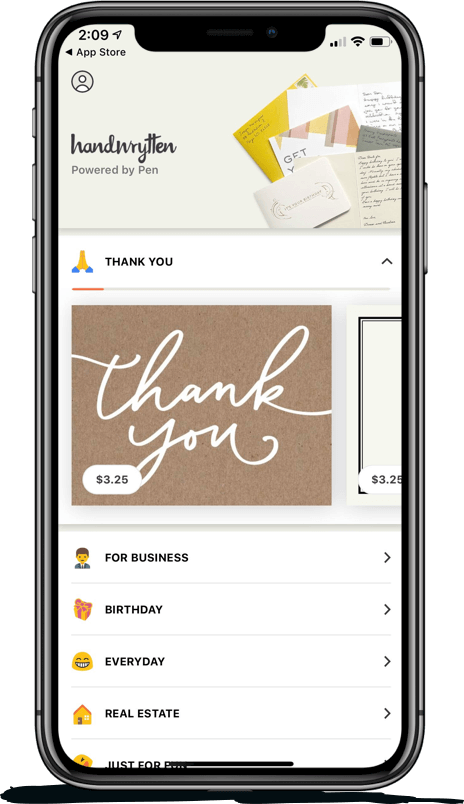
Scale your handwritten outreach, creating positive impressions and long lasting bond.
Sign Up Today!

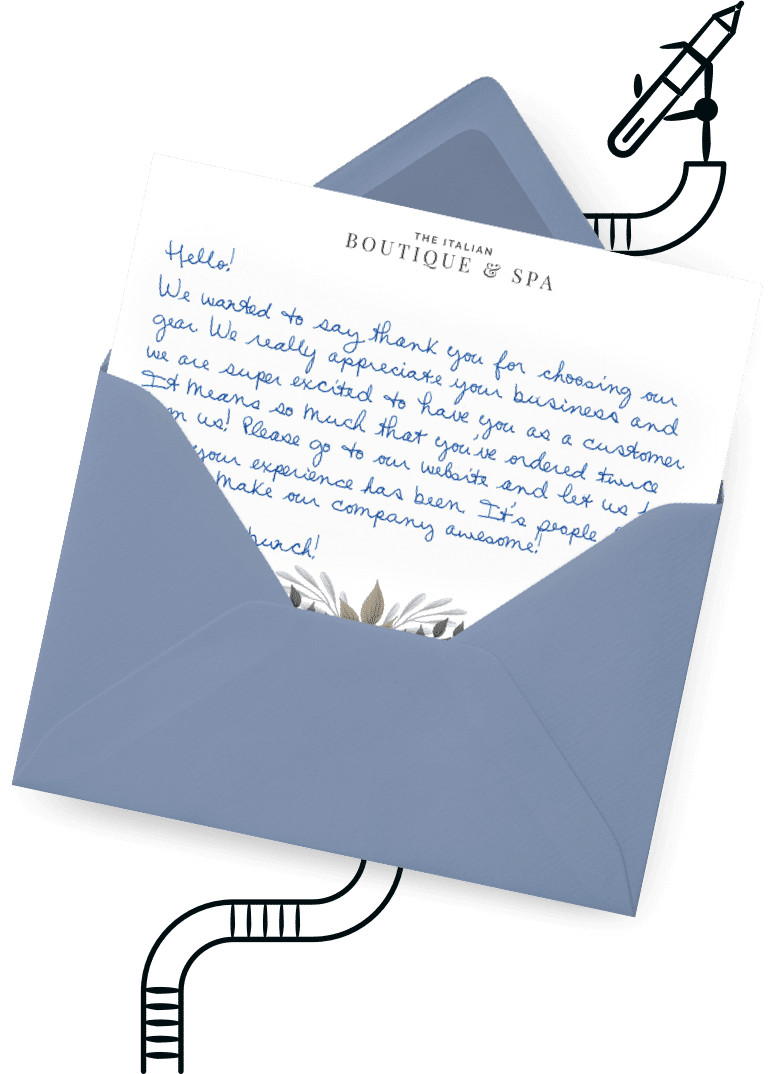

Over 100 designs to choose from or design your own. Our online card customizer makes it simple.
Check Out Our Cards!




Thank you.
