



The most comforting thing you can say to someone who is grieving isn’t the perfect phrase. It’s the evidence that you showed up.
Sympathy card writing is one of the most genuinely difficult forms of personal communication — not because the feelings aren’t there, but because the weight of the moment makes finding words that feel adequate to it almost impossible. When someone we care about is facing grief, loss, illness, or the kind of quiet heartache that doesn’t always have an obvious name, the instinct to reach out is immediate and the words to do it well feel just out of reach. Most people either say too little, say too much, or reach for phrases that sound comforting in the abstract and land as hollow in the specific moment.
Sympathy card writing that actually brings comfort isn’t about eloquence or poetic language — it’s about three specific qualities that the most effective sympathy messages share regardless of the situation: acknowledgment of the specific loss, genuine expression of care for the specific person, and the absence of any language that minimizes, explains, or rushes the grief. This guide covers all of it — messages for every type of loss and difficult moment, phrases to avoid and why, closing lines that leave the right feeling, and how to make every sympathy card feel genuinely written for the person receiving it.
Why Sympathy Card Writing Matters More Than Most People Realize
The sympathy card that arrives at the right moment — in genuine handwriting, with a message that acknowledges the specific loss and communicates specific individual care — creates an impression that persists long after the immediate grief has softened. People keep sympathy cards. They reread them during the difficult days that follow the initial shock. They remember, years later, who showed up in the way that felt real.
The sympathy card writing that creates this kind of lasting comfort isn’t necessarily the most eloquent or the most poetic. It’s the most genuine — the message that sounds like the person who wrote it, acknowledges what specifically happened, and communicates that the sender is present and caring without any agenda beyond the expression of that care.
For businesses and professionals — the estate attorney acknowledging a client’s loss, the financial advisor reaching out after a client’s bereavement, the HR team supporting an employee through a difficult personal moment — sympathy card writing represents one of the highest-impact individual gestures available in any professional relationship. A genuine handwritten sympathy card from a business relationship communicates a quality of individual human care that no email ever achieves at the same depth.
Handwrytten’s robotic pen-and-ink technology produces genuinely handwritten sympathy cards — real pen, real paper, real ink — ensuring every sympathy message arrives in the format that communicates individual care most powerfully, without requiring the sender to find words and write them by hand at exactly the moment when their own grief or concern may be making that difficult.
Before the specific messages — the principles that make sympathy card writing effective regardless of the situation, the relationship, or the type of loss.
Acknowledge the specific loss. The sympathy card writing that lands most powerfully begins with direct acknowledgment of what specifically happened — not a general expression of sympathy that could apply to any difficult situation, but a specific recognition of this loss. “I’m so sorry for the loss of your mother” is more comforting than “I’m so sorry to hear what you’re going through.”
Keep the focus on the recipient. Effective sympathy card writing keeps the focus entirely on the person receiving the card — their grief, their loss, their experience. Avoid shifting the focus to how the news affected you, your memories of the deceased at length, or your own experiences with grief. Brief references to the deceased are welcome and meaningful. Extended narratives about your own grief are not.
Don’t explain or minimize. The most common sympathy card writing mistakes come from the instinct to comfort by providing perspective — “they’re in a better place,” “everything happens for a reason,” “at least they didn’t suffer long.” These phrases, however well-intentioned, communicate that the sender wants the grief to be over rather than witnessed. Effective sympathy card writing sits with the grief rather than trying to resolve it.
Be honest about limitations. “I don’t know what to say” is one of the most comforting things sympathy card writing can include — because it’s honest, and because it communicates that the sender is genuinely present with the weight of the moment rather than reaching for comfortable phrases that create distance from it.
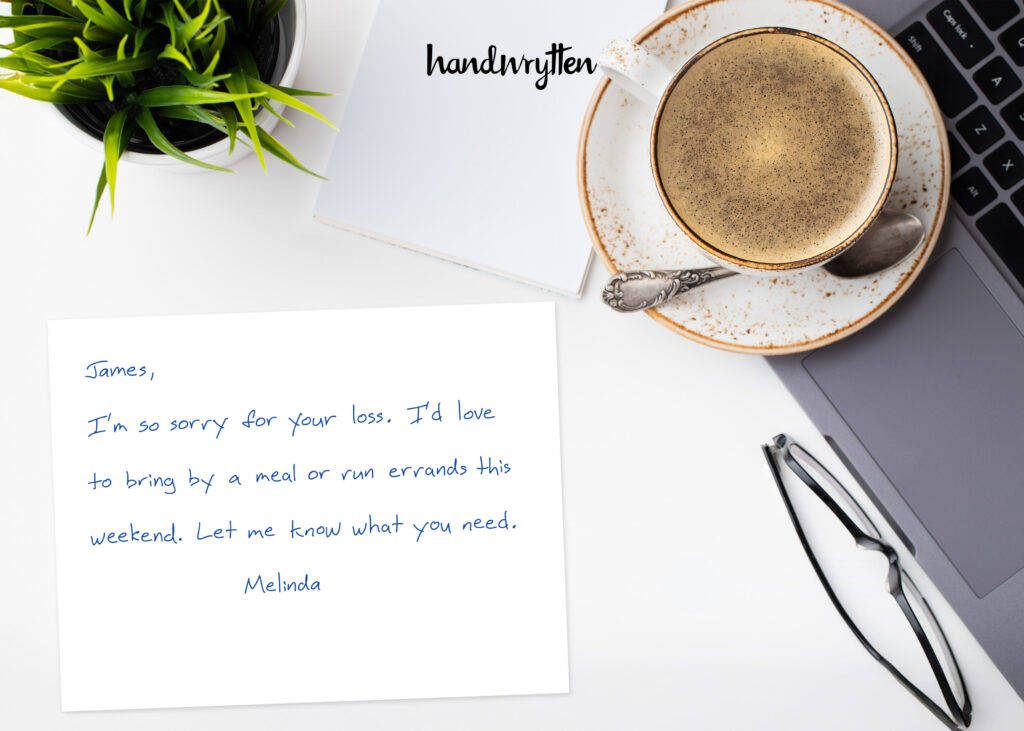
Offer something specific. Vague offers of support — “let me know if you need anything” — are almost never acted on because they place the burden of asking on the person who is least positioned to advocate for themselves. Specific offers — “I’m bringing dinner on Thursday” or “I’ll walk the dog whenever you need” — communicate genuine willingness to help in a form the recipient can actually accept.
Loss of a parent:
“I’m so sorry for the loss of your [mother/father]. The grief of losing a parent is unlike anything else — and I want you to know that I’m thinking of you specifically during these days. Please reach out whenever you need anything. I’m here.”
“Your [mother/father] was [specific quality you observed] — and that is something I’ll always associate with them. I’m so sorry for your loss. Wishing you peace and the presence of people who love you.”
“Losing a parent changes everything. I’m so sorry you’re facing that now — and I want you to know that whatever you need, however I can help, I’m here without any agenda other than supporting you.”
Loss of a spouse or partner:
“The loss of a life partner is one of the deepest griefs there is — and I’m holding you in my thoughts with so much care right now. I’m so sorry, [Name]. I’m here for whatever you need.”
“[Name] was extraordinary — and so is the love you shared. I’m so sorry for your loss. Please know I’m thinking of you and that I’m available for anything at all whenever you’re ready.”
Loss of a child:
“There are no words for a loss like this. I won’t pretend to have them. What I can say is that I love you, I’m here, and I’ll show up for you in whatever way you need for as long as you need it.”
“I’m so deeply sorry. [Child’s name] was loved — and that love doesn’t end with grief. I’m thinking of you with so much care and am here whenever you need me.”
Loss of a sibling:
“Siblings are irreplaceable — and the specific loss of yours is something I can only imagine. I’m so sorry. I’m here for anything you need, now and in the weeks ahead when the support often thins out.”
Loss of a close friend:
“Losing a close friend is grief that doesn’t always get recognized the way it should. I want you to know I see it — and I’m here for you through it. I’m so sorry for the loss of [Name].”
Sympathy card writing when you didn’t personally know the person who died should keep its focus entirely on the recipient rather than attempting to speak to the deceased.
“I’m thinking of you during this difficult time — and I want you to know that my care for you extends to the grief you’re carrying right now. I’m so sorry for your loss.”
“I didn’t know [Name] personally, but I know how much they meant to you — and that’s enough for me to understand how significant this loss is. I’m here for anything you need.”
“My deepest sympathy to you and your family. Please know I’m thinking of you and am available for anything at all.”
Loss isn’t only the loss of a person. Sympathy card writing for illness — a serious diagnosis, a long treatment, a health challenge that has reshaped someone’s daily life — requires the same presence and acknowledgment that bereavement cards call for, without the framing of finality.
For a serious diagnosis:
“I heard about your diagnosis — and I want you to know I’m thinking of you with so much care right now. Whatever this looks like going forward, I’m here for the hard days and for whatever you need practically. Please don’t hesitate to ask.”
“I don’t have the right words — but I have the right intention, which is to let you know I’m here, I care deeply, and I’ll show up in whatever way is most helpful. Please reach out whenever you’re ready.”
For someone in treatment:
“I know treatment is hard — and I wanted to reach out to say that I’m thinking of you through every difficult day of it. You don’t have to be strong all the time. I’m here for all of it.”
“Just a note to say you’re in my thoughts consistently — and that the door is always open whenever you want company, a distraction, or just silence with someone who cares about you.”
For a long recovery:
“Recovery takes longer than people expect — and I want you to know my support doesn’t have an expiration date. I’m still here, still thinking of you, and still ready to help in any way that’s useful.”
Divorce or relationship ending:
“I know this isn’t the outcome you hoped for — and I want you to know I’m not going anywhere. I’m here for the hard conversations, the distraction when you need it, and the quiet when you just want company. I’m sorry you’re going through this.”
“Grief comes in many forms — and what you’re going through right now is real and valid. I’m thinking of you and I’m here for whatever you need as you navigate this.”
Job loss or career setback:
“Losing a job you cared about is its own kind of grief — and I don’t want to minimize that. I’m here for whatever you need, whether that’s practical support, a listening ear, or just someone to be angry with for a while.”
“I’m so sorry to hear what happened. Your talent and work ethic are things I’ve always admired — and I have no doubt that this chapter isn’t the end of the story. In the meantime, I’m here for anything.”
Pregnancy loss or miscarriage:
“I’m so sorry for the loss of your baby. This kind of grief doesn’t always get the acknowledgment it deserves — and I want you to know I see it and I’m here for you through it.”
“You’ve been through something that deserves genuine care and acknowledgment. I’m so sorry. Please know I’m thinking of you and am here for anything you need.”
Pet loss:
“[Pet’s name] was clearly so loved — and the loss of a beloved animal is real grief, full stop. I’m so sorry. Please let me know if there’s anything I can do to help during this time.”
“Losing a pet is losing a member of the family — and I want you to know I see that and I’m sorry. [Pet’s name] was lucky to have you.”
One of the most meaningful — and most neglected — dimensions of sympathy card writing is the follow-up message. The initial wave of support that arrives immediately after a loss often subsides within weeks, precisely when the acute shock has worn off and the long grief of adjustment begins. A sympathy card arriving a month, six weeks, or three months after a loss — acknowledging that the grief continues even as the world moves on — creates one of the most powerful impressions of individual care available.
Follow-up messages:
“It’s been a few weeks now — and I wanted to reach out to say I’m still thinking of you. Grief doesn’t follow a schedule, and neither does my care for you. I’m here.”
“I know the initial support often thins out about now — and I wanted to make sure you knew mine hasn’t. I’m still here, still thinking of you, and still available for anything you need.”
“The anniversary is coming up, and I wanted to reach out before it arrived to say I haven’t forgotten — and I’m thinking of you with so much care as that day approaches.”
“The holidays can make grief feel sharper — and I wanted to reach out to say I’m thinking of you specifically during this season. Please know I’m here for anything that would help.”
The most well-intentioned sympathy card writing often includes phrases that minimize rather than acknowledge grief. Understanding why these phrases land the way they do helps sympathy card writers avoid them naturally rather than memorizing a list of prohibitions.
“Everything happens for a reason.” This phrase communicates that the loss has meaning the grieving person should be able to access — which places a burden on them at exactly the moment they’re least positioned to find it. Grief doesn’t require meaning to be valid.
“At least they’re no longer suffering.” Whatever comfort is intended by this phrase, what it communicates is that the sender wants the grief to be over — and that there’s a silver lining the recipient should be able to access. Silver linings, however real, are not comforting when offered by others.
“They lived a long, full life.” The length or quality of a life doesn’t determine the depth of the grief at its loss. This phrase minimizes the loss rather than acknowledging it.
“You’ll be stronger for this.” Grief is not a growth exercise. This phrase communicates that the sender is uncomfortable with the grief and would prefer it to produce something positive rather than simply be witnessed.
“Let me know if you need anything.” This isn’t harmful in the way the above phrases are — but it places the burden of asking on the person least positioned to advocate for themselves. Replace it with a specific offer.
“I know how you feel.” Even if you’ve experienced a similar loss, no one’s grief is identical to another’s. This phrase inadvertently centers the sender’s experience rather than the recipient’s.
The closing line of a sympathy card is the last impression it creates — and in sympathy card writing, the closing should match the warmth and presence of the message rather than reverting to generic professional sign-offs.
Warm and personal:
Warm and professional:
Simple and honest:

The difficulty of sympathy card writing is compounded by one practical reality: the moment someone needs to reach out with a sympathy message is often a moment of their own grief, concern, or emotional difficulty — making the process of sitting down and writing a card even harder than it already is.
Handwrytten removes the physical barrier without removing the personal quality. Type the message — in your own words, drawn from the guidance in this article — and Handwrytten’s robotic pen-and-ink technology writes it in genuine handwriting on premium card stock, addresses it, and mails it. The card arrives as genuinely handwritten — because it is genuinely handwritten — in the format that communicates individual care most powerfully.
For businesses and professionals using Handwrytten to send sympathy cards to clients, employees, or partners — the same genuine handwriting quality, the same premium card stock, the same individual impression — at any volume, triggered automatically through CRM integrations, with each card personalized for the specific recipient and their specific loss.
Is it too late to send a sympathy card weeks after the loss?
No — and in many cases a sympathy card arriving several weeks after the initial loss is more meaningful than one that arrives in the immediate aftermath, because it comes at the moment when most of the initial support has subsided and the long grief of adjustment has begun. A card that arrives a month later communicates sustained care rather than reflexive response.
What if I didn’t know the deceased personally?
Keep the focus of the message entirely on the recipient rather than the deceased. Acknowledge that you’re aware of their loss, express genuine care for the specific person you’re writing to, and offer specific support. You don’t need to speak to the deceased to write a meaningful sympathy card.
Should I send a sympathy card to a client or professional contact?
Yes — and the impact of a genuine handwritten sympathy card in a professional relationship context is often greater than in personal ones, because clients and professional contacts rarely expect that level of individual care from a business relationship. A genuine handwritten sympathy card from a professional contact communicates that the relationship is valued as a human connection rather than a commercial one.
How long should a sympathy card message be?
Three to five sincere sentences is the optimal length for most sympathy card writing. Longer messages can feel like they’re asking the recipient to manage the sender’s grief rather than the other way around. Trust the format to carry emotional weight and let the message stay focused on acknowledgment and genuine presence.
What’s the most important element of effective sympathy card writing?
Specific acknowledgment of the loss combined with a genuine expression of presence and care. The sympathy card that names the loss specifically — “I’m so sorry for the loss of your mother” — and communicates genuine individual presence — “I’m here for whatever you need, now and in the weeks ahead” — creates a stronger impression than any eloquent phrase that doesn’t acknowledge the specific situation.
Sympathy card writing doesn’t require perfect words. It requires honest ones — words that acknowledge what happened, communicate genuine care for the specific person experiencing it, and offer presence without agenda or timeline. The card that arrives with those qualities, in genuine handwriting on real paper, at the moment when someone needs to know they haven’t been forgotten — that card brings real comfort.
Say the honest thing. Send it in the format that communicates care most powerfully. Let the gesture do the rest.
Start Sending → handwrytten.com
Editor’s note: This article was revised in July 2026


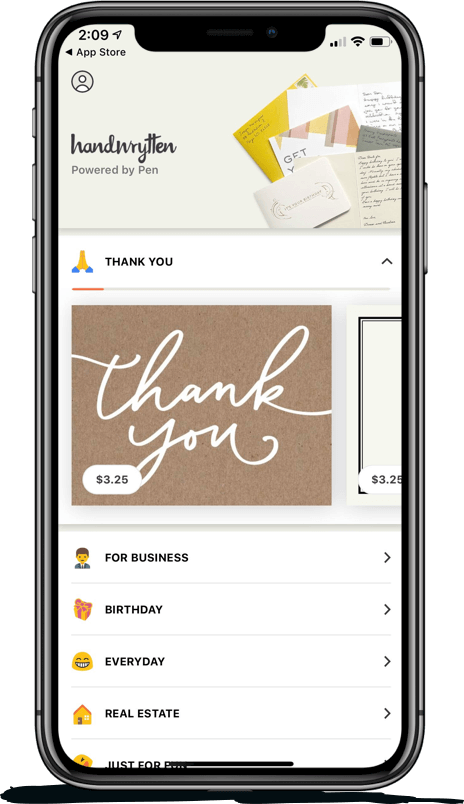
Scale your handwritten outreach, creating positive impressions and long lasting bond.
Sign Up Today!



Over 100 designs to choose from or design your own. Our online card customizer makes it simple.
Check Out Our Cards!




Thank you.
