



Your best salespeople are already on your payroll. You just haven’t paid them yet.
Learning to harness the power of your customers is one of the most underleveraged growth strategies in modern business — and one of the most effective. While most companies spend the majority of their acquisition budget chasing strangers through ads, cold outreach, and SEO, their most persuasive asset sits largely untapped: the people who already buy from them.
A satisfied customer doesn’t just buy again. They talk. They recommend. They vouch. And a referral from a trusted friend or colleague carries more weight than any ad campaign you’ll ever run. The question isn’t whether referrals are valuable — it’s whether you’re doing anything deliberate to generate them.
One of the most reliable ways to harness the power of your customers and turn them into active advocates is also one of the simplest: send them a card.
In a world saturated with digital communication, a physical handwritten card does something an email cannot — it creates a moment. The recipient holds it, reads it, and feels the difference between a message typed in thirty seconds and one sent with genuine intention.
That feeling is the foundation of a referral. People recommend businesses they feel connected to, and connection is built through moments that feel personal. A handwritten card is one of the most efficient ways to create that moment at scale — especially with a platform like Handwrytten, which uses robotic pen-and-ink technology to produce real handwritten notes personalized for each recipient.
The gesture doesn’t have to be elaborate. It has to feel real.
You don’t need a reason to send a card — but having one makes the message land even better. Here are the touchpoints worth building into your customer outreach calendar:
Birthdays Few things make a customer feel genuinely seen like a card that arrives on their birthday — especially one that doesn’t ask for anything in return. “Happy Birthday from all of us at [Company]. We’re grateful you’re part of our community — hope today is a great one.”
Customer Anniversaries Mark the date a customer first came to you. One year in, two years in — it signals that you track these things because they matter to you. “It’s been a year since you joined us, and we’re glad you did. Thank you for your trust and your business.”
Major Holidays Thanksgiving, the winter holidays, and the new year are natural moments to express appreciation without any transactional undertone. “We’re grateful for customers like you. Wishing you and yours a wonderful holiday season.”
Milestones and Life Events A new home, a promotion, a business launch — when you acknowledge what’s happening in a customer’s life, you stop being a vendor and start being a relationship. “Congratulations on the new home — what an exciting milestone. Wishing you every happiness in it.”
Sympathy and Support These are the cards most businesses never send, and the ones customers remember longest. A simple, sincere note during a difficult time says more about your character than any marketing message ever could. “We’re thinking of you during this time. Please don’t hesitate to reach out if there’s anything we can do.”
Birthdays and holidays are expected. A card that arrives on an ordinary Tuesday — just to say thank you, or to acknowledge a small milestone no one else noticed — is the one that gets talked about.
Consider moments like Teacher Appreciation Day, Veterans Day, or Mother’s and Father’s Day as opportunities to reach customers in a way that has nothing to do with selling. Businesses that harness the power of their customers understand that loyalty is built in these quiet, unasked-for moments — not just at the point of sale.
A card that says we see you, and we appreciate you builds the kind of goodwill that eventually converts into a referral conversation at dinner, in a group chat, or in a review. The goal isn’t to manufacture loyalty. It’s to demonstrate that yours is a business worth being loyal to.
Once you’ve invested in the relationship, asking for a referral becomes a natural extension of it — not an awkward transaction. The key to harnessing the power of your customers at this stage is making the ask feel like a genuine invitation rather than a closing tactic.
Lead with gratitude, not the ask. Thank the customer specifically for their support before mentioning referrals at all. The ask should feel like an afterthought, not the point.
Keep the language warm and low-pressure. “If you ever come across someone who could use what we do, we’d be honored if you passed our name along.” That’s it. No pressure. No urgency. Just a genuine invitation.
Make it easy. Include a separate referral card in the envelope — something the customer can hand to a friend without any effort. A physical reminder lives in a wallet or on a desk far longer than a referral link ever will.
Offer something in return. A small thank-you for a successful referral — a discount, a gift, a handwritten note of its own — closes the loop and reinforces the relationship. “We’d love to meet more people like you. If you refer someone our way, we’ll send you a little something to say thank you.”
The businesses that grow fastest through referrals aren’t necessarily the ones with the best product — they’re the ones that make customers feel the most valued. Handwrytten makes it easy to harness the power of your customers by sending personalized, pen-and-ink handwritten cards at scale, with each one tailored to the recipient’s name, milestone, or message. The result feels individual even when the process is automated.
From automotive dealerships to insurance agencies to professional services firms, businesses across every industry are using handwritten outreach to deepen relationships and generate the kind of word-of-mouth that no ad budget can buy.
How does sending cards actually lead to referrals? Cards build emotional connection, and emotional connection drives word-of-mouth. When customers feel genuinely valued — not just marketed to — they naturally bring up your business when someone in their network needs what you offer.
How often should I be sending cards? At minimum, target the high-value moments: birthdays, customer anniversaries, and a year-end holiday card. If your budget allows, layer in unexpected touchpoints throughout the year. Consistency matters more than volume.
Is it appropriate to ask for referrals on a handwritten card? Yes — if the ask is genuine and low-pressure. A card that leads with appreciation and closes with a soft referral invitation is far more effective than a cold referral request, and far less likely to feel transactional.
Can this work at scale? Absolutely. Handwrytten makes it possible to send personalized, pen-and-ink handwritten cards to thousands of customers without manual effort — each one personalized with the recipient’s name, milestone, or message. The result feels individual even when the process is automated.
Referrals don’t happen by accident. They happen when customers feel good enough about your business to put their own name behind it. The most reliable path to that outcome is consistent, genuine relationship-building — and few tools do that more effectively than a handwritten card sent at exactly the right moment.
Start Sending → handwrytten.com
Editor’s note: This article was revised in May 2026


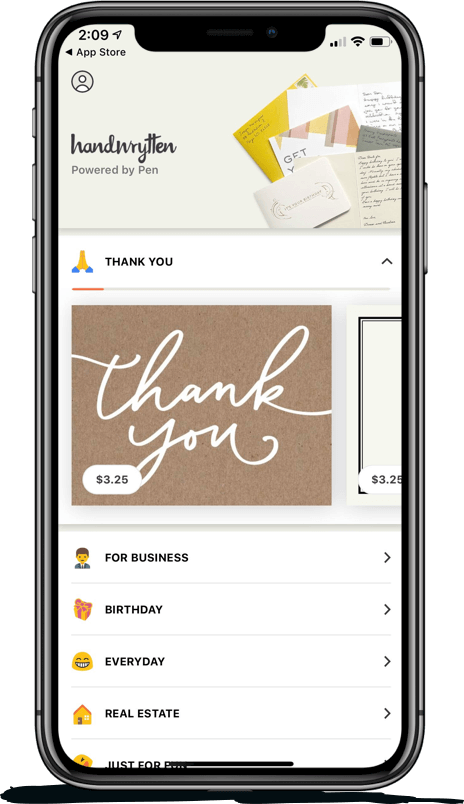
Scale your handwritten outreach, creating positive impressions and long lasting bond.
Sign Up Today!

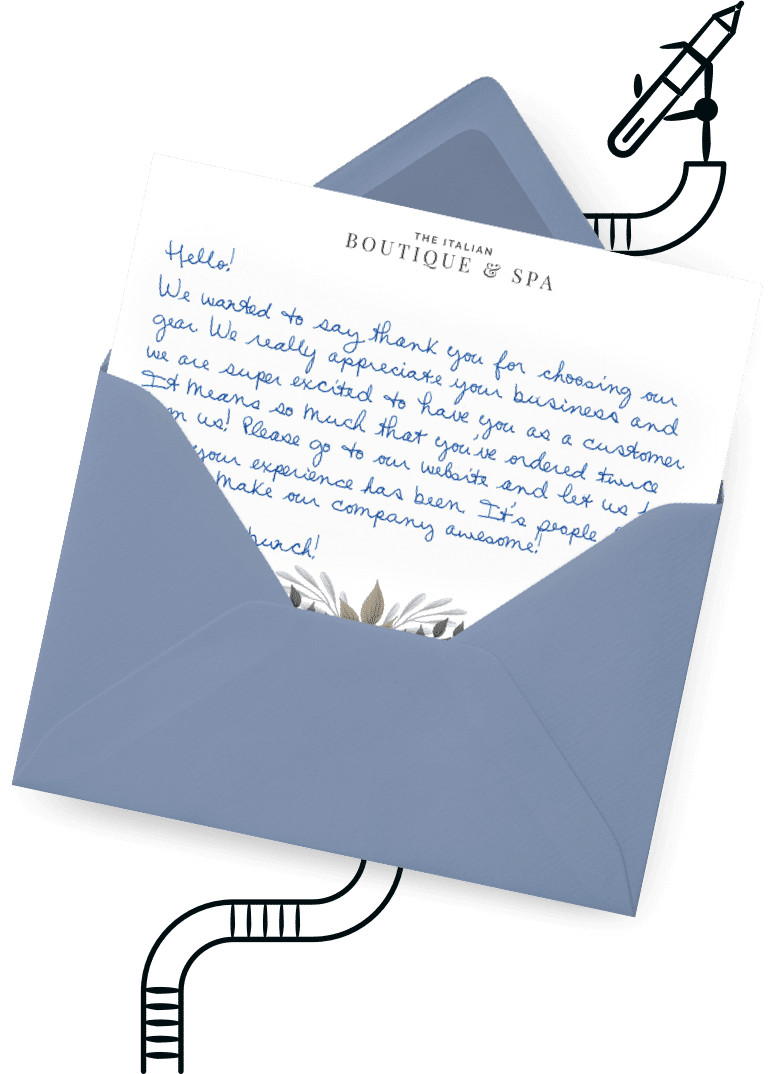

Over 100 designs to choose from or design your own. Our online card customizer makes it simple.
Check Out Our Cards!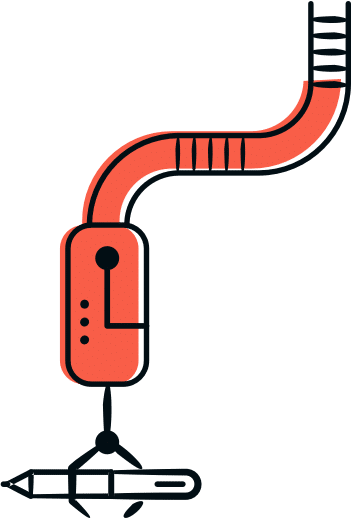




Thank you.
