



Pet owners don’t just remember the care their animals received. They remember how the clinic made them feel.
Handwritten veterinary clinic cards are one of the most effective and most underleveraged relationship-building tools available to veterinary practices — and the ones that consistently separate the clinics with thriving, loyal client bases from those perpetually working to replace the clients they’re quietly losing. Veterinary medicine is a relationship business at its core. Pet owners aren’t just choosing a provider — they’re choosing a partner in the health and wellbeing of animals they love as family members. The practices that understand and act on that distinction build the kind of veterinary client relationships that sustain referral activity, survive competitive pressure, and create the genuine loyalty that no marketing campaign can manufacture.
Digital communication has made veterinary client outreach more efficient and less personal simultaneously. Automated appointment reminders, email newsletters, and text confirmations handle the operational communication competently — and communicate almost nothing about the quality of care and genuine individual attention that distinguishes an exceptional practice. A handwritten veterinary clinic card arriving in a client’s home mailbox creates a categorically different impression: that a real person at this practice took specific time for this specific client, independent of any appointment or transaction.
This guide covers every meaningful touchpoint where handwritten veterinary clinic cards create lasting impressions — from new client welcome notes to sympathy cards, from birthday greetings to referral thank-yous — and how Handwrytten’s robotic pen-and-ink technology makes deploying them systematically feasible for practices of any size.
The veterinary client relationship is built on trust — and trust in veterinary medicine is specifically the trust that this practice sees my pet as an individual, cares about their wellbeing genuinely, and treats me as a partner in their care rather than as a transaction in a schedule. Digital communication, however warm in tone, communicates the opposite of individual attention before it’s even read — because the format signals mass communication regardless of how personalized the content is.
Handwritten veterinary clinic cards create the impression of individual attention automatically — because the format itself communicates that someone at this practice picked up a pen specifically for this client. That impression is established before the card is opened, reinforced by the genuine quality of the handwriting, and deepened by a message that references something real and specific about the client and their pet.
The veterinary client relationships that sustain practices long-term are the ones built on exactly this quality of individual acknowledgment — and handwritten cards are the most reliable format for delivering it at every meaningful moment in the client lifecycle.
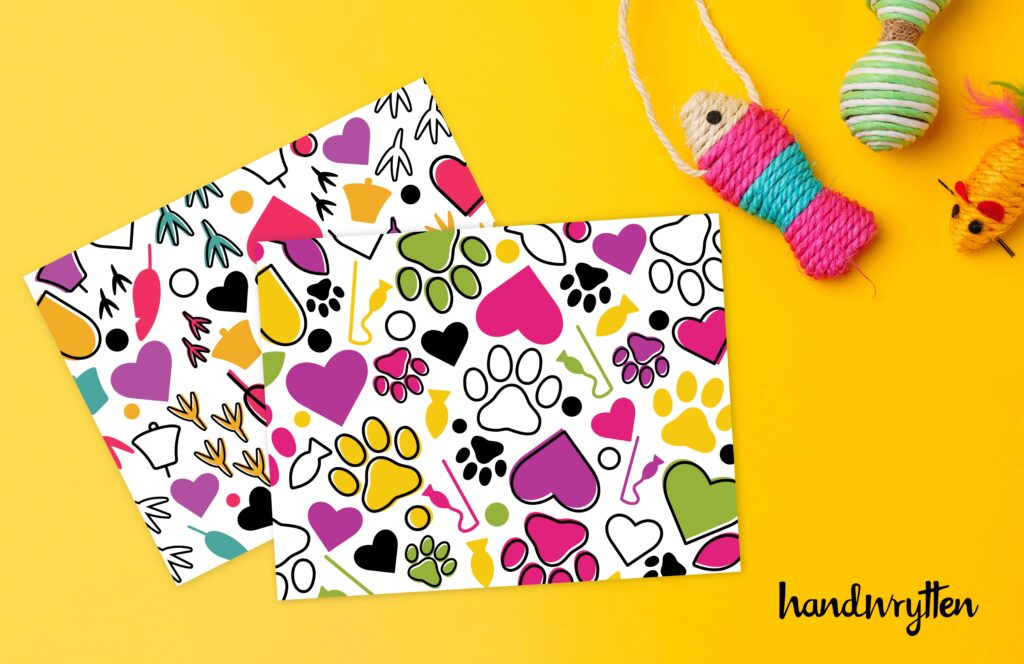
The first impression a new client forms of a veterinary practice is shaped almost entirely by their initial experience — and the practices that extend that initial experience into the client’s home through a handwritten welcome card create a relational foundation that digital-only onboarding never achieves.
A handwritten welcome card arriving within a few days of a new client’s first visit communicates something that no new client email sequence produces: that this specific client and their specific pet were noticed and specifically welcomed by real people at this practice. That communication creates the emotional anchor that shapes every subsequent interaction.
Sample messages:
“Welcome to [Clinic Name] — we’re genuinely delighted to have you and [Pet’s Name] as part of our practice. Our whole team is committed to providing the kind of care that reflects how much [Pet’s Name] means to you. Please reach out anytime — we’re always here.”
“It was wonderful to meet you and [Pet’s Name] this week. We’re looking forward to being your trusted partners in [his/her] health for years to come. Welcome to the [Clinic Name] family.”
“Welcome — we take the trust you’ve placed in us with [Pet’s Name]’s care seriously, and we’re committed to earning it at every visit. It was a genuine pleasure meeting you both. We’re glad you’re here.”
The period immediately after a significant veterinary appointment — a surgery, a difficult diagnosis, a first wellness visit, a dental procedure — is when clients are most attuned to whether this practice genuinely cares about the outcome beyond the appointment itself. Most practices handle this moment with an automated follow-up text or email. Almost none send a handwritten card.
A handwritten follow-up card arriving two to three days after a significant appointment communicates genuine ongoing care for the animal’s wellbeing in a format that no digital follow-up replicates. For appointments that were emotionally significant — a cancer diagnosis, a major surgery, a senior wellness visit — this card arrives at exactly the moment when the client most needs to feel that their practice is genuinely invested in their pet’s outcome.
Sample messages:
“We’ve been thinking about [Pet’s Name] since [his/her] visit on [day] and wanted to reach out personally to check in. We hope [he/she] is recovering well and feeling more comfortable. Please don’t hesitate to call us anytime — we’re here for both of you.”
“It was a pleasure seeing [Pet’s Name] this week — thank you for bringing [him/her] in for [specific procedure/visit]. We’re keeping [him/her] in our thoughts and hope [he/she] is doing wonderfully. We’re always here if you have any questions.”
“Following up on [Pet’s Name]’s visit — we wanted you to know that [he/she] has been on our minds. Please reach out if you notice anything concerning or simply want to talk through how [he/she] is doing. We’re genuinely invested in [his/her] recovery.”
The loss of a pet is one of the most emotionally significant experiences many people face — and the veterinary practice’s response to that loss is the moment that defines the veterinary client relationship more permanently than almost any other. A genuine, personal, handwritten condolence card arriving in the days after a pet’s passing communicates a level of care and empathy that no digital message ever achieves — and creates the kind of lasting impression that generates referrals for years.
This is the highest-stakes of all the handwritten veterinary clinic card moments — and the one that most clearly differentiates practices that send genuine handwritten condolences from those that send automated sympathy emails.
Sample messages:
“We are so deeply sorry for the loss of [Pet’s Name]. [He/She] was a beloved member of your family, and we were honored to be trusted with [his/her] care. Please know that our entire team shares in your grief and holds you in our thoughts during this difficult time.”
“The loss of [Pet’s Name] is something our whole team feels. [He/She] was a joy to care for, and the love you gave [him/her] was evident in every visit. We’re so sorry for your loss — and we’re here for you in whatever way might help.”
“[Pet’s Name] left paw prints on our hearts too. We’re so grateful for the years we were entrusted with [his/her] care — and so sorry that those years have ended. Please know that you’re in our thoughts and that we’re here for you whenever you need us.”
Pet birthday and adoption anniversary cards are among the most delightful of all handwritten veterinary clinic cards — and among the most effective for maintaining year-round client engagement in a format that feels celebratory rather than commercial. Most pet owners know their pet’s birthday or adoption anniversary. Very few expect their veterinary clinic to remember it.
A handwritten birthday or adoption anniversary card arriving on or near the pet’s special day creates a genuine moment of surprise and warmth — communicating that this practice maintains an individual relationship with every patient rather than managing a schedule of appointments. That impression sustains the veterinary client relationship through the months between visits when no other touchpoints occur.
Sample messages:
“Happy Birthday, [Pet’s Name]! We hope [he/she] is celebrated with all the treats, belly rubs, and extra snuggles [he/she] deserves today. We’re so grateful to be part of [his/her] care — and looking forward to seeing [him/her] at [his/her] next visit. Happy birthday from everyone at [Clinic Name]!”
“Happy Adoption Anniversary to [Pet’s Name] — and to you for giving [him/her] the most wonderful home. Celebrating [X] years of the best decision you ever made. Thank you for trusting us with [his/her] care.”
“[Pet’s Name]’s birthday has us thinking about all the wonderful visits we’ve shared — and how grateful we are to be [his/her] healthcare team. Wishing [him/her] a pawsome birthday from everyone at [Clinic Name].”
Long-term clients are the foundation of every successful veterinary practice — and the ones most frequently taken for granted in the day-to-day management of a busy clinic. A handwritten veterinary clinic card acknowledging a client’s loyalty at a meaningful milestone — three years, five years, ten years of trusting the same practice with their pet’s care — communicates genuine individual appreciation for the tenure of the relationship.
This touchpoint builds veterinary client relationships in the specific way that sustains practices long-term: by making loyal clients feel that their loyalty has been noticed, valued, and specifically acknowledged by the people they’ve chosen to trust.
Sample messages:
“Five years of caring for [Pet’s Name] — and we wouldn’t trade a single visit. Thank you for the trust you’ve continued to place in us with [his/her] health. It’s a privilege we take seriously every day. Here’s to many more years together.”
“We realized recently that you’ve been part of the [Clinic Name] family for [X] years — and we wanted to reach out personally to say how much that means to us. Thank you for your continued loyalty and trust. We’re genuinely grateful for you.”
“To one of our most valued and longest-tenured clients — thank you for [X] years of trust. The relationship we’ve built with you and [Pet’s Name] is exactly why we do what we do. We’re honored to be your veterinary team.”
When a client refers a friend, family member, or colleague to a veterinary practice — the highest expression of trust one person can extend to any service provider — a handwritten thank-you card communicates genuine, individual gratitude in a format that no email ever matches. It also activates the reciprocity effect that makes the referring client significantly more likely to refer again.
Sample messages:
“Thank you so much for introducing [referred client’s name] to our practice — that kind of trust and generosity means the world to us. Referrals from clients like you are the highest compliment we receive, and we’re going to take wonderful care of them. Thank you — genuinely.”
“We heard you sent [referred client] our way, and we wanted to reach out personally to say thank you. Your confidence in our practice is something we don’t take lightly. We’re so grateful for your continued loyalty and generosity.”
“Thank you for the referral — and for the trust that comes with it. Our whole team appreciates it more than a standard thank-you email can express. We’re looking forward to welcoming them to the [Clinic Name] family.”
Preventive care reminders sent as handwritten cards rather than automated texts or emails create a completely different client experience — one that communicates genuine individual care for the pet’s health rather than automated schedule management. A handwritten reminder card for an annual wellness visit, a vaccination update, or a dental cleaning arrives as a personal gesture rather than an administrative notification.
Sample messages:
“Just a friendly personal note to let you know it’s time for [Pet’s Name]’s annual wellness visit. Preventive care is the foundation of a long and healthy life — and we want to make sure [he/she] gets everything [he/she] needs. Give us a call whenever you’re ready to schedule.”
“Hi [Client’s Name] — we wanted to reach out personally to let you know [Pet’s Name] is due for [specific care]. We know how much [he/she] means to you, and staying ahead of [his/her] preventive care is the best way to keep [him/her] healthy and happy. We’d love to see you both soon.”
Holiday and seasonal greeting cards sent by a veterinary practice to its clients communicate year-round engagement with the client relationship that goes beyond the appointment cycle — and create the brand presence that sustains top-of-mind awareness through the long stretches between visits.
Sample messages:
“Happy holidays from everyone at [Clinic Name] — to you and every four-legged, feathered, and scaled member of your family. We’re grateful for your trust and look forward to caring for your pets in the year ahead. Wishing you a wonderful season.”
“As the new year begins, we’re reflecting on the clients and patients who make this work genuinely meaningful — and your family is at the top of that list. Thank you for another year of trust. Happy New Year from our whole team.”
“Wishing [Pet’s Name] and the whole family a wonderful [season/holiday]. Thank you for being such a valued part of our practice. We’re grateful for you — always.”

The most common barrier to consistent handwritten veterinary clinic card outreach isn’t intention — it’s operational capacity. Most veterinary practices are running at full capacity managing appointments, patient care, and client communication simultaneously. The manual work of writing, addressing, and mailing individual cards for every meaningful client moment isn’t feasible alongside everything else.
Handwrytten removes that barrier entirely. Using robotic pen-and-ink technology that produces genuinely handwritten veterinary clinic cards — real pen, real paper, real ink — Handwrytten makes it possible to send personalized cards to every client at every meaningful moment without any manual writing effort from your team.
CRM and practice management software integrations allow handwritten veterinary clinic cards to be triggered automatically — when a new client’s first visit is recorded, when a pet’s birthday arrives in the system, when a patient passes away, when a client reaches a loyalty milestone. Each card is produced in genuine handwriting, personalized with the pet’s name, the client’s name, and a message tailored to the specific moment, and mailed without any manual effort from your front desk or clinical team.
Custom handwriting fonts , your own signature, branded stationery with your practice’s logo and contact information, and a selection of card designs appropriate for every occasion ensure every piece feels like a coherent extension of your practice’s identity while communicating the genuine individual care that makes handwritten veterinary clinic cards effective.
The business outcomes generated by a systematic handwritten veterinary clinic cards program are measurable — and measuring them is what builds the case for sustained investment in the program.
Client retention rate. Compare retention rates among clients who received consistent handwritten card outreach against those who received only digital communication. The differential almost always demonstrates significant value — and expressing it in lifetime client value terms provides the most compelling business case.
Referral attribution rate. Track the source of every new client acquisition and flag referrals from clients who received the handwritten card program. The correlation between handwritten outreach and referral activity is consistently clear in practices that measure it.
Review generation. Clients who receive genuine, personal handwritten cards from a veterinary practice are significantly more likely to leave positive reviews — and the practices with the highest handwritten outreach consistency tend to have the strongest online review profiles.
Appointment compliance. Track whether clients who received handwritten preventive care reminder cards schedule the recommended appointment at higher rates than those who received only digital reminders. The comparison almost always favors the handwritten format.
How quickly should a post-appointment follow-up card be sent?
Within two to three days of the appointment — while the client’s feelings about the visit are still fresh and the pet’s recovery is ongoing. Handwrytten’s one-to-two business day production window means a card submitted immediately after an appointment is logged arrives within the optimal follow-up window.
Should condolence cards be sent for every patient loss?
Yes — for every client whose pet passes away at the practice or whose loss is recorded in the practice management system. Condolence handwritten veterinary clinic cards are the single highest-impact touchpoint in the entire client lifecycle and the one most likely to generate long-term referral activity from grieving clients who never forget the gesture.
Can handwritten veterinary clinic cards be automated for busy practices?
Yes. Handwrytten’s platform integrates with veterinary practice management systems to trigger personalized handwritten cards automatically at every meaningful moment — new client welcome, post-appointment follow-up, birthday, condolence, loyalty milestone — without any manual effort from your clinical or administrative team.
What’s the most important element of an effective handwritten veterinary clinic card?
The pet’s name. A card that addresses the specific animal by name communicates something that no generic veterinary communication achieves — that this practice maintains an individual relationship with this specific patient. Every handwritten veterinary clinic card should include the pet’s name prominently in the message.
How does Handwrytten ensure the handwriting looks authentic?
Handwrytten uses robotic pen-and-ink technology — a real pen held by a robotic writing instrument — that produces genuine ink-on-paper handwriting with the natural variation in line weight and letter formation that recipients recognize as authentically human. This is real handwriting produced by real pen on real paper, not a printed font designed to simulate it.
Veterinary medicine is built on the trust that comes from genuine care — and genuine care communicates itself most powerfully in the moments outside the exam room. A handwritten veterinary clinic card arriving in a client’s home says something that a hundred automated texts and emails can never say: that this practice thinks about your pet when there’s no appointment on the calendar, and considers the relationship worth a specific, personal, individual gesture.
That gesture builds the veterinary client relationships that sustain practices for decades. Handwrytten makes it systematic, scalable, and genuine — one card at a time.
Start Sending → handwrytten.com
Editor’s note: This article was revised in June 2026


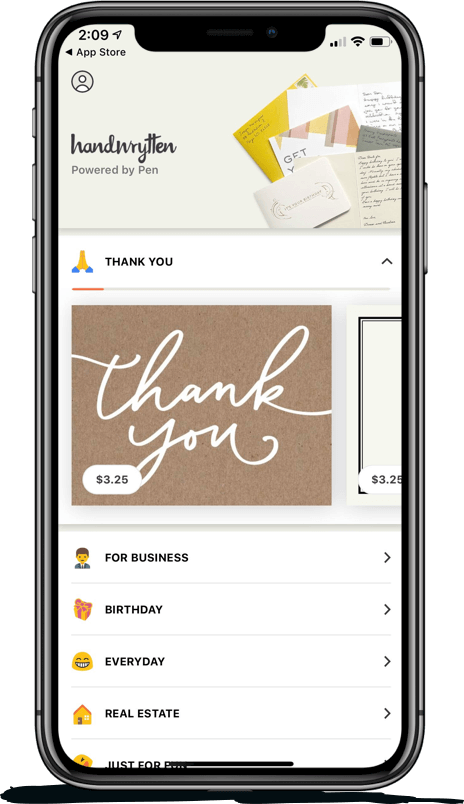
Scale your handwritten outreach, creating positive impressions and long lasting bond.
Sign Up Today!



Over 100 designs to choose from or design your own. Our online card customizer makes it simple.
Check Out Our Cards!




Thank you.
