



February 14th is the one day on the calendar explicitly designed for acknowledging the relationships that matter most. Most businesses skip it. The ones that don’t own it.
Valentine’s Day cards for customers are one of the most strategically underutilized seasonal outreach tools available to any consumer-facing business — and the ones that produce the most disproportionate loyalty and referral impressions of any February marketing investment available. Most businesses treat Valentine’s Day as a consumer holiday with no obvious business application beyond retail promotions and flower shop sales spikes. That assumption is the opportunity — because the business that shows up in a customer’s physical mailbox on Valentine’s Day with a genuine, handwritten card occupies a completely uncontested seasonal space that no competitor is filling.
The cultural associations of Valentine’s Day — genuine care, authentic appreciation, acknowledgment of the relationships that matter — align perfectly with what effective customer outreach is trying to communicate. Valentine’s Day cards for customers that arrive in genuine handwriting, with warm personal messages, and with no commercial agenda beyond pure relationship acknowledgment create exactly the emotional impression that sustains the loyalty, repeat purchase behavior, and organic word-of-mouth that every consumer business depends on.
This guide covers exactly what to write in Valentine’s Day cards for customers — specific messages for every customer type, every brand voice, and every relationship stage — and how to build a systematic Valentine’s Day outreach program that creates genuine individual impressions at scale.
The strategic case for Valentine’s Day cards for customers starts with a simple observation about the February communication environment. Valentine’s Day email campaigns are among the most saturated promotional sequences in the marketing calendar — every brand in a customer’s inbox deploys the same hearts-and-flowers creative, the same percentage-off offers, and the same subject line creativity competing for attention in the same crowded window.
A genuine handwritten Valentine’s Day card arriving in a customer’s physical mailbox operates in a completely different environment. The physical mailbox in February receives almost no personal business outreach — which means a beautifully designed, handwritten card stands out with a quality of individual attention that no email campaign achieves regardless of how creative the subject line is. It gets picked up. It gets opened. It gets read carefully. And because it arrived in genuine handwriting at a moment when nobody else sent anything physical and personal, it gets remembered — and often displayed through the remainder of the month.
Valentine’s Day cards for customers create the impression that Valentine’s Day email campaigns reach for and never achieve — because the format is the message before the content is read.
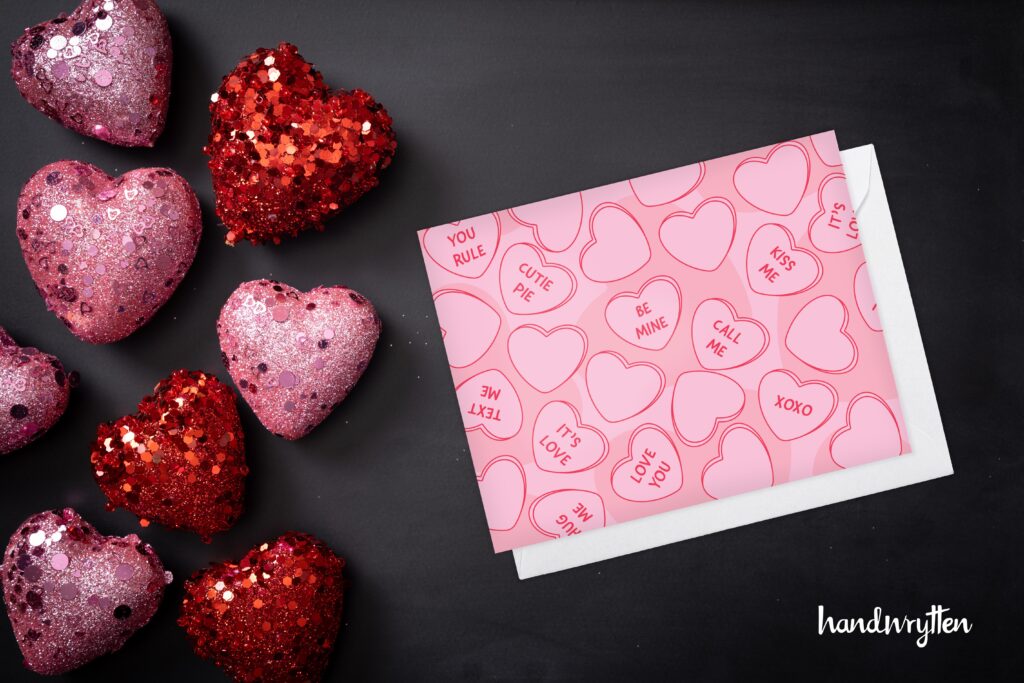
Loyal customers are the most valuable segment in any customer base — the repeat buyers, the long-term subscribers, the clients who have chosen the business again and again when alternatives were available. Valentine’s Day cards for loyal customers should acknowledge that specific sustained loyalty with the individual gratitude it deserves.
1. “Happy Valentine’s Day, [Name] — and thank you. For choosing us again and again when you had other options. For the loyalty that makes this business possible. For being the kind of customer that makes the work genuinely meaningful. We’re grateful for you.”
2. “[Name] — Valentine’s Day felt like exactly the right occasion to say what we should say more often: we genuinely appreciate you. Your continued loyalty means more to us than a promotional email can adequately express. Happy Valentine’s Day from our whole team.”
3. “Happy Valentine’s Day, [Name] — [X] years of being part of our community is something worth celebrating on a day designed for acknowledging what matters. Thank you for your continued trust and loyalty. We’re so glad you’re here.”
4. “[Name] — loyal customers like you are the reason this business exists and the reason we show up every day with genuine care for what we do. Happy Valentine’s Day. Thank you for everything your loyalty represents.”
New customers who receive a Valentine’s Day card in their first weeks or months as a customer have a specific, memorable story about the brand from the very beginning — and that story is the foundation of the long-term loyalty that makes new customer acquisition genuinely valuable.
5. “Happy Valentine’s Day, [Name] — and welcome. We’re so glad you chose us, and we wanted to reach out personally on a day designed for acknowledging the relationships that matter. We’re committed to earning your continued trust. Thank you for giving us the chance.”
6. “[Name] — we’re still early in our relationship, but Valentine’s Day felt like the perfect moment to say we’re genuinely glad you’re part of our community. Thank you for choosing us. We’re looking forward to everything ahead.”
7. “Happy Valentine’s Day from everyone at [Brand], [Name]. Your first [order/visit/engagement] with us was the beginning of something we’re genuinely invested in. Thank you for starting this relationship with us. We hope to earn your trust for a long time.”
High-value customers — the top-tier buyers, the VIP accounts, the customers whose relationship with the brand represents significant lifetime value — deserve Valentine’s Day card messages that reflect the specific significance of their partnership.
8. “[Name] — Valentine’s Day felt like the right moment to reach out personally and say thank you for everything your support of [Brand] has meant. Your partnership has shaped this business in ways you may not fully realize — and we’re genuinely grateful for it. Happy Valentine’s Day.”
9. “Happy Valentine’s Day, [Name] — as one of our most valued customers, you deserve more than a standard seasonal email. So here’s something that tries harder: genuine, specific, individual thank you for everything your loyalty and support represent to our team. We appreciate you.”
10. “[Name] — today is about celebrating the relationships that matter most. Yours is one of them. Thank you for the trust, the loyalty, and the specific way you’ve supported [Brand] through everything. Happy Valentine’s Day from people who genuinely value this relationship.”
Seasonal customers — those who engage during specific times of year but aren’t active year-round — represent a significant re-engagement opportunity on Valentine’s Day, which falls outside most seasonal purchase windows and arrives as a genuine surprise.
11. “Happy Valentine’s Day, [Name] — we think about you even between seasons, and Valentine’s Day felt like the right moment to reach out and say so. Thank you for your support when we see you. We hope you’re doing wonderfully and look forward to connecting again soon.”
12. “[Name] — even though we don’t always see you year-round, your support when we do means everything to us. Happy Valentine’s Day from our whole team. We hope this season is treating you well and that we’ll see you again soon.”
13. “Happy Valentine’s Day, [Name] — a note from people who appreciate your seasonal support more than the annual pattern probably conveys. Thank you for always coming back. We’re here for you.”
Valentine’s Day cards for lapsed customers are one of the most natural and least sales-driven re-engagement touchpoints available — because a Valentine’s Day card communicates genuine individual care rather than commercial reactivation intent.
14. “[Name] — it’s been a while, and Valentine’s Day felt like the right moment to reach out personally and say we’ve been thinking about you. No agenda here — just a genuine note from people who valued having you as a customer and wanted to make sure you knew the door is always open.”
15. “Happy Valentine’s Day, [Name] — we noticed you’ve been away for a while, and we wanted to reach out on a day designed for acknowledging what matters to say: we miss having you. Whenever you’re ready to come back, we’ll be here.”
Valentine’s Day cards for prospects create the most unexpected and memorable first impression available in any sales or marketing program — because a handwritten card arriving before a commercial relationship exists communicates individual investment that no digital outreach achieves at the same depth.
16. “Happy Valentine’s Day, [Name] — we wanted to reach out in a format that felt more personal than another email in your inbox. We believe there’s a genuine conversation worth having about how [Brand] can help you achieve [specific goal]. No pressure — just a genuine hello from people who are genuinely interested.”
17. “[Name] — Valentine’s Day seemed like exactly the right moment to introduce ourselves in a way that felt human rather than transactional. We’d love to show you what [Brand] can do whenever the timing feels right. Happy Valentine’s Day.”
For brands whose voice is warm, fun, and genuinely lighthearted — Valentine’s Day cards for customers are the perfect context for the seasonal playfulness that creates the most shareable, most memorable customer impressions.
18. “[Name] — you’ve been our customer for [timeframe] and we’re not even a little bit sorry about how attached we’ve become. Happy Valentine’s Day from a brand that genuinely loves its customers — especially you.”
19. “Happy Valentine’s Day, [Name] — you had us at your first order. Thank you for being part of our story. We’re completely smitten.”
20. “[Name] — if loyalty were a love language, yours would be fluent. Happy Valentine’s Day from everyone at [Brand]. We’re grateful for you.”
21. “Happy Valentine’s Day, [Name] — we think you’re kind of a big deal. Thank you for choosing us. We promise to keep earning it.”
22. “Happy Valentine’s Day, [Name] — thank you for being part of our story. We appreciate you more than this card can hold.”
23. “[Name] — grateful for you today and every day. Happy Valentine’s Day from our whole team.”
24. “Happy Valentine’s Day — no agenda, just genuine appreciation for a customer we genuinely value. Thank you.”
25. “[Name] — thank you for your loyalty. It means everything. Happy Valentine’s Day from [Brand].”
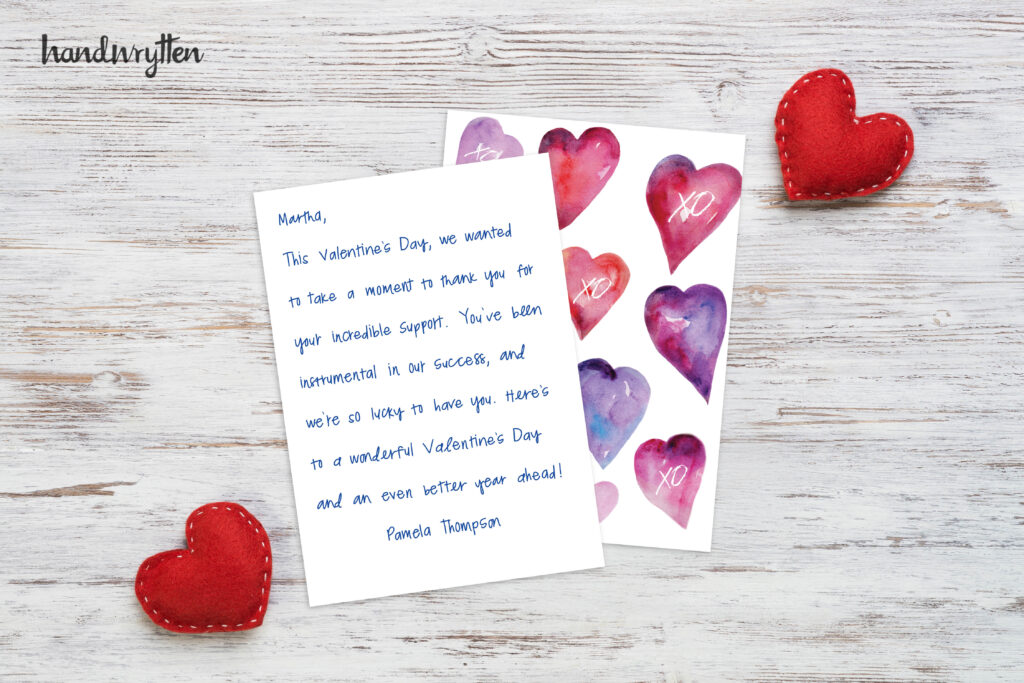
The most important principle of effective Valentine’s Day cards for customers is the complete absence of commercial content. A Valentine’s Day card that includes a discount code, a product promotion, or a sales call to action converts a genuine relationship gesture into a marketing piece with a Valentine’s Day wrapper — and customers feel that distinction immediately.
The impression that makes Valentine’s Day cards for customers effective is their agenda-free quality — the felt sense that the card was sent purely to acknowledge the customer as an individual rather than to drive a transaction. Keep every card entirely focused on genuine individual appreciation. Save commercial content for dedicated promotional campaigns.
A Valentine’s Day card that opens with the customer’s name communicates individual attention from the first word. Dynamic personalization fields in Handwrytten’s platform pull customer names from CRM or e-commerce databases automatically — ensuring every card in a bulk Valentine’s Day campaign opens with genuine individual address.
A Valentine’s Day card that references something specific about the customer’s relationship with the brand — their tenure, their purchase history, a specific product they love, a specific milestone in the relationship — creates a significantly stronger impression than generic seasonal warmth. Even one specific detail makes the card feel genuinely written for this person rather than for anyone in the customer segment.
Valentine’s Day cards for customers that sound like the brand — rather than like a template any brand might send — create the most authentic impression and generate the most social sharing. A playful brand sends playful Valentine’s Day cards. A sophisticated brand sends warm but understated ones. A warm community-oriented brand sends cards that feel like they came from neighbors rather than a corporation.
Optimal delivery window: February 10th through February 13th — arriving in the days immediately before Valentine’s Day when the seasonal sentiment is most active and the mailbox is not yet crowded with last-minute deliveries.
Submit your Handwrytten campaign by February 7th for guaranteed pre-Valentine’s Day delivery — accounting for one-to-two business day production time plus standard delivery.
For organizations running systematic seasonal outreach programs, Handwrytten’s scheduling tools allow Valentine’s Day campaigns to be configured weeks in advance and triggered automatically — ensuring every customer receives a genuine handwritten card without any manual initiation from the marketing team.
The operational challenge of sending genuine, personalized, handwritten Valentine’s Day cards to every customer in a database — at any meaningful volume — is precisely what prevents most businesses from deploying the Valentine’s Day outreach program their customer relationships deserve.
Handwrytten removes every operational barrier. Using robotic pen-and-ink technology that produces genuinely handwritten Valentine’s Day cards — real pen, real paper, real ink — Handwrytten’s platform allows organizations of any size to send fully personalized, individually written customer cards at any volume.
Custom branded stationery. Every Valentine’s Day card can carry your brand’s logo, colors, and visual identity — ensuring every card reinforces brand recognition while communicating the personal warmth of the handwritten format.
Dynamic personalization. CRM and e-commerce integrations with Shopify, Salesforce, HubSpot, and other platforms pull customer names and relationship context into each card automatically — ensuring every card opens with genuine individual address.
Gift card inclusions. For brands pairing Valentine’s Day cards with a small gift — a coffee shop gift card, a discount code delivered physically, a modest seasonal treat — Handwrytten’s platform supports gift card inclusions at checkout for seamless fulfillment at any volume.
No minimums. Whether you’re sending ten cards or ten thousand, Handwrytten handles every volume with the same genuine handwriting quality and one-to-two business day production turnaround.
When should Valentine’s Day cards for customers be sent?
Target delivery in the February 10th through February 13th window — close enough to Valentine’s Day to feel genuinely seasonal, early enough to arrive before the holiday itself. Submit your Handwrytten campaign by February 7th for guaranteed delivery within this window.
Should Valentine’s Day cards for customers include a promotional offer?
No — the impression that makes Valentine’s Day cards effective is their agenda-free quality. Keep every card focused on genuine individual appreciation. A promotional offer converts a relationship gesture into a marketing piece. If you want to pair a tangible gift with the card, a modest gift card inclusion communicates generosity without promotional intent.
Can Valentine’s Day cards be personalized for different customer segments?
Yes. Handwrytten’s platform supports multiple message templates within a single campaign — allowing different customer segments to receive different messages while all cards are produced in the same genuine handwriting quality. Loyal customers receive different messages than new customers, seasonal customers, or lapsed customers.
Can Valentine’s Day cards for customers be automated?
Yes. Handwrytten’s integrations with Shopify, Salesforce, HubSpot, and Zapier allow Valentine’s Day card campaigns to be configured from customer lists and triggered automatically — each card produced in genuine pen-and-ink handwriting and mailed without any manual effort from the marketing team.
What’s the most important element of an effective Valentine’s Day card for customers?
Agenda-free genuine appreciation — a message that communicates individual care for the customer with no commercial intent behind it. One specific detail that makes the card feel written for this customer specifically, in genuine handwriting on real paper, arriving in the February mailbox before any competitor sends anything physical. That combination creates the impression that sustains loyalty through the year ahead.
Valentine’s Day cards for customers aren’t a sentimental marketing tactic — they’re a strategic relationship investment that creates the specific emotional impressions that sustain loyalty, generate referrals, and build the brand reputation that no promotional campaign ever replicates at the same depth of individual feeling.
February 14th belongs to the relationships that matter most. Your customers are one of them. Show up in their mailbox — in genuine handwriting, with something warm and personal and completely agenda-free — and watch what that single gesture does for the loyalty that carries every other business metric through the year.
Start Sending → handwrytten.com
Editor’s note: This article was revised in July 2026


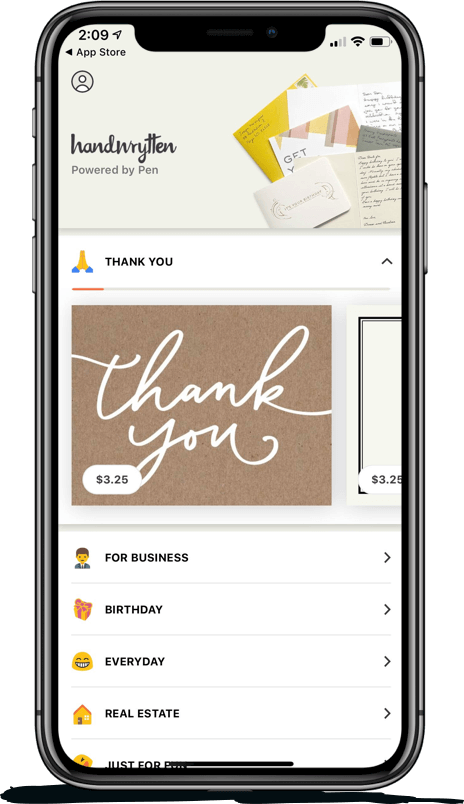
Scale your handwritten outreach, creating positive impressions and long lasting bond.
Sign Up Today!

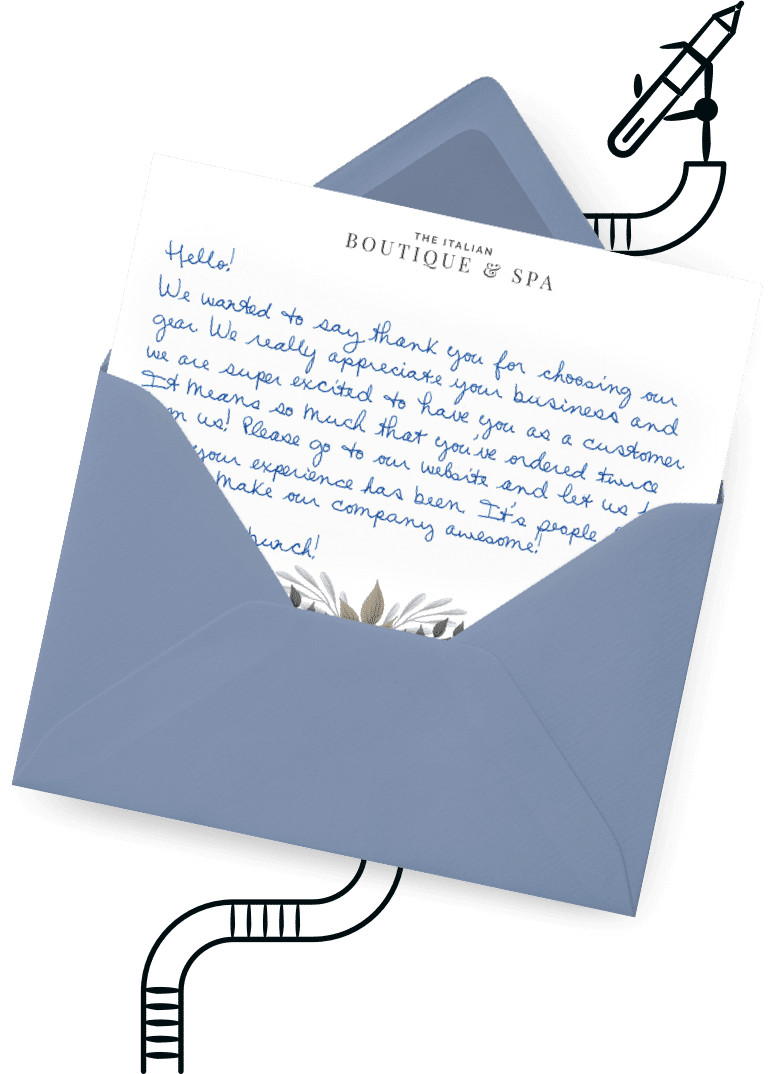

Over 100 designs to choose from or design your own. Our online card customizer makes it simple.
Check Out Our Cards!




Thank you.
