



Most Valentine’s Day marketing looks the same. The businesses that win February are the ones doing something genuinely different.
Valentine’s Day marketing ideas are a dime a dozen in February — every marketing blog publishes the same listicle of hearts-and-flowers campaign suggestions, every email platform sends the same subject line inspiration roundup, and every social media scheduler offers the same holiday content calendar template. The result is a Valentine’s Day marketing landscape where most businesses look identical — running the same promotions, posting the same content, and competing for the same attention in the same digital channels with the same seasonal creative.
The businesses that actually drive sales from Valentine’s Day aren’t the ones running the most elaborate campaigns. They’re the ones running the most genuine ones — campaigns that create real emotional connections rather than seasonal noise, that deploy tactics their competitors haven’t considered, and that use the holiday’s cultural resonance with care, gratitude, and authentic relationship acknowledgment to build the customer loyalty that outlasts February 14th by months.
This guide covers the complete Valentine’s Day marketing playbook — seven proven tactics across every channel, with specific applications for every business type, and the strategic framework that ties them together into a coordinated campaign that actually drives sales rather than simply acknowledging the holiday.
Valentine’s Day is the second-largest consumer spending holiday in the United States — generating billions in annual consumer expenditure across gifts, dining, entertainment, and experiences. But the marketing opportunity extends well beyond the obvious retail categories. Every business that serves customers who have relationships — which is every business — has a genuine Valentine’s Day marketing opportunity in the holiday’s core emotional themes: care, appreciation, connection, and the acknowledgment of what matters most.
The businesses that miss this opportunity are the ones that treat Valentine’s Day as a retail holiday with no application to their specific category. The ones that capitalize on it are the ones that understand Valentine’s Day marketing ideas at their most strategic level — as an opportunity to create genuine emotional connections with customers, partners, and community members at a culturally resonant moment when those connections feel most natural and most powerful.
The seven valentine’s day marketing ideas in this guide work across every business category — retail and service, B2B and B2C, local and national, product and experience. Each one is accompanied by specific industry applications and measurement guidance that makes implementation straightforward and ROI trackable.
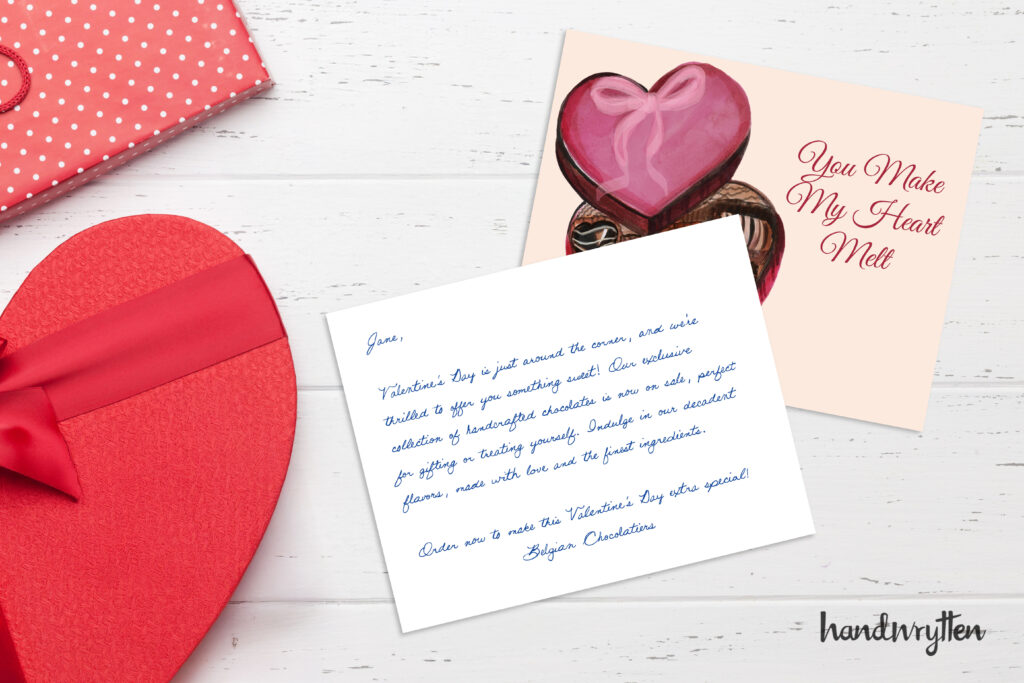
The first and most foundational of all valentine’s day marketing ideas is the one that creates the strongest individual impression at the lowest competitive intensity: genuine handwritten outreach to customers, clients, and partners at the moment when no competitor is showing up with anything physical and personal.
Valentine’s Day handwritten cards work as a marketing tactic because they operate in a completely uncontested channel — the physical mailbox — at a moment when every competitor is fighting for attention in the same digital channels. A genuine handwritten card arriving in a customer’s physical mailbox in the week before Valentine’s Day receives a quality of individual attention that no digital campaign achieves, regardless of how sophisticated the targeting or how creative the content.
The strategic function of handwritten outreach in a Valentine’s Day marketing campaign is to serve as the anchor touchpoint — the physical, individual, agenda-free gesture that creates the emotional connection that makes every other campaign element land more powerfully. A customer who received a genuine handwritten Valentine’s Day card from a brand is significantly more receptive to that brand’s social media content, email campaigns, and promotional offers in February — because the relational warmth established by the physical card creates the individual connection that makes every subsequent touchpoint feel like communication from a brand they know rather than advertising from a brand they follow.
Industry applications:
Retail and e-commerce: Include a handwritten note with February orders, or send a proactive card to top customers before Valentine’s Day arrives.
Service businesses: Send handwritten cards to every active client in the week before Valentine’s Day — warm, personal, and completely free of promotional content.
B2B companies: Send handwritten cards to key accounts and referral partners — acknowledging the professional relationship at a moment when no competitor is doing the same.
Healthcare and wellness: Send handwritten cards to active patients acknowledging the personal relationship that sustains practice loyalty.
For the complete guide to what to write in Valentine’s Day cards for customers — with specific message examples for every customer type — visit our Valentine’s Day Cards for Customers resource.
Handwrytten’s robotic pen-and-ink technology makes handwritten Valentine’s Day outreach scalable — producing genuinely handwritten cards in real pen on real paper at any volume, triggered automatically through CRM integrations, and mailed without any manual effort from the marketing team.
The second of the most effective valentine’s day marketing ideas is the limited-time promotion — but deployed with a strategic sophistication that separates genuine value creation from the generic percentage-off offer that every competitor runs simultaneously.
The Valentine’s Day promotions that drive the strongest sales are the ones that create genuine value in a format specifically relevant to the holiday — pairing products or services in ways that make intuitive Valentine’s Day sense, creating access to experiences that aren’t available outside the promotional window, or offering combinations that make gift-giving genuinely easier for the customer.
The promotion formats that work:
Experience bundles. Service businesses create their strongest Valentine’s Day promotions by bundling complementary experiences — a spa’s couples massage package, a restaurant’s fixed-price Valentine’s dinner with paired wine, a fitness studio’s partner class series. The bundle creates genuine holiday value that individual service offerings don’t achieve at the same emotional resonance.
Gift-with-purchase. Pairing a tangible gift — a handwritten card, a branded item, a curated sample — with a Valentine’s Day purchase creates a complete giving experience that increases perceived value without requiring significant margin sacrifice.
Early access offers. Providing loyal customers with early access to Valentine’s Day promotions — before they open to the general public — communicates the individual priority that sustains the loyalty that makes them worth giving early access to.
Buy-one-gift-one. Subscription services and recurring purchase businesses create their most compelling Valentine’s Day offers through gift mechanisms — “subscribe and send a free month to someone you love” combines the holiday’s gifting theme with new customer acquisition at a cost that existing customer goodwill subsidizes.
Industry applications:
Restaurants: Valentine’s dinner package with a complimentary handwritten card for the table — creating a complete romantic experience that justifies premium pricing.
Spas and wellness: Couples treatment packages available exclusively in February, paired with a handwritten confirmation card that functions as a gift-worthy tangible artifact.
Subscription services: Gift subscription offers that allow existing subscribers to give a month’s subscription to someone new — driving both acquisition and loyalty simultaneously.
Retailers: Gift-wrapping service with a gift card included — adding genuine experiential value to the purchase at minimal cost.
Measurement: Track Valentine’s Day promotion redemption rates, average order value during the promotional window versus the same period in non-promotional years, and new customer acquisition rate among gift recipients who redeem Valentine’s Day gift offers.
The third of the proven valentine’s day marketing ideas is the social media contest — deployed not as a generic engagement tactic but as a genuine user-generated content strategy that amplifies Valentine’s Day campaign reach through the authentic voice of real customers.
Valentine’s Day’s emotional resonance makes it the ideal context for user-generated content campaigns — because customers are already sharing Valentine’s Day moments on social media, and a well-designed brand campaign gives them a natural, branded context for the content they were going to create anyway.
The UGC formats that drive the strongest Valentine’s Day engagement:
Love story contests. Ask customers to share the story of how your brand was part of a meaningful moment in their relationship — a first date at your restaurant, a gift that became a tradition, a product that featured in a significant occasion. The stories that emerge are both organic social proof and genuinely compelling content.
Pet Valentine’s content. For brands with pet-adjacent audiences — veterinary practices, pet supply retailers, any brand whose customer base includes pet owners — Valentine’s Day pet content is among the most shareable content available in any social media context. A “show us your Valentine” campaign that celebrates pet-human relationships generates extraordinary organic reach.
Team and community appreciation. For B2B brands and service businesses, a Valentine’s Day campaign that asks customers to share who they’re grateful for — with a nominated third party receiving a handwritten thank-you card from the brand — creates engagement, generates goodwill, and extends the campaign’s reach to the nominated third parties who receive unexpected physical acknowledgment.
Industry applications:
Restaurants: “Share your Valentine’s Day dinner moment at [Restaurant] for a chance to win a return dinner for two.” Creates organic social content and drives return visit motivation simultaneously.
Fitness studios: “Show us your Valentine’s Day workout partner — human or furry.” Generates authentic community content while reinforcing the studio’s community identity.
Retailers: “Show us the gift that started a tradition.” Generates product-specific social proof in the most emotionally resonant context available.
Measurement: Track contest entries, hashtag reach, organic impressions generated by user-generated content, and new follower acquisition attributable to contest visibility.
The fourth of the most effective valentine’s day marketing ideas is the email campaign — deployed with a strategic approach that differentiates from the promotional email noise that saturates every inbox in the two weeks before Valentine’s Day.
Most Valentine’s Day email campaigns lead with the promotion — the percentage off, the limited-time offer, the gift guide — and use emotional language as a vehicle for the commercial ask. The campaigns that generate the strongest engagement lead with genuine appreciation and use the commercial offer as a secondary element that the emotional content makes feel like a gift rather than a sales pitch.
The email formats that work:
The appreciation email. A Valentine’s Day email that leads with genuine customer appreciation — specific, warm, and completely free of promotional content in the first half — before optionally introducing a modest offer creates the emotional connection that makes the commercial element feel like a genuine Valentine’s Day gift rather than a promotional tactic with a holiday wrapper.
The curated gift guide. For retail and e-commerce brands, a genuinely curated Valentine’s Day gift guide — organized by recipient type, price point, or relationship stage — creates genuine utility that earns the email’s place in the inbox rather than competing for attention with every other promotional email.
The personal note from leadership. A Valentine’s Day email written in genuine personal voice from a founder, CEO, or specific team member — acknowledging customers as the people who make the business possible — creates the authentic individual connection that most brand emails never achieve at the same emotional depth.
Industry applications:
E-commerce: Curated Valentine’s gift guide segmented by customer purchase history — showing each customer gifts relevant to their specific interests based on what they’ve previously bought.
Service businesses: Personal appreciation email from the owner or team — thanking specific customer segments for their loyalty with genuine individual language that doesn’t sound like it came from a marketing platform.
B2B companies: Valentine’s Day email to key accounts acknowledging the partnership — warm, specific, and completely free of commercial content — that positions the brand as a genuine partner rather than a vendor.
Measurement: Track Valentine’s Day email open rates against baseline, click-through rates on curated content versus promotional content, and conversion rates on any offers introduced in the second half of the email.
The fifth of the proven valentine’s day marketing ideas is the charitable campaign — deploying Valentine’s Day’s cultural theme of care and generosity in a community context that extends the brand’s goodwill beyond the immediate customer relationship.
Valentine’s Day charitable campaigns work as a marketing tactic because they create a specific kind of brand association — with values like generosity, care, and community investment — that no promotional campaign creates at the same emotional depth. A customer who participated in a brand’s Valentine’s Day charitable campaign has a specific, positive story about the brand that sustains loyalty and generates word-of-mouth in a way that a twenty percent discount never achieves.
The charitable formats that work:
Donation matching. For every Valentine’s Day purchase, the brand donates a specific amount or percentage to a relevant charitable cause — creating a purchase context that feels like participation in something meaningful rather than a simple transaction.
Product gifting programs. Some brands create Valentine’s Day programs where a purchase funds the gifting of the product to someone in need — a “buy one, give one” model that creates both acquisition and community impact simultaneously.
Local community partnerships. Small and medium businesses create their most compelling charitable Valentine’s Day campaigns through genuine local community partnerships — a coffee shop donating proceeds to a local shelter, a restaurant serving a Valentine’s dinner to community volunteers, a retailer collecting donations for a local food bank.
Industry applications:
Restaurants: “For every Valentine’s dinner served, we donate a meal to [local charity].” Creates a purchase context that transforms a romantic dinner into a community contribution.
Retailers: “This Valentine’s Day, every purchase supports [cause]. Shop with love.” Creates both purchase motivation and brand association with values that sustain loyalty beyond the holiday.
Service businesses: “We’re grateful for your support — this Valentine’s Day, we’re donating [amount] in your honor to [local cause].” Creates genuine individual acknowledgment while generating community goodwill.
Measurement: Track campaign-specific revenue, donation amount generated, social media mentions of the charitable campaign, and new customer acquisition attributable to charitable campaign visibility.
The sixth of the most effective valentine’s day marketing ideas is the exclusive event — creating a Valentine’s Day brand experience that generates both immediate revenue and long-term loyalty through the emotional memory of a genuinely exceptional moment.
Valentine’s Day events work as a marketing tactic because they create the kind of experiential brand association that no promotional campaign produces — a customer who attended a genuinely memorable Valentine’s Day event hosted by a brand has a specific, positive, shareable story about that brand that sustains loyalty through the year and generates organic word-of-mouth that digital advertising can’t replicate.
The event formats that work:
Intimate dining experiences. Restaurants create their strongest Valentine’s Day revenue through exclusive prix fixe dinners — limited seating, curated menus, elevated service — that justify premium pricing through genuine experiential scarcity.
Partner and couples programming. Fitness studios, dance schools, art spaces, and wellness businesses create compelling Valentine’s Day events through partner-oriented programming — couples yoga, partner dance classes, paint-and-sip evenings, couples cooking classes — that transform a standard service into a shared Valentine’s Day experience.
Craft and creation events. Retailers, bookstores, and community businesses create genuine Valentine’s Day event opportunities through customer participation — a card-making workshop, a “blind date with a book” event, a custom gift-building experience — that creates both immediate engagement and genuine community connection.
Industry applications:
Bookstores: “Blind Date with a Book” — wrapped books with intriguing descriptions, no titles visible, creating the Valentine’s Day gift experience of genuine discovery.
Art studios: “Paint Your Valentine” — couples paint each other’s portraits in a guided evening class, creating a keepsake and a shared memory simultaneously.
Specialty food retailers: Valentine’s Day tasting event — curated chocolates, wines, or specialty foods paired with education and community — creating purchase context through genuine experiential engagement.
Measurement: Track event attendance, per-attendee revenue, social media content generated by event participants, and return visit rate among event attendees in the months following Valentine’s Day.
The seventh of the proven valentine’s day marketing ideas is personalization — offering Valentine’s Day-specific customization options that transform standard products and services into genuinely personal gifts that carry emotional weight beyond their functional value.
Personalization works as a Valentine’s Day marketing tactic because it directly addresses the most common Valentine’s Day purchasing challenge: finding a gift that feels genuinely individual rather than generically appropriate. A brand that makes genuine personalization accessible — at a reasonable price point, with a simple process — creates a competitive advantage that price-matching and promotional offers can’t replicate.
The personalization formats that work:
Engraving and custom messaging. Jewelry, accessories, and durable goods become genuinely individual gifts through name engraving, date stamping, or custom message inclusion — transforming a standard product into a specific artifact of a specific relationship.
Custom packaging and presentation. For e-commerce and retail brands, Valentine’s Day gift wrapping with a custom handwritten message card creates the complete gift experience that transforms a standard purchase into a genuine Valentine’s Day giving moment.
Build-your-own gift options. Curated gift building — selecting specific products, customizing quantities, and adding personal messages — creates the perception of individual thoughtfulness at the scale of a standard product catalog.
Industry applications:
Jewelry retailers: Custom engraving offered as a Valentine’s Day add-on — creating genuine individual artifacts from standard inventory.
Food and beverage brands: Valentine’s-themed custom packaging with the recipient’s name — transforming a standard product into a personalized gift.
E-commerce: Gift message service with genuine handwritten cards — Handwrytten integration allows post-purchase handwritten gift cards to be triggered automatically for every Valentine’s Day order, creating the complete gift experience without any manual effort.
Measurement: Track personalization add-on attachment rate, average order value for personalized versus standard orders, and customer return rate among Valentine’s Day buyers who selected personalization options.
The most effective Valentine’s Day marketing programs aren’t collections of individual tactics deployed in isolation — they’re coordinated campaigns that use multiple channels simultaneously to create the complete Valentine’s Day brand experience that sustains customer loyalty beyond the holiday.
The coordinated Valentine’s Day marketing campaign structure:
Week 1 (February 1-7) — Physical outreach anchor: Handwritten Valentine’s Day cards submitted for delivery in the optimal pre-Valentine’s window. This physical touchpoint establishes the relational warmth that makes every subsequent digital touchpoint land more powerfully.
Week 1-2 (February 1-10) — Social media activation: Contest launch, user-generated content campaign initiation, and organic social content that builds Valentine’s Day brand presence across every relevant platform.
Week 2 (February 7-13) — Email and promotional push: Valentine’s Day email campaign deployment — appreciation-led with promotional offer in the second half — and limited-time promotion activation across all relevant channels.
Valentine’s Day week (February 10-14) — Event and experience delivery: In-store events, exclusive experiences, and charitable campaign culmination that creates the complete Valentine’s Day brand moment for customers who engage across multiple touchpoints.
Post-Valentine’s Day (February 15+) — Measurement and follow-up: Campaign performance analysis across all tactics, follow-up outreach to new customers acquired through Valentine’s Day campaigns, and thank-you acknowledgments to customers who participated in contests or charitable campaigns.
Which Valentine’s Day marketing ideas drive the strongest ROI?
Handwritten physical outreach consistently produces the strongest individual customer impression and loyalty outcome. Social media contests drive the strongest reach and new audience acquisition. Limited-time promotions drive the strongest immediate revenue. The coordinated campaign that combines all three produces the strongest overall ROI by creating reinforcing impressions across multiple channels simultaneously.
How early should Valentine’s Day marketing campaigns launch?
February 1st for social media and email campaigns — giving two full weeks of Valentine’s Day marketing visibility before the holiday. Handwritten card campaigns should be submitted by February 7th for guaranteed pre-Valentine’s Day delivery.
Should Valentine’s Day marketing ideas be different for B2B versus B2C businesses?
The tactics differ in emphasis — B2C businesses benefit most from consumer-facing promotions, social media campaigns, and customer appreciation outreach. B2B businesses benefit most from handwritten outreach to key accounts and referral partners, charitable campaigns that create community goodwill, and personalized account-level appreciation gestures. The underlying principle is identical: create genuine emotional connections at a culturally resonant moment.
Can Valentine’s Day marketing be effective for businesses that don’t sell romantic products?
Yes — because Valentine’s Day’s core emotional themes of care, appreciation, and acknowledgment of what matters apply to every business that serves customers with relationships. A law firm, a healthcare practice, an accounting firm, or a B2B software company all have customer relationships worth acknowledging on Valentine’s Day — and the unexpectedness of receiving a genuine Valentine’s Day gesture from a non-romantic brand category creates a stronger impression than the same gesture from a brand whose Valentine’s Day participation is obvious.
How do you measure the ROI of Valentine’s Day marketing campaigns?
Through a combination of direct response measurement — promotion redemption rates, contest engagement metrics, email performance — and indirect loyalty measurement — retention rate comparison between customers who received Valentine’s Day outreach and those who didn’t, repeat purchase frequency in the months following Valentine’s Day, and referral activity from Valentine’s Day campaign participants.
Valentine’s Day marketing ideas that actually drive sales aren’t the ones that look most festive or spend the most on creative production. They’re the ones that create the most genuine individual emotional connections — through the tactics that reach customers in the channels competitors aren’t using, with the messages that communicate real care rather than seasonal obligation, and with the coordinated campaign structure that makes every touchpoint reinforce every other.
February 14th is one day. The loyalty it creates lasts the rest of the year.
Start Sending → handwrytten.com
Editor’s note: This article was revised in July 2026


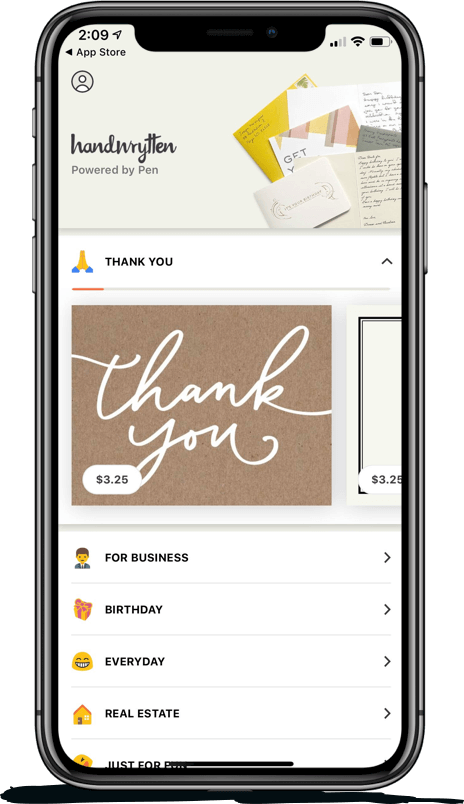
Scale your handwritten outreach, creating positive impressions and long lasting bond.
Sign Up Today!

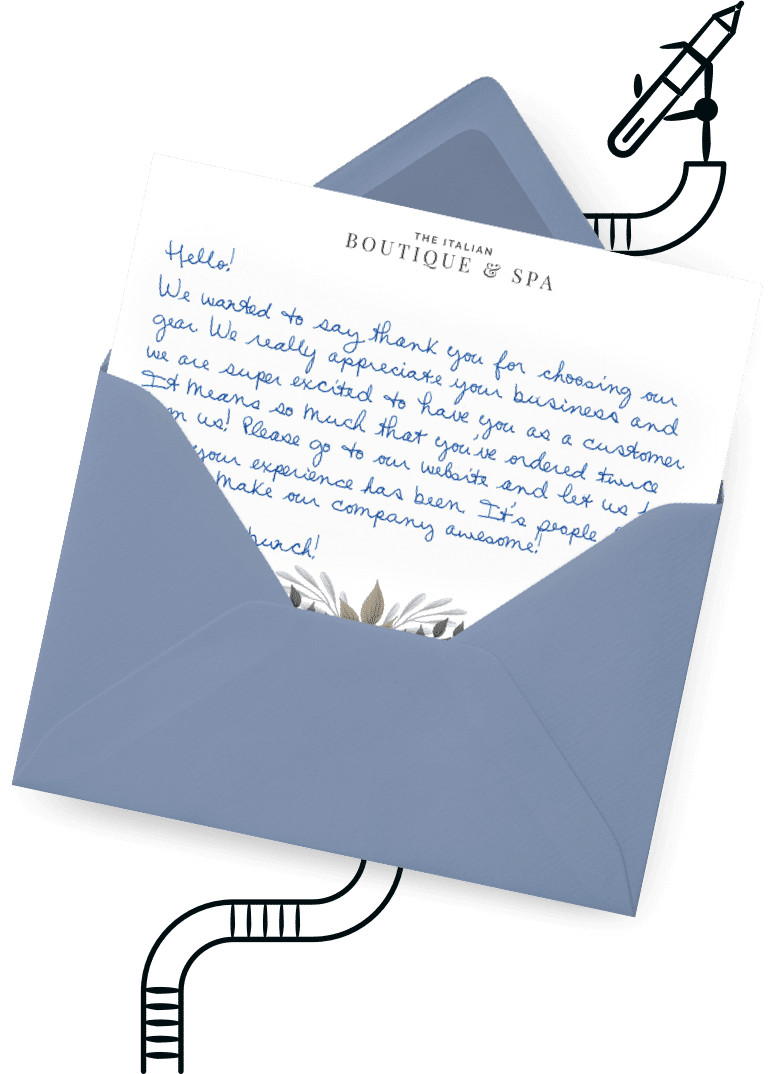

Over 100 designs to choose from or design your own. Our online card customizer makes it simple.
Check Out Our Cards!




Thank you.
