



Every budget cycle, the same conversation happens. Here’s how to end it permanently.
Handwritten outreach gets treated as a luxury in most organizations — a thoughtful gesture for when there’s time and budget to spare, a seasonal nice-to-have that gets cut when things get tight and reinstated when things ease up. It lives in the discretionary column. It gets defended with feelings rather than data. And when the pressure comes, it’s one of the first things to go.
That treatment is a strategic mistake — and the organizations making it are leaving measurable revenue on the table while their competitors quietly build the relationship infrastructure that drives retention, referrals, and the kind of loyalty that no digital campaign can manufacture.
Handwritten outreach isn’t a gesture. It’s a high-performing business strategy with documented outcomes across retention, acquisition, engagement, and revenue — and the proof is in the numbers, the neuroscience, and the consistent real-world results that organizations using it at scale have been producing for years.
Here’s the case.
Before the proof, the diagnosis. Why does handwritten outreach end up in the discretionary column in the first place?
The answer is almost always measurement — or the absence of it. When handwritten notes for business are sent manually, without systematic tracking or CRM integration, the outcomes they produce are invisible in the data. A client who received a handwritten card and renewed their contract didn’t tag the card as the reason. A prospect who responded to a handwritten follow-up after ignoring six emails didn’t attribute their response to the format. A donor who gave again after receiving a handwritten acknowledgment wasn’t captured as a card-driven conversion.
The outcomes were real. The data just wasn’t there to prove it.
And in a data-driven organization, programs without data don’t get protected — they get cut. That’s the trap most handwritten outreach programs fall into: genuinely high-performing, systematically undermeasured, and therefore perpetually vulnerable to the discretionary label.
The solution isn’t to stop measuring. It’s to build the measurement infrastructure that makes handwritten outreach’s performance as visible as any other channel’s — and then let the data make the argument.
The proof for handwritten outreach starts before the business data — it starts in how the human brain processes physical, handwritten communication differently from digital.
When a person receives a handwritten note, multiple regions of the brain activate simultaneously: the visual cortex processing the handwriting itself, the motor cortex engaging in recognition of the physical writing act, and the emotional centers responding to the implicit signal of effort and individual attention. This multi-sensory, multi-region activation creates stronger memory encoding than single-channel digital communication — meaning recipients are more likely to remember the message, the sender, and the positive emotional experience of receiving it.
That memory encoding is the neurological foundation of brand loyalty. A client who remembers receiving a handwritten note from your organization — who carries a positive emotional association with that memory — is a client who thinks of your brand first when a renewal decision arrives, who mentions your name when a colleague asks for a recommendation, and who forgives a service misstep more readily because the emotional account is already in surplus.
Handwritten notes for business work at the neurological level in a way that digital communication simply doesn’t replicate — and that difference in how the brain processes the two formats is what drives the measurable business outcomes that follow.
Retention is where the handwritten outreach business case is strongest — and where the numbers are most compelling.
Organizations that implement systematic handwritten outreach programs consistently report retention rate improvements among the clients who receive them. The mechanism is straightforward: clients who feel genuinely appreciated — who receive a physical, personal acknowledgment at a meaningful moment in the relationship — cancel less, renew more, and stay longer than those who experience only digital communication.
The financial implication compounds quickly. A 5% improvement in retention rate, applied to an average contract value of $25,000, produces $125,000 in protected revenue for every 100 clients in the program. At scale, handwritten outreach produces retention outcomes that dwarf its cost by orders of magnitude — which is why organizations that measure it properly almost never cut it.
Referrals are the highest-value, lowest-cost acquisition channel available to most businesses — and handwritten outreach is one of the most reliable triggers for referral behavior. When a client receives a handwritten note that makes them feel genuinely seen and appreciated, the emotional response frequently expresses itself as advocacy: a recommendation to a colleague, a mention in a conversation, a social share, a review.
Organizations tracking referral attribution consistently find correlation between handwritten outreach touchpoints and referral activity in the 30 to 90 days that follow. That correlation — expressed as new revenue generated through referrals from clients who received handwritten notes for business — is one of the most powerful additions to a handwritten outreach business case.
When handwritten outreach is used in cold prospecting or dormant client re-engagement campaigns, the response rate differential versus digital alternatives is consistently significant.
A prospect who has ignored six email follow-ups isn’t necessarily uninterested — they may simply be filtering out everything that looks like automated outreach. A handwritten card arriving in a physical format that no digital message occupies creates a completely different kind of first impression — one that generates curiosity rather than defensiveness, and that produces response rates that email sequences targeting the same segment rarely approach.
Cost-per-response calculations frequently demonstrate that handwritten outreach — despite its higher per-unit cost — produces better outcomes per dollar spent than digital alternatives in prospecting and re-engagement contexts. That’s the counterintuitive math that makes handwritten outreach essential rather than discretionary.
Organizations that run NPS surveys or post-interaction satisfaction reviews consistently find that clients who received handwritten outreach score their overall experience higher than those who didn’t. The handwritten note doesn’t just create a positive impression in isolation — it elevates the perceived quality of the entire relationship surrounding it.
That NPS lift is significant for two reasons. First, it’s a metric that resonates at the executive level — NPS improvement is a stated priority for most customer-facing organizations, and a program that demonstrably drives it earns protection. Second, higher NPS scores correlate with higher referral activity and higher retention rates — which means handwritten outreach’s impact on satisfaction compounds into the retention and referral outcomes already described.
The comparison between handwritten outreach and digital communication isn’t close — and the gap is widening as digital channels become more saturated and more filtered.
Open rates. A physical envelope gets opened at rates that no email campaign approaches. The format commands attention in a way that has become impossible to replicate digitally as inbox filtering has become more sophisticated.
Read rates. A handwritten note gets read — fully, carefully, and often more than once. An email gets skimmed. The difference in how much of the message actually lands is significant.
Retention in memory. The neurological case outlined earlier translates into a measurable practical outcome: recipients remember handwritten notes for business for weeks and months. They remember the sender, the message, and the feeling of receiving it. Digital messages are forgotten within hours in most cases.
Emotional impact. Handwritten outreach creates an emotional response — appreciation, warmth, the feeling of being genuinely seen — that digital communication produces far less reliably. That emotional response is the mechanism behind the retention, referral, and satisfaction outcomes that make the business case.
Physical persistence. A handwritten card sits on a desk, gets pinned to a bulletin board, or gets tucked into a drawer of things worth keeping. It continues to create brand impressions for days, weeks, or months after arrival. A digital message disappears from active consciousness within hours.
The most persistent objection to treating handwritten outreach as an essential business strategy rather than an occasional gesture is the scalability problem. Writing individual notes to every client, prospect, donor, or employee isn’t realistic as a manual process — and the moment handwritten outreach depends on individuals finding time to write cards, it becomes inconsistent and ultimately unsustainable.
Handwrytten eliminates that barrier. Using robotic pen-and-ink technology that produces genuinely handwritten notes — real pen, real paper, real ink — at any volume, Handwrytten’s platform makes it possible to send personalized handwritten outreach to any number of recipients, triggered automatically through CRM integrations with Salesforce, HubSpot, Shopify, Zapier, and other platforms.
A new client is added to the CRM — a handwritten welcome note goes out automatically. A customer reaches their one-year anniversary — a handwritten acknowledgment triggers without anyone initiating it. A prospect goes dormant for 90 days — a handwritten re-engagement card arrives in their mailbox while your competitors are sending their fifth follow-up email.
The scalability problem has been solved. Which means the only remaining argument for treating handwritten outreach as discretionary is the absence of measurement — and that problem is solved by the same platform infrastructure that enables the scale.
Moving handwritten outreach from the discretionary column to the essential column requires three things: measurement, integration, and positioning.
Measurement. Connect your handwritten outreach program to your CRM so that every card sent is logged and every recipient is tracked. Use QR codes and personalized URLs to create direct response tracking. Pull cohort comparisons between clients who received handwritten notes for business and those who didn’t — retention rates, referral activity, NPS scores, revenue per client. The data will make the argument for you.
Integration. Build handwritten outreach into your existing workflows rather than treating it as a separate initiative. When a new client onboards, a handwritten welcome note goes out. When a customer hits a milestone, a handwritten acknowledgment triggers. When a prospect goes cold, a handwritten card arrives. This systematic integration is what transforms handwritten outreach from an occasional gesture into reliable relationship infrastructure.
Positioning. Present handwritten outreach to leadership not as a marketing expense but as a retention and revenue strategy. Lead with the numbers — retention rate differential, referral revenue, response rate comparison — and frame the program in terms of what it would cost to eliminate it rather than what it costs to maintain it. That reframe changes the budget conversation from defending a spend to protecting a return.
The proof isn’t theoretical — it’s operational. These are the industries where leading organizations have already moved handwritten outreach from discretionary to essential:
Real estate. Top-performing agents treat handwritten outreach as the backbone of their referral pipeline. Closing cards, anniversary notes, and neighborhood farming campaigns are systematic, scheduled, and measured — not occasional gestures.
Financial services. Wealth managers and financial advisors who use handwritten notes for business consistently report stronger client retention and more referral activity than those relying exclusively on digital communication. In a sector where trust is the primary competitive differentiator, handwritten outreach builds it more reliably than any other channel.
Nonprofits. Organizations that send handwritten donor acknowledgments consistently outperform those using only digital receipts and email on donor retention and repeat giving rates. The personal acknowledgment is the mechanism that transforms a one-time donor into a long-term supporter.
E-commerce. Brands that include handwritten thank-you notes with orders generate higher repeat purchase rates, stronger review activity, and more organic social sharing than those sending only digital confirmation emails. The physical note creates a brand moment that the digital confirmation cannot.
B2B sales. Sales teams that use handwritten outreach as part of their prospecting and follow-up sequences consistently report higher response rates from cold and dormant prospects than email-only approaches targeting the same segments.
How do I prove handwritten outreach ROI if I haven’t been measuring it? Start now. Use Handwrytten’s CRM integrations to log every card going forward and segment your contacts by outreach receipt. Even three to six months of clean data produces a meaningful cohort comparison — and the differential between clients who received handwritten notes for business and those who didn’t is almost always compelling enough to make the essential argument.
What’s the strongest single argument for making handwritten outreach essential? Retention rate differential tied to revenue impact. If you can show that clients who received handwritten outreach renewed at a meaningfully higher rate than those who didn’t — and translate that differential into protected revenue — the argument is almost always won. Lead with that number.
Is handwritten outreach cost-effective compared to digital alternatives? Yes — when measured on a cost-per-outcome basis rather than cost-per-unit. The higher per-card cost of handwritten outreach is offset by significantly higher response rates, retention rates, and referral activity. The math almost always favors handwritten outreach when the comparison is outcome-per-dollar rather than cost-per-send.
Can handwritten outreach really be automated without losing its personal quality? Yes. Handwrytten’s robotic pen-and-ink technology produces genuinely handwritten notes — each one written with real pen on real paper — at any volume, with each card personalized for the individual recipient. The automation handles the consistency. The handwriting handles the impression.
What’s the best way to position handwritten outreach to skeptical leadership? Frame it as revenue protection rather than marketing spend. Show the retention differential, calculate the revenue at risk if the program is eliminated, and present the scaling opportunity based on existing performance data. That reframe — from discretionary gesture to essential infrastructure — changes the conversation from defense to offense.
Handwritten outreach isn’t a nice-to-have. It never was. It’s a measurable, scalable, high-performing business strategy that produces documented outcomes in retention, referrals, acquisition, and satisfaction — outcomes that compound over time into competitive advantages that digital-only organizations genuinely cannot replicate.
The proof is in the data. The data is available to any organization willing to measure it. And the organizations that measure it almost never go back to treating handwritten notes for business as optional.
Start Sending → handwrytten.com


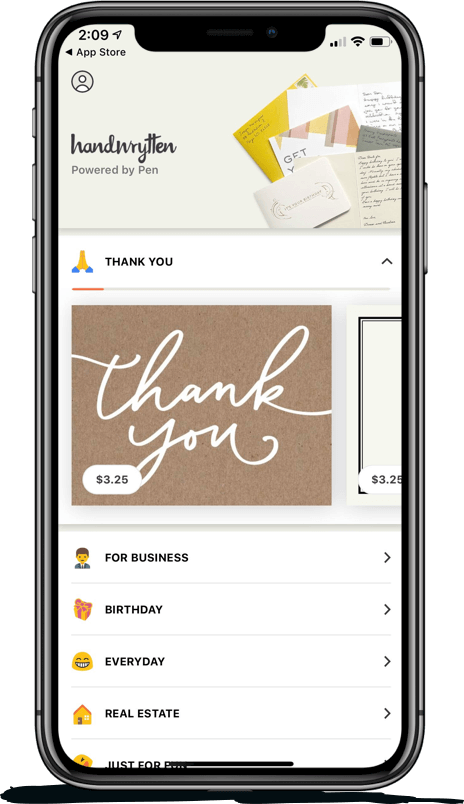
Scale your handwritten outreach, creating positive impressions and long lasting bond.
Sign Up Today!



Over 100 designs to choose from or design your own. Our online card customizer makes it simple.
Check Out Our Cards!




Thank you.
