



The leads that went quiet over the holidays aren’t gone. They just need a reason to come back — and a better channel to receive it on.
Revitalizing cold leads after the holidays is one of the most significant opportunities in the B2B sales calendar — and one of the most consistently mishandled. January arrives with the promise of Q1 momentum, fresh budgets, and renewed decision-making energy. But for most sales teams, the reality looks different: a pipeline full of prospects who went quiet in December and haven’t responded to the follow-up emails that started hitting their inboxes on January 2nd.
The problem isn’t that those leads have lost interest. It’s that everyone is reaching out to them the same way, at the same time, through the same channel. Post-holiday inboxes are flooded. Digital fatigue is at its seasonal peak. Key decision-makers are still catching up from time off, reprioritizing budgets, and filtering aggressively through the noise.
In that environment, revitalizing cold leads with another email sequence is like shouting louder in a crowded room. The answer isn’t more volume — it’s a different channel entirely. Here are four powerful ways a handwritten note cuts through the post-holiday noise and restarts conversations that matter.
Understanding the post-holiday dynamic is the first step to addressing it effectively. Leads don’t go cold in December because they’ve lost interest in what you’re selling. They go cold because:
Inbox overload. Digital messages pile up during the holiday period and don’t get processed — they get deleted in bulk when the recipient returns. Your carefully crafted pre-holiday email is often collateral damage in that cleanup.
Shifting priorities. January brings budget resets, strategic planning sessions, and a reshuffling of organizational priorities. Decisions that felt imminent in Q4 may now be on hold while leadership reassesses the landscape.
Decision-maker availability. Key stakeholders return from leave gradually and unevenly — meaning the person who needed to approve the next step may have been out longer than the person you were in contact with.
Digital fatigue. Post-holiday, prospects are acutely aware of how many automated follow-up sequences are hitting them simultaneously. Generic outreach doesn’t just underperform — it actively reinforces the perception that your brand is indistinguishable from the dozen other vendors doing the same thing.
Revitalizing cold leads in this environment requires something that breaks the digital pattern entirely. A handwritten note — physical, personal, and arriving in a context completely separate from the inbox — does exactly that.
Prospects who were mid-cycle before the holidays often go quiet not because the conversation ended, but because it got interrupted. The decision was pending. The timing wasn’t right. Someone went on leave. And by the time January arrived, the thread had been buried under weeks of accumulated emails and the implicit awkwardness of too much time having passed.
A handwritten note resets that dynamic without the friction of a digital follow-up. It arrives as something physical and personal — not another message in the sequence — and it positions you as thoughtful rather than persistent.
“Happy New Year — I know January is busy, but I’d love to reconnect whenever the timing works for your team. Looking forward to picking up where we left off.”
The tone is warm, low-pressure, and completely free of urgency. That’s intentional. Revitalizing cold leads at this stage isn’t about pushing for a decision — it’s about reopening the door in a way that makes walking through it feel easy.
For prospects who received digital outreach before the holidays but never responded, a handwritten note in January does something an email follow-up cannot: it makes you memorable before you’ve even had a conversation.
The implicit message a handwritten note sends — that you took the time to write something physical and personal rather than adding them to another sequence — differentiates you immediately from every other vendor competing for their attention in Q1. It signals intention, effort, and a genuine interest in the relationship rather than just the transaction.
“Wishing you a strong start to the year. I’d love to share some ideas that might support your Q1 objectives whenever you’re ready — no pressure, just a conversation.”
This approach is particularly effective for high-value accounts where breaking through the initial engagement barrier is the primary challenge. A handwritten note as a first physical touchpoint creates a foundation that digital outreach alone struggles to establish — and makes every subsequent communication more likely to be received favorably.
Account-based marketing campaigns targeting high-value accounts face a specific post-holiday challenge: these prospects receive more digital outreach than anyone, which means their digital fatigue is highest and their filtering is most aggressive. A handwritten note added to an ABM campaign changes the dynamic entirely.
Where digital touchpoints create awareness, a handwritten card creates presence — a physical object in the prospect’s environment that reinforces your brand in a way no notification can. When revitalizing cold leads within an ABM framework, the combination of personalization, timing, and physical presence consistently outperforms digital-only approaches.
The most effective ABM approach using handwritten outreach:
Lead with a personalized note referencing a previous conversation, a webinar they attended, a piece of content they engaged with, or a challenge specific to their industry. Specificity is what separates a note that feels written for them from one that feels sent to a list.
Include a subtle, helpful resource. A one-page industry insight, a relevant tip sheet, or a brief case study relevant to their specific situation adds value without turning the gesture into a sales pitch.
Follow up digitally within a week. The handwritten note creates the impression. The digital follow-up captures the conversion. Reference the card in your follow-up — it creates continuity and dramatically increases the likelihood of a response.
Not every cold lead is a post-holiday casualty. Some went quiet in Q2 or Q3 — conversations that showed genuine promise before stalling for reasons that had nothing to do with fit or interest. The new year is one of the most natural and least awkward moments to revisit those opportunities, and a handwritten note is the most effective vehicle for doing it.
The key is acknowledging the time that’s passed without over-explaining it. A simple, warm, forward-looking message positions the outreach as a genuine check-in rather than a last-ditch re-engagement attempt.
“I know the end of last year got busy for everyone. As Q1 gets underway I wanted to reach out and see how your team is approaching the year ahead — I’d love to explore ways we can support your goals if the timing is right.”
This message works because it does two things simultaneously: it acknowledges the gap without making it awkward, and it focuses entirely on the prospect’s situation rather than the sender’s pipeline. That combination — forward-looking, low-pressure, genuinely interested — is the foundation of effective post-holiday lead reactivation.
The effectiveness of handwritten outreach for revitalizing cold leads isn’t intuitive — it becomes obvious the moment you understand what the format communicates that digital outreach cannot.
Tangibility. A handwritten note exists in the physical world, separate from the digital clutter that’s overwhelming your prospects. It doesn’t compete with 150 other unread emails. It arrives alone, in its own context, and demands a moment of attention that digital messages have largely lost the ability to command.
Memorability. Prospects recall the senders of handwritten notes more easily and more positively than those of digital messages. In a Q1 landscape where every vendor is fighting for the same attention, being the one who sent a handwritten card is a meaningful differentiator.
Non-intrusiveness. A handwritten note creates connection without pressure. It doesn’t require an immediate response, doesn’t trigger a decision, and doesn’t come with the implicit expectation that the prospect needs to do something right now. That lack of pressure is, paradoxically, what makes it most effective at generating responses.
Scalability. Handwrytten’s robotic pen-and-ink technology makes it possible to send genuinely handwritten cards at any volume — each one produced with real pen on real paper, personalized for the individual recipient, with CRM integrations for Salesforce, HubSpot, Zapier, and other platforms that trigger outreach automatically based on lead status, inactivity period, or campaign schedule.
Send early in January. The first two weeks of the new year represent the highest-value window for post-holiday outreach. Prospects are settling back in, priorities are being set, and the field hasn’t yet been saturated with Q1 campaigns. Revitalizing cold leads in this window gives you first-mover advantage before the noise builds.
Keep messages short and specific. Three to four sentences of genuine, specific outreach will outperform a longer, more polished message every time. Reference something real — a previous conversation, a specific challenge, a shared connection — and let that specificity do the work.
Combine handwritten notes with gentle digital follow-ups. The strongest post-holiday re-engagement strategies are multi-channel. A handwritten note creates the impression; a brief, warm email referencing the card a week later captures the response. Neither works as well alone as they do together.
Use premium stationery. The physical quality of the card itself contributes to the impression it creates. A well-designed card on quality paper signals the same level of attention to detail you bring to your actual work — and that signal is received before a single word is read.
Include a soft call-to-action. A calendar link, a relevant resource, or a simple invitation to reconnect gives the prospect an easy next step without creating pressure. The ask should feel like a natural extension of the gesture — not the reason for it.
Can handwritten notes integrate with existing CRM workflows? Yes. Handwrytten integrates with Salesforce, HubSpot, Zapier, and other platforms — making it straightforward to trigger handwritten outreach automatically based on lead status, inactivity period, or campaign schedule. Revitalizing cold leads through automated handwritten touchpoints is one of the highest-ROI uses of the platform.
How quickly can cards be produced and sent? Most cards are produced and mailed within one to two business days, with domestic delivery in three to seven business days. Even during high-volume Q1 periods, Handwrytten maintains consistent turnaround times.
Can handwritten outreach scale for large sales teams? Yes. Handwrytten supports campaigns of any volume — from a handful of high-value accounts to hundreds of cold leads — while maintaining consistent handwriting quality and individual personalization across every card.
Is client data secure? Yes. Handwrytten is SOC 2 compliant, meeting enterprise-level security standards for the protection of client and prospect data.
Can international prospects receive handwritten cards? Yes. Handwrytten supports both domestic and international mailing — so your post-holiday re-engagement campaign can reach prospects regardless of location.
January is the most important month in the B2B sales calendar for lead re-engagement — and the most crowded. The sales teams that win Q1 pipeline momentum aren’t the ones sending the most emails. They’re the ones showing up differently, in a channel their competitors have largely ignored, with a gesture that feels personal in a season when nothing else does.
Revitalizing cold leads with handwritten outreach isn’t a supplementary tactic. In a post-holiday landscape defined by digital noise, it’s the most powerful re-engagement tool available.
Start Sending → handwrytten.com


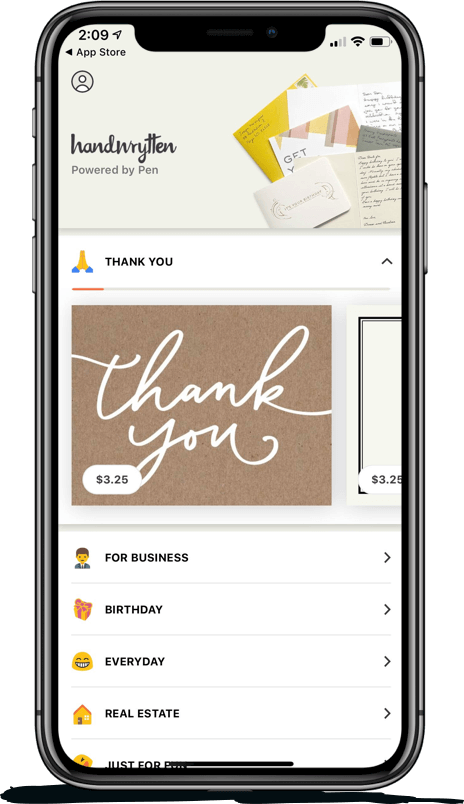
Scale your handwritten outreach, creating positive impressions and long lasting bond.
Sign Up Today!

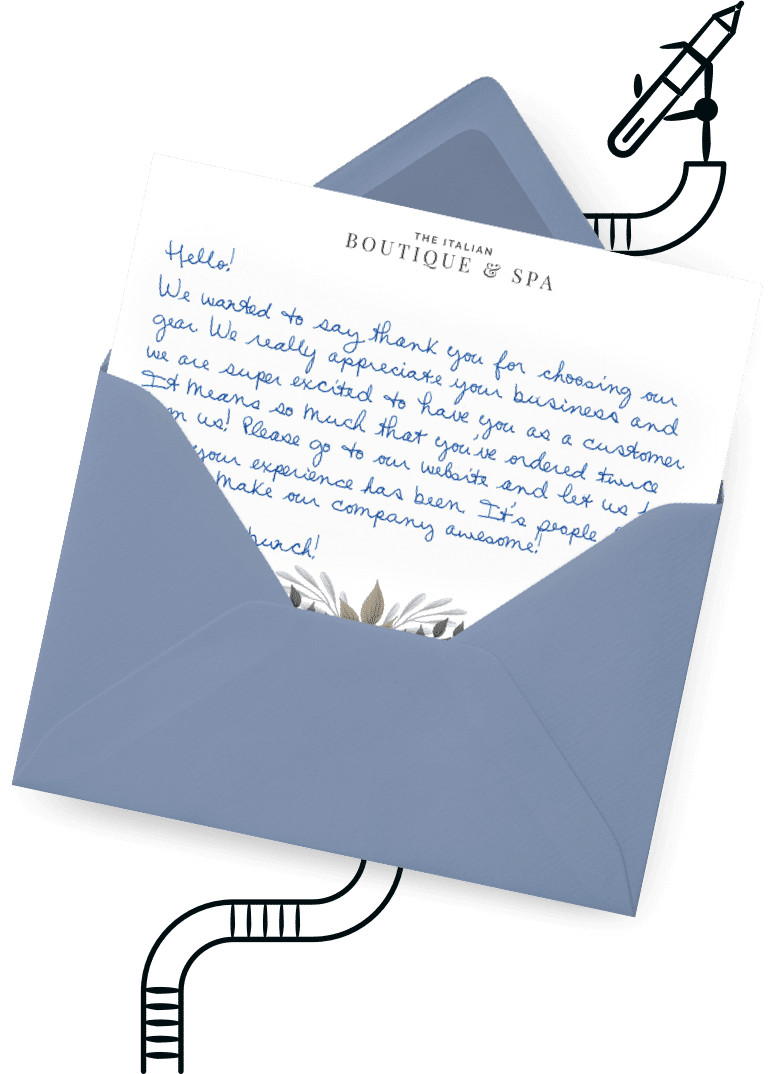

Over 100 designs to choose from or design your own. Our online card customizer makes it simple.
Check Out Our Cards!




Thank you.
