



Every account on your ABM target list is receiving the same emails, the same LinkedIn messages, and the same automated sequences. The ones that remember you are the ones you reached differently.
ABM handwritten outreach is the strategic differentiator that most account-based marketing programs have never seriously considered — and the one that produces the most disproportionate impression at every stage of the high-value account relationship. Account-based marketing is built on a specific premise: that the highest-value accounts deserve a fundamentally different quality of engagement than mass marketing can provide. The targeting is precise. The messaging is personalized. The investment per account is significant. And yet, almost universally, the outreach that delivers that personalized ABM engagement arrives through the same digital channels — the same email platform, the same LinkedIn automation, the same digital advertising ecosystem — that every other vendor targeting the same accounts is using simultaneously.
The result is an ABM program that is more targeted than mass marketing but less differentiated than it needs to be — because targeting precision alone doesn’t create the impression of individual human care that moves high-value accounts from awareness to consideration to committed partnership. ABM handwritten outreach creates that impression — arriving in a physical format that no digital channel reaches, at the exact moments in the account journey where individual acknowledgment matters most, communicating the quality of genuine individual investment that sustains the trust relationships that high-value B2B partnerships are built on.
This guide covers exactly how ABM handwritten outreach works at every stage of the account-based marketing funnel — the strategy, the specific touchpoints, the messages, and the implementation approach that transforms handwritten outreach from a one-off gesture into a systematic competitive advantage.
The case for ABM handwritten outreach starts with a clear-eyed assessment of what digital communication does well and where it falls short in high-value account contexts.
Digital ABM outreach is efficient, measurable, and scalable. It delivers information effectively. It reaches accounts consistently and at high frequency. And it fails, consistently, to create the individual impression of genuine human investment that moves decision-makers from professionally interested to personally committed. The decision-makers at high-value accounts receive dozens of targeted emails every day from vendors who have invested in ABM programs. They’ve developed sophisticated filtering for exactly the kind of personalized digital outreach that ABM programs deliver — because everyone is delivering it.
ABM handwritten outreach bypasses every element of that filtering. A genuine handwritten card arriving in a decision-maker’s physical mailbox — or delivered to their office — arrives in a channel that no competing vendor is using. It requires the recipient to open and physically handle it before any filtering mechanism can be applied. It communicates individual investment in a format that signals effort before the message is read. And it creates a physical object — something real, tangible, and worth keeping — in a relationship defined by digital ephemera.
The impression created by ABM handwritten outreach at a key account moment isn’t just stronger than a personalized email — it’s categorically different. It doesn’t add to the digital noise. It interrupts it entirely.
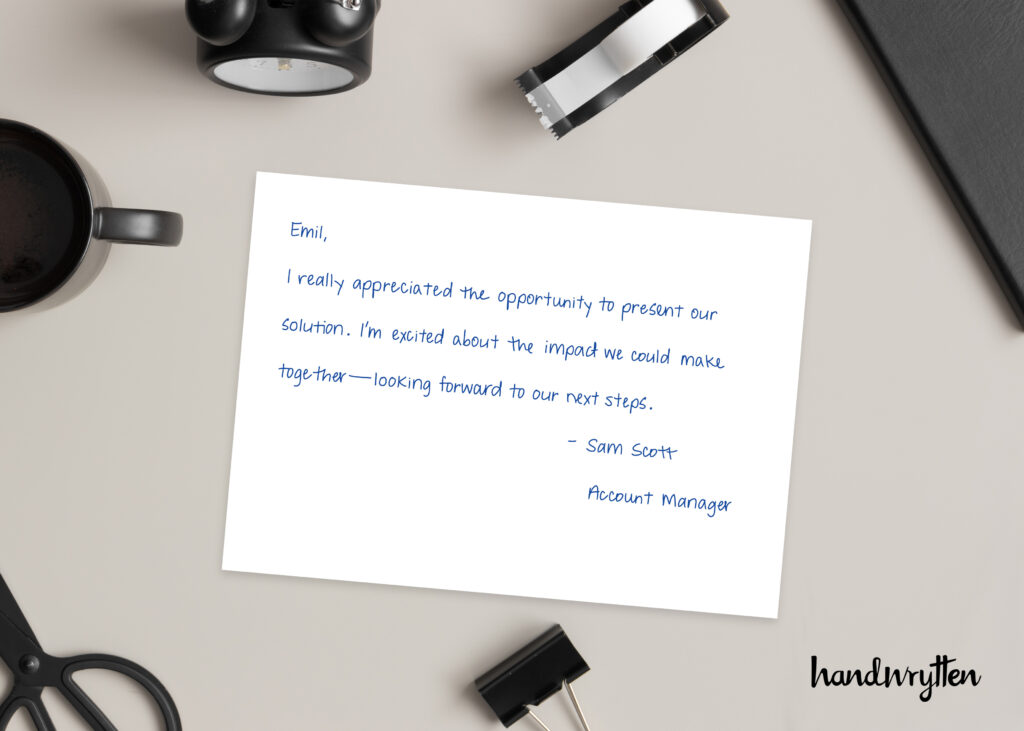
The most challenging moment in any ABM program is the first impression — the initial contact with a high-value account that needs to communicate enough individual relevance and genuine investment to earn the attention of a decision-maker who has learned to filter everything that looks like it came from a sales automation platform.
ABM handwritten outreach at the top of the funnel creates an entirely different first impression than digital outreach because the format itself is the message before any content is read. A genuine handwritten card arriving at a target account communicates three things simultaneously: that the sender knows this specific person well enough to have their physical address, that the sender invested in a format that signals individual effort, and that this relationship is worth something beyond a digital sequence. All of this is communicated before the envelope is opened.
Top-of-funnel ABM handwritten outreach use cases:
Post-event follow-up. Following a conference, trade show, or industry event where a connection was made — a handwritten follow-up arriving two to three days later, while the event is still fresh, creates the most memorable follow-up impression available. Every other attendee who connected with the same decision-maker sent a LinkedIn request. You sent a handwritten card.
Cold outreach to high-value target accounts. For accounts where no prior relationship exists, ABM handwritten outreach as the first touch — delivered to the decision-maker’s office with a genuine, specific, research-informed message — generates significantly higher response rates than cold email because the format signals the kind of individual investment that earns attention before the content does.
Content or insight delivery. A handwritten note accompanying a physical piece of highly relevant content — a research report, an industry analysis, a book relevant to the account’s specific challenges — creates a complete physical package that communicates genuine individual understanding of the account’s situation.
Sample top-of-funnel ABM handwritten outreach messages:
Post-event:
“[Name] — it was genuinely great to connect at [event]. Your perspective on [specific topic from conversation] has stayed with me — and I think there’s a conversation worth having about how [your company] might be relevant to what you’re building. I’ll follow up by email with some specifics, but I wanted to reach out in a format that felt more personal first.”
Cold outreach to target account:
“[Name] — I’ve been following [Company]’s work on [specific initiative] with genuine interest, and I wanted to reach out in a way that felt more considered than another email. I believe there’s a specific conversation worth having about [relevant value proposition]. I’ll keep it brief — would a 20-minute call be worth exploring?”
The middle of the ABM funnel is where deals stall — where prospect engagement slows, where competitive evaluation lengthens the consideration period, and where the vendor who maintains the most genuine individual presence through the buying process tends to win the relationship. ABM handwritten outreach at this stage doesn’t replace the digital nurture tracks and sales follow-up that move deals forward operationally — it adds the human layer that sustains the individual connection through the extended evaluation period.
Middle-of-funnel ABM handwritten outreach use cases:
Post-demo or post-presentation follow-up. A handwritten thank-you arriving within 48 hours of a significant presentation or product demonstration creates the personal impression that email follow-ups, however well-crafted, never achieve. It communicates that the meeting mattered enough to warrant something more than a digital response — and positions the relationship on a more human footing than competitive evaluation processes typically allow.
Re-engagement of stalled opportunities. For accounts that have gone quiet mid-evaluation — no response to follow-up emails, no activity in the CRM, the deal drifting toward no-decision — ABM handwritten outreach is the pattern interruption that reopens the conversation. A genuine handwritten card communicates continued individual investment in a format that no automated re-engagement sequence can replicate.
Buying committee outreach. In complex B2B sales involving multiple decision-makers, handwritten notes to individual buying committee members — acknowledging their specific role, their specific concerns, or a specific interaction — creates the individual impression that moves evaluation from committee-level consideration to individual advocacy.
Executive-to-executive outreach. A handwritten note from your organization’s CEO or senior leader to the target account’s C-suite communicates a level of individual investment in the relationship that no junior sales outreach achieves — and creates the executive-level relationship foundation that sustains partnerships through the inevitable operational challenges of implementation.
Sample middle-of-funnel ABM handwritten outreach messages:
Post-demo:
“[Name] — thank you for the time yesterday. The conversation about [specific challenge discussed] confirmed for me that there’s a genuinely compelling fit between what you’re trying to accomplish and what [Company] has built. I’m excited about the possibility of working together and wanted to say that directly rather than just through another follow-up email.”
Re-engagement:
“[Name] — I wanted to reach out personally rather than through another automated follow-up. Whatever has shifted in the timeline or the priorities, I remain genuinely interested in the conversation — and I wanted to make sure you knew that came from a real person who values the relationship we’ve been building, not from a sequence that fired because you went quiet.”
Executive-to-executive:
“[Name] — I wanted to reach out personally to express how much our team values the engagement we’ve had with [Company] over the past [timeframe]. The challenges you’re working to solve are ones we’ve thought deeply about — and I’m confident we can deliver meaningful impact. I’d welcome the chance to connect directly.”
The bottom-of-funnel moment — when a high-value account is close to decision — is when the individual impression created by ABM handwritten outreach throughout the process compounds into its most significant strategic value. Deals at this stage are often decided by the relationship quality rather than the product quality alone — and the vendor who has created the most individual, human relational impression through the evaluation process enters the final decision conversation with a meaningful advantage.
A final handwritten note from senior leadership arriving at the moment of decision — warm, specific, and communicating genuine enthusiasm for the partnership — creates the closing impression that sustains through the evaluation process and into the committed relationship.
Sample bottom-of-funnel ABM handwritten outreach messages:
Pre-close from account executive:
“[Name] — as we get close to a decision, I wanted to reach out personally to say how genuinely excited our team is about the possibility of this partnership. What you’re building at [Company] is something we believe in — and we’re committed to being the kind of partner that earns that trust every day. Whatever questions remain, I’m here.”
Pre-close from executive sponsor:
“[Name] — I wanted to reach out directly before we finalize next steps to say that our team’s commitment to [Company]’s success isn’t contingent on the contract being signed. It’s the reason we pursued this relationship from the beginning. I’m excited about what we’re going to build together.”
The most strategically valuable application of ABM handwritten outreach is the one that most organizations deprioritize after the deal closes — the systematic post-sale relationship investment that converts new accounts into long-term partners, upsell opportunities, and active referral sources.
Post-sale ABM handwritten outreach communicates something that new client relationships critically need: that the individual investment demonstrated throughout the sales process wasn’t a closing tactic — it’s the genuine quality of the partnership that follows the signature. That communication is what sustains the relationship through implementation challenges, through organizational changes, through the competitive approaches that every high-value account eventually receives.
Post-sale ABM handwritten outreach use cases:
New client welcome. A handwritten welcome card arriving within 48 hours of contract signing — from the account executive, the customer success manager, or a senior leader — creates the first impression of the post-sale relationship before any operational onboarding communication arrives.
Milestone acknowledgments. Handwritten cards acknowledging specific milestones in the client relationship — go-live, first results achieved, renewal anniversary, significant account growth — communicate ongoing investment in the partnership rather than sustained neglect punctuated by renewal conversations.
Referral acknowledgment. When a high-value account refers another organization — the highest expression of partnership satisfaction available — a genuine handwritten thank-you arriving within 24 hours communicates the appreciation that sustains ongoing referral behavior.
Renewal and expansion. A handwritten note arriving before a renewal conversation — warm, specific, and completely free of commercial pressure — positions the renewal as a relationship continuation rather than a commercial transaction and creates the goodwill that makes expansion conversations natural rather than resistant.
Sample post-sale ABM handwritten outreach messages:
New client welcome:
“Welcome — officially. Thank you for the trust you’ve placed in [Company] with this partnership. The commitment we made during the sales process is the same one we’re bringing to everything that follows. We’re genuinely excited about what we’re going to build together.”
Milestone acknowledgment:
“[Name] — [specific milestone] is worth acknowledging with more than an automated notification. What your team has accomplished in [timeframe] is genuinely impressive — and we’re proud to be part of the story. Here’s to everything the next phase brings.”
Referral thank-you:
“Thank you for referring [organization] to us — that kind of trust is something we take seriously and are committed to honoring through the quality of what we deliver to them. Your confidence in our partnership means more than I can adequately express in an email. Which is why I’m not using one.”
The most effective ABM handwritten outreach programs aren’t collections of individual thoughtful gestures — they’re systematic programs that ensure every high-value account receives precisely timed, precisely personalized handwritten outreach at every key moment in the account journey without any manual initiation from the account team.
Account tier segmentation. Not every account warrants the same investment in handwritten outreach — and the most efficient ABM handwritten outreach programs tier their approach by account value, matching the frequency and format of handwritten touches to the strategic importance of each account relationship.
Trigger mapping. Identify every key moment in the account journey where a handwritten card would create a stronger impression than digital outreach — event attendance, demo completion, deal stage advancement, contract signing, milestone achievement, renewal approach — and map each to a specific CRM trigger that initiates the card automatically.
Message template development. Develop message frameworks for each trigger category — specific enough to communicate genuine individual attention, flexible enough to be personalized with account-specific details through dynamic fields. The template provides the structure. The account intelligence provides the individual quality.
CRM integration through Handwrytten. Handwrytten’s native integrations with Salesforce, HubSpot, and other platforms allow ABM handwritten outreach to be triggered automatically at every mapped moment — each card produced in genuine pen-and-ink handwriting, personalized for the individual recipient, and mailed without any manual effort from the account team.
Executive signature configuration. For high-value account outreach, Handwrytten’s signature recreation service allows executive signatures to be used on any card — communicating the seniority of individual investment that high-value account relationships deserve.
ABM handwritten outreach produces measurable outcomes — and measuring them is what builds the business case for sustained program investment.
Response rate tracking. QR codes, unique URLs, and personalized landing pages included in handwritten cards create direct attribution for physical outreach engagement — allowing the ABM team to track which accounts engaged with which physical touchpoints.
Deal progression correlation. Comparing deal progression speed and close rates between accounts that received ABM handwritten outreach and those that received only digital outreach provides the most compelling business case for the program — expressed in revenue terms and deal cycle time.
Renewal and expansion rates. Tracking renewal rates and expansion revenue among accounts that received systematic post-sale handwritten outreach against those that didn’t reveals the loyalty impact of the program in the terms that matter most to revenue leadership.
Referral attribution. Tracking new account referrals from accounts that received ABM handwritten outreach provides the acquisition efficiency argument for the program — demonstrating that the investment in physical outreach generates new pipeline without proportional acquisition cost.
How does ABM handwritten outreach integrate with existing ABM technology stacks?
Handwrytten integrates natively with Salesforce, HubSpot, Zapier, and other platforms central to most ABM technology stacks — allowing handwritten outreach to be triggered automatically by deal stage changes, account events, CRM milestones, and marketing automation workflows. Cards are produced and mailed without any manual effort from the account team.
Can ABM handwritten outreach be personalized with account-specific details at scale?
Yes. Handwrytten’s dynamic personalization system pulls any data point from CRM account records — contact names, company names, specific deal details, milestone dates — into each card automatically. Every card reads as individually written because the personalization is genuine, even across large target account lists.
What is the optimal frequency for ABM handwritten outreach in a target account program?
Three to five handwritten touchpoints per account per year represents the optimal frequency for most ABM programs — enough to establish a pattern of consistent individual acknowledgment without creating a volume that feels overwhelming. Key moments to prioritize: first touch or post-event follow-up, post-demo or proposal follow-up, deal close, first milestone achievement, and renewal approach.
Can executive signatures be included on ABM handwritten outreach cards?
Yes. Handwrytten’s signature recreation service produces executive signatures for use on any card — created from a completed handwriting packet and used exclusively on the organization’s account. Cards signed by the CEO or senior leadership communicate the seniority of investment that high-value account outreach deserves.
How do you measure the ROI of ABM handwritten outreach?
Through response rate tracking using QR codes and unique URLs, deal progression speed comparison between accounts that received handwritten outreach and those that didn’t, renewal and expansion rate analysis for post-sale handwritten programs, and referral attribution from accounts that received systematic handwritten outreach throughout the relationship.
ABM handwritten outreach doesn’t compete with digital ABM programs — it completes them. The digital channels handle the information, the frequency, and the operational nurture that moves accounts through the funnel. The handwritten outreach handles the individual impression, the human connection, and the genuine relational investment that makes high-value accounts choose one vendor over another when the products are comparable and the price is competitive.
That’s not a soft benefit. That’s the mechanism that closes enterprise deals, sustains long-term partnerships, and generates the referrals that make a high-performing ABM program genuinely self-sustaining.
Start Sending → handwrytten.com
Editor’s note: This article was revised in July 2026


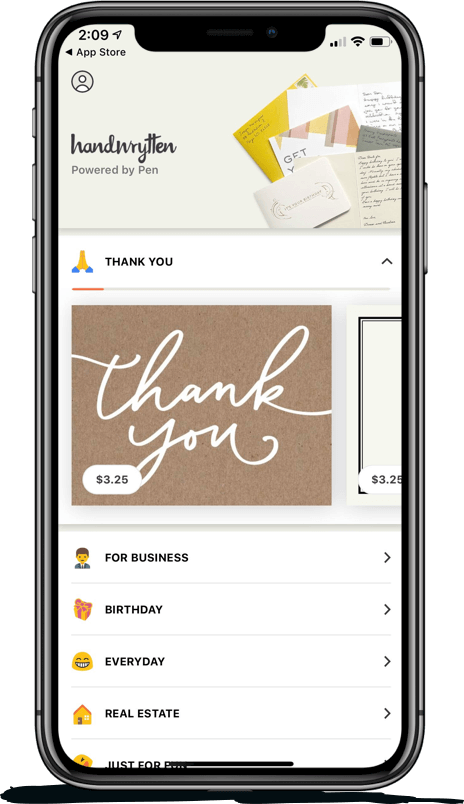
Scale your handwritten outreach, creating positive impressions and long lasting bond.
Sign Up Today!

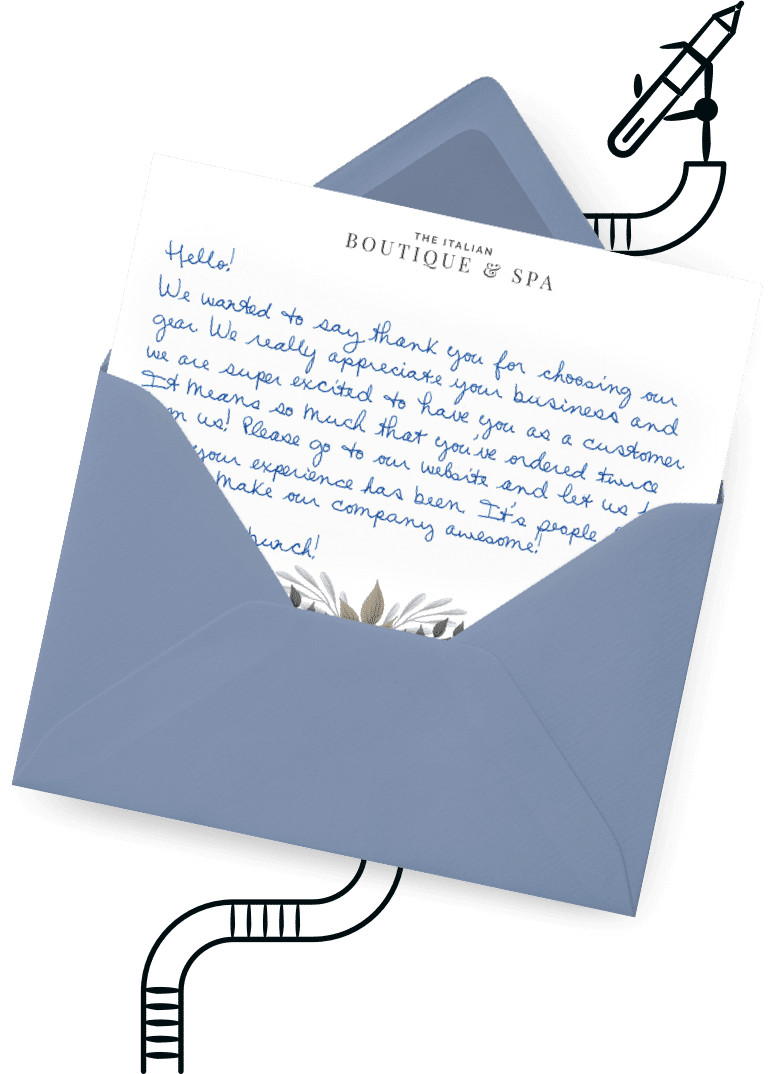

Over 100 designs to choose from or design your own. Our online card customizer makes it simple.
Check Out Our Cards!




Thank you.
