



Physical mail gets opened. QR codes tell you what happens next.
The Handwrytten QR code feature is a built-in tool that allows businesses to add unique, trackable QR codes to any handwritten card — bridging the gap between physical mail and digital engagement by creating a measurable connection between the card a recipient holds in their hands and the online action they take after reading it. QR codes on handwritten cards solve the measurement problem that has historically made physical outreach harder to justify than digital alternatives: not the impression quality, which physical handwritten cards consistently outperform digital at, but the attribution — the ability to know specifically who engaged, when they engaged, and what they did next.
Handwrytten’s QR code feature changes that equation entirely. Every card gets a unique code. Every scan generates a real-time notification. Every campaign produces trackable engagement data that lives in the sender’s Handwrytten account and informs every subsequent outreach decision. The result is physical handwritten outreach that delivers both the impression quality that digital alternatives can’t match and the measurement capability that modern marketing programs require.
Quick Answer: The Handwrytten QR code feature lets you add a unique, trackable QR code to any handwritten card at no additional cost. When a recipient scans the code, you receive an instant notification and can view real-time engagement data in your Handwrytten account. QR codes link to any URL — a website, landing page, booking calendar, review page, or any other digital destination.
The Handwrytten QR code feature adds a unique scannable code to any card that links to any URL the sender specifies — a website, a landing page, an appointment booking calendar, a survey, a video, a donation page, or any other digital destination relevant to the campaign.
What makes the Handwrytten QR code feature different from a standard QR code is the tracking layer underneath it. Every QR code generated through Handwrytten has a unique identifier — which means when a recipient scans the code, the sender receives an immediate notification and the scan is recorded in their Handwrytten account. Over time, this creates a complete engagement picture: who scanned, when they scanned, and — through the digital destination the code links to — what they did after scanning.
This tracking capability transforms handwritten cards from relationship gestures into measurable marketing assets — without removing any of the genuine individual warmth that makes handwritten outreach effective in the first place.
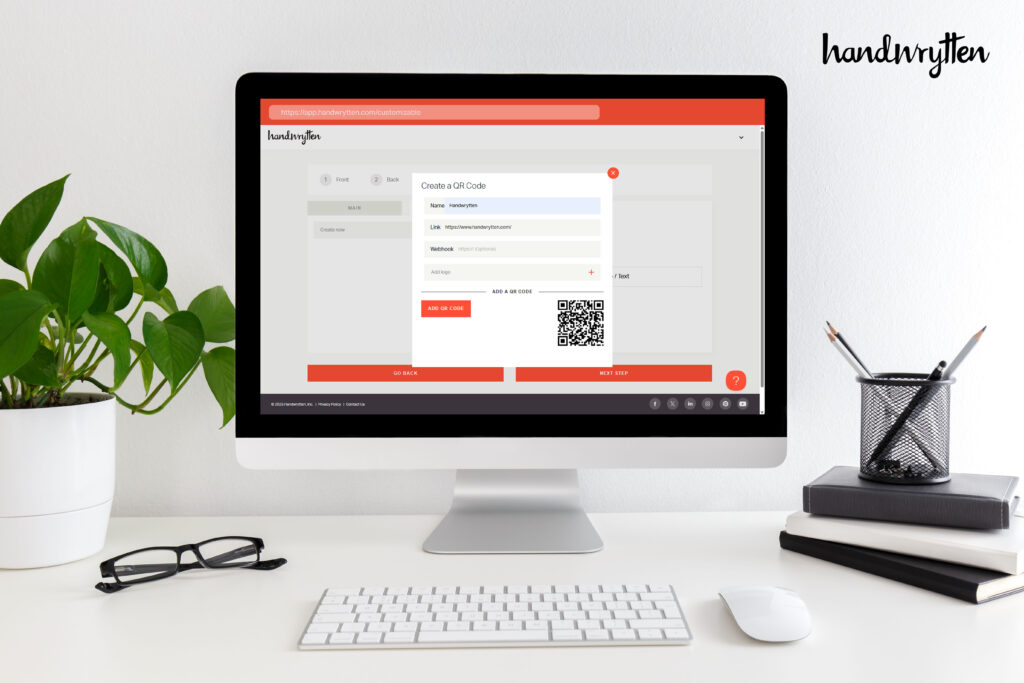
Adding a QR code through the Handwrytten QR code feature takes less than two minutes and requires no technical expertise.
Step 1 — Select your card. Choose any card from Handwrytten’s catalog or upload custom branded stationery. The QR code feature is available for any card format.
Step 2 — Select the QR code option. During the card customization process, choose the QR CODE feature from the available customization options.
Step 3 — Create your QR code. Click “Create now,” enter a name for the code — something that identifies the campaign or recipient segment — and paste the destination URL. The URL must begin with “https://” for the code to generate correctly.
Step 4 — Add the code to your card. Click “ADD QR CODE” and Handwrytten generates and places the code on the card automatically — positioned within the design to ensure visibility without interfering with the handwritten message.
Step 5 — Complete and submit your order. The QR code is included at no additional charge. Once the card is mailed, the tracking is live — every scan generates a real-time notification to the sender’s account.
One important note: QR codes cannot be changed after a card has been printed and mailed. Always verify the destination URL before finalizing any order.
QR codes on handwritten cards create a seamless bridge from physical mail to any digital destination — allowing a handwritten card campaign to generate measurable website traffic, landing page visits, and digital conversions that can be tracked alongside every other digital marketing channel.
A real estate agent who sends a neighborhood a handwritten card with a QR code linking to a neighborhood market report landing page generates both the individual impression of the handwritten card and the measurable digital engagement of the landing page visit — creating a complete outreach moment with both relationship and attribution value.
Best for: Real estate farm outreach, product launches, seasonal promotions, content marketing campaigns, and any outreach where driving specific digital traffic is a campaign objective.
A QR code linking directly to a booking calendar removes every friction point between the positive impression of a handwritten card and the conversion of a scheduled appointment — making it the highest-conversion use case available for QR codes on handwritten cards in service businesses.
A dental practice that sends a patient reactivation card with a QR code linking directly to their online scheduling system converts the warm impression of the handwritten card into booked appointments without any phone tag or follow-up required. A financial advisor who sends a client check-in card with a booking QR code creates the complete outreach-to-meeting conversion in a single physical touchpoint.
Best for: Healthcare practices, financial advisors, real estate agents, salons and spas, and any service business where appointment scheduling is the primary conversion goal.
QR codes on handwritten cards generate significantly higher review response rates than email review requests — because the physical format creates the goodwill that motivates the action and the QR code makes the action frictionless.
A handwritten post-purchase thank-you card with a QR code linking directly to a Google or Yelp review page removes every barrier between the customer’s positive feeling about the purchase and the public expression of that positive feeling as a review. Research consistently shows that customers who feel genuinely appreciated are more likely to leave reviews — and no format creates the felt sense of genuine appreciation more reliably than a handwritten card.
Best for: E-commerce brands, restaurants, service businesses, healthcare practices, and any organization where online review volume and recency directly affect new customer acquisition.
The Handwrytten QR code feature makes this measurable — tracking which card recipients scanned the review link and correlating card campaigns with review activity.
The most strategically significant capability of QR codes on handwritten cards is the real-time engagement tracking that transforms physical mail from an unmeasurable brand investment into a trackable campaign channel.
Every scan of a Handwrytten QR code generates a real-time notification and is recorded in the sender’s account — creating engagement data that answers the questions physical mail historically couldn’t: Who engaged? When did they engage? Which segments showed the highest scan rates? Which campaigns produced the most measurable digital activity?
This data allows organizations to evaluate the ROI of handwritten card campaigns with the same specificity they apply to email campaigns, digital advertising, and other trackable outreach channels — building the business case for sustained physical outreach investment based on measured rather than assumed results.
Best for: Marketing teams running campaigns that need to demonstrate measurable ROI, organizations evaluating the effectiveness of different outreach segments, and any campaign where understanding recipient engagement patterns informs future strategy.
A QR code linking to an exclusive offer, a personalized discount page, or early access content creates a physical delivery mechanism for digital promotional content — giving the promotional offer the impression quality of a handwritten card while maintaining the measurability of a digital campaign.
The customer who receives a handwritten loyalty appreciation card with a QR code linking to an exclusive offer experiences the promotion as a genuine gift rather than a promotional email — because the handwritten card format communicates individual care that transforms the commercial offer into a personal gesture. Redemption rates for offers delivered through handwritten cards with QR codes consistently outperform the same offers delivered through email sequences because the format changes how the offer is received.
Best for: Retail and e-commerce brands, loyalty programs, seasonal campaigns, and any promotion where the format of delivery affects both the impression created and the conversion rate achieved.
Nonprofits that include QR codes on handwritten donor acknowledgment cards create a direct, frictionless path from the positive feeling of genuine appreciation to the next giving action — making the Handwrytten QR code feature one of the highest-return tools available in nonprofit donor stewardship.
A handwritten donor thank-you card with a QR code linking to an impact story page, a volunteer sign-up form, or the next campaign donation page extends the gratitude gesture into a complete engagement moment — sustaining the donor relationship between formal campaign communications and creating measurable mid-cycle engagement that sustains giving behavior.
Best for: Nonprofit organizations, educational institutions, Greek chapter alumni giving programs, and any cause-based organization where donor engagement between campaign windows sustains giving rates.
QR codes on handwritten cards can be paired with CRM integrations to trigger automatic follow-up sequences when recipients scan their codes — creating a complete physical-to-digital-to-follow-up workflow that runs automatically without any manual initiation from the sender’s team.
A scan of the QR code in a sales prospect’s handwritten outreach card can trigger an automatic CRM notification to the account owner, initiate a follow-up email sequence, update the prospect’s engagement score, and move them to the next stage of the pipeline — all without any manual action from the sales team. The handwritten card creates the impression. The QR code creates the conversion signal. The CRM integration creates the automated follow-up that sustains the momentum.
Best for: B2B sales organizations, ABM programs, lead nurturing campaigns, and any outreach program where timely follow-up after engagement signals is critical to conversion.
QR codes in email campaigns link to digital destinations and generate trackable engagement — but they operate in the most competitive attention environment available. Email inboxes are managed environments where recipients process messages efficiently and QR codes in promotional emails rarely generate the same quality of engaged attention as QR codes in physical handwritten cards.
QR codes on handwritten cards operate differently for three specific reasons:
The physical card commands undivided attention. A recipient who opens a handwritten card is fully present with the physical object — not simultaneously managing an inbox, processing notifications, or filtering promotional content. The QR code in a handwritten card receives the same quality of undivided attention as the card itself.
The handwritten format creates goodwill that motivates action. A recipient who has just read a genuine handwritten note is in a state of positive relational warmth that makes them significantly more likely to take the action the QR code invites than a recipient who has just processed a promotional email. The format creates the emotional state that drives the scan.
The physical-to-digital transition creates novelty. Scanning a QR code in a physical handwritten card is an inherently more engaging action than clicking a link in an email — because the physical-to-digital transition creates a moment of discovery that email links never produce. Recipients who scan QR codes in handwritten cards are actively choosing engagement in a way that email link clicks rarely represent.
Real estate: Cards with QR codes linking to market reports, listing pages, or home valuation tools — creating measurable digital engagement from physical farm outreach.
Financial services: Client check-in cards with QR codes linking to appointment booking, financial planning resources, or market commentary — creating complete physical-to-digital client engagement moments.
Healthcare: Patient reactivation and wellness cards with QR codes linking to appointment scheduling, patient portal access, or health resource pages — converting handwritten patient outreach into booked appointments.
E-commerce and retail: Post-purchase thank-you cards with QR codes linking to review pages, loyalty program enrollment, or exclusive offers — creating complete post-purchase engagement sequences from physical thank-you outreach.
Nonprofits: Donor acknowledgment cards with QR codes linking to impact stories, volunteer registration, or next campaign giving pages — sustaining donor engagement between formal campaign windows.
B2B sales: Prospect outreach cards with QR codes linking to case studies, demo booking pages, or personalized landing pages — creating measurable engagement signals from physical ABM outreach.
Greek life: Alumni outreach cards with QR codes linking to chapter websites, alumni portals, giving pages, or event registration — bridging physical chapter outreach to digital alumni engagement.
What is the Handwrytten QR code feature and how does it work?
The Handwrytten QR code feature is a built-in tool that generates a unique, trackable QR code for any handwritten card. The code links to any URL the sender specifies. When a recipient scans the code with their smartphone camera — no special app required — the sender receives an immediate notification and the scan is recorded in their Handwrytten account for real-time reporting and campaign analysis.
Does adding a QR code to a Handwrytten card cost extra?
No — the Handwrytten QR code feature is included as part of Handwrytten’s standard customization options at no additional charge. QR codes can be added to any card in the catalog or any custom branded stationery without affecting the per-card price.
Where is the QR code placed on the card?
The QR code is positioned within the card design to ensure visibility without interfering with the handwritten message. Handwrytten handles placement automatically when the QR code is generated through the card customizer.
Can I track QR code scans over time?
Yes — the Handwrytten QR code feature provides real-time reporting in the sender’s account, allowing scan activity to be monitored, trends to be analyzed, and campaign performance to be evaluated over any time period. This data is accessible through the Handwrytten dashboard at any time.
Can I change the QR code URL after the card has been mailed?
No — once a card has been printed and mailed, the QR code cannot be changed. Always verify the destination URL before finalizing any order. For campaigns where the destination URL may change, configure the QR code to link to a redirect URL that can be updated without changing the code itself.
Does the recipient need a special app to scan the QR code?
No — any modern smartphone camera can scan a Handwrytten QR code without any special app. The camera automatically recognizes the code and opens the linked URL in the device’s default browser.
Can QR codes be used in automated Handwrytten campaigns?
Yes — QR codes can be included in any Handwrytten campaign, including automated birthday campaigns, anniversary outreach, CRM-triggered sends, and bulk campaign sends. Every card in an automated campaign can carry the same QR code or different codes for different recipient segments.
How does the Handwrytten QR code feature integrate with CRM platforms?
Handwrytten integrates natively with Salesforce, HubSpot, Zapier, and other CRM platforms — allowing QR code scan events to trigger automated follow-up sequences, update engagement records, and initiate next-stage workflows in existing CRM systems. Contact sales@handwrytten.com to discuss specific CRM integration configurations.
What types of URLs can a Handwrytten QR code link to?
Any URL beginning with “https://” — including website pages, landing pages, appointment booking calendars, survey forms, review pages, video content, donation pages, loyalty program enrollment, social media profiles, and any other digital destination relevant to the campaign.
The Handwrytten QR code feature solves the measurement gap that has historically made physical handwritten outreach harder to justify than digital alternatives — without changing any of the impression qualities that make handwritten outreach worth justifying in the first place. Physical mail gets opened. Handwritten cards get read. QR codes tell you what happens next — and give you the data to make every subsequent card more effective than the last.
The result is handwritten outreach that delivers both what digital alternatives can’t — genuine individual impression — and what physical alternatives traditionally couldn’t — real-time measurable engagement.
Start Sending → handwrytten.com
Editor’s note: This article was revised in August 2026


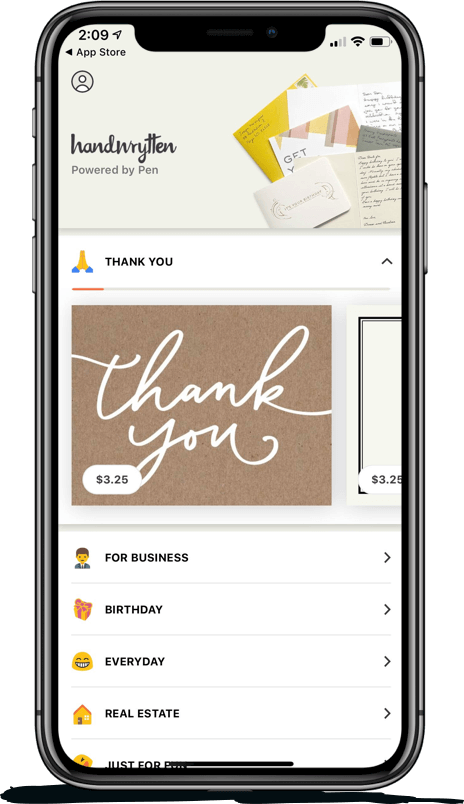
Scale your handwritten outreach, creating positive impressions and long lasting bond.
Sign Up Today!



Over 100 designs to choose from or design your own. Our online card customizer makes it simple.
Check Out Our Cards!




Thank you.
