



Email gets ignored. Handwritten mail gets remembered. Here’s why that difference matters for your bottom line.
Handwritten mail drives results in a way that digital marketing channels increasingly struggle to match — and the numbers are starting to reflect it. While most businesses continue pouring budget into email campaigns, paid social, and retargeting ads, engagement rates across those channels keep declining. Inboxes are saturated. Digital ads are scrolled past. The more channels fill up, the harder it becomes to break through.
Handwritten mail works precisely because it exists outside that noise. It arrives physically, demands a moment of genuine attention, and communicates something no algorithm can replicate: that a real person took the time to reach out. That perception changes how the message is received — and ultimately, how the recipient responds.
Understanding exactly how handwritten mail drives results is what separates businesses that treat it as an occasional gesture from those that build it into a measurable, scalable marketing channel. Here are five ways it delivers.
The average professional receives well over 100 emails per day. The average household receives fewer than two pieces of personal mail per week. That asymmetry is your opportunity.
A handwritten card doesn’t compete with a cluttered inbox — it arrives in an entirely different context, one where the recipient is far more likely to slow down, read carefully, and retain what they’ve read. The physical nature of the medium signals intentionality, and intentionality signals value.
This is one of the clearest ways handwritten mail drives results from the very first touchpoint. Higher open rates, longer read times, and stronger brand recall than digital equivalents — the medium itself is part of the message.
Put it to work: Use handwritten cards at high-stakes moments — first outreach to a cold prospect, post-meeting follow-ups, or re-engagement campaigns for dormant leads — where capturing attention is the single most important objective.
One of the most persistent misconceptions about direct mail is that it can’t be measured. QR codes and personalized URLs (PURLs) put that concern to rest entirely.
When a handwritten card includes a QR code linking to a personalized landing page, every scan becomes a data point. You know who engaged, when they engaged, and what action they took next. That data feeds directly into your existing marketing funnel — transforming a physical touchpoint into a measurable driver of digital conversions.
PURLs take this a step further by giving each recipient a unique URL tied to their name or account, creating a seamless bridge between the offline card and an online experience that feels built specifically for them. This is precisely how handwritten mail drives results beyond the mailbox and into your conversion funnel.
Put it to work: Include a single, clear call-to-action on every card — a QR code linking to a landing page, a PURL tied to a personalized offer, or a unique discount code. Tell recipients exactly what to do next and make it as easy as possible to do it.
The most common objection to handwritten mail is the obvious one: it doesn’t scale. Writing individual cards to hundreds or thousands of recipients isn’t feasible for most teams.
Automation solves that problem without compromising the quality of the output. Handwrytten’s platform uses robotic pen-and-ink technology to produce genuinely handwritten cards — not printed simulations — triggered automatically by CRM events, customer actions, or campaign schedules. Dynamic fields pull in recipient names, milestones, or personalized messages, so each card feels individual even when the process runs at scale.
The result is a channel that combines the emotional impact of handwriting with the operational efficiency of automation — and a scalable system through which handwritten mail drives results consistently, without adding workload to your team.
Put it to work: Identify the CRM triggers that matter most in your customer journey — a new signup, a completed purchase, a contract renewal, a period of inactivity — and build automated handwritten touchpoints around them. Set it up once and let the system maintain the relationship.
Handwritten mail drives results across a wide range of industries and use cases — not just in one vertical or one type of campaign:
B2B sales: Follow-up cards sent after meetings or demos drive 30–40% higher engagement rates than email follow-ups alone, turning warm conversations into active opportunities.
E-commerce: Thank-you cards with personalized URLs or discount codes increase repeat purchase rates by up to 25%, converting one-time buyers into loyal customers.
Nonprofits: Personalized donor cards drive higher online giving rates and stronger event participation than digital appeals sent to the same audience.
Financial services: Onboarding cards with links to tutorials, resources, or account setup guides help new clients get started faster and reduce early churn.
The common thread is consistent: a physical, personalized touchpoint creates stronger engagement than digital outreach alone — and when paired with a clear next step, that engagement converts.
Put it to work: Identify the single highest-value moment in your customer journey where engagement tends to drop off, and test a handwritten touchpoint there before expanding to the full funnel.
Engagement metrics matter, but loyalty is what drives long-term business growth. And loyalty — the kind that generates referrals, repeat purchases, and strong retention — is built through emotional connection, not ad frequency.
This is perhaps the most underappreciated way handwritten mail drives results. It signals that your business sees customers as individuals, not data points. That perception accumulates over time. Clients who receive consistent, thoughtful outreach don’t just stay longer — they advocate more actively, refer more readily, and forgive mistakes more generously.
When handwritten mail is integrated into a broader marketing strategy — paired with email sequences, retargeting campaigns, and CRM-triggered follow-ups — it creates a cohesive experience that reinforces your brand at every touchpoint, online and off.
Put it to work: Don’t treat handwritten mail as a one-off campaign. Build it into your ongoing customer communication strategy as a consistent channel, and measure its impact on retention and referral rates over time — not just immediate conversions.
Personalize every card. Include the recipient’s name at minimum — and whenever possible, reference a specific milestone, interaction, or detail that makes the message feel written for them specifically.
Lead with one clear call-to-action. A card that asks recipients to do three things will have them do none. Pick one next step and make it impossible to miss.
Integrate offline and online. A handwritten card that drives recipients to a personalized landing page, a retargeting sequence, or a follow-up email creates a more cohesive experience and a more measurable outcome.
Test and optimize. Use QR codes and PURLs to run A/B tests on messaging, placement, and timing. Handwritten mail is measurable — treat it like any other performance channel.
Does handwritten mail work for both B2B and B2C campaigns? Yes. The application differs — B2B tends to focus on relationship-building and follow-up, while B2C leans toward retention and repeat purchase — but the underlying mechanics are the same. Both audiences respond to personal, physical outreach more strongly than to digital messages alone.
How do I track the results of a handwritten mail campaign? QR codes, personalized URLs, and unique discount codes all make handwritten mail fully trackable. Each scan or URL visit ties back to a specific recipient, giving you engagement data that feeds directly into your analytics.
Can handwritten mail campaigns be automated? Yes. Handwrytten’s platform allows you to trigger cards automatically based on CRM events, dynamically insert personalized content, and scale to any volume — all while maintaining the genuine handwritten quality that makes the medium effective.
Will handwritten mail actually improve my response rates? Consistently, yes. Handwritten cards outperform email in open rates, read time, and response rates across virtually every industry and use case. The physical format commands attention in a way digital messages have largely lost the ability to.
How do I integrate handwritten mail into an existing marketing strategy? Start by identifying the highest-value touchpoints in your current funnel — the moments where engagement drops off or relationships go cold — and test handwritten outreach there first. From there, expand to a broader integration that connects physical cards with your digital campaigns, CRM workflows, and follow-up sequences.
Handwritten mail isn’t nostalgic — it’s strategic. In a marketing landscape where digital channels are increasingly crowded and increasingly ignored, a physical, personal, measurable touchpoint stands out for exactly the right reasons.
Start Sending → handwrytten.com


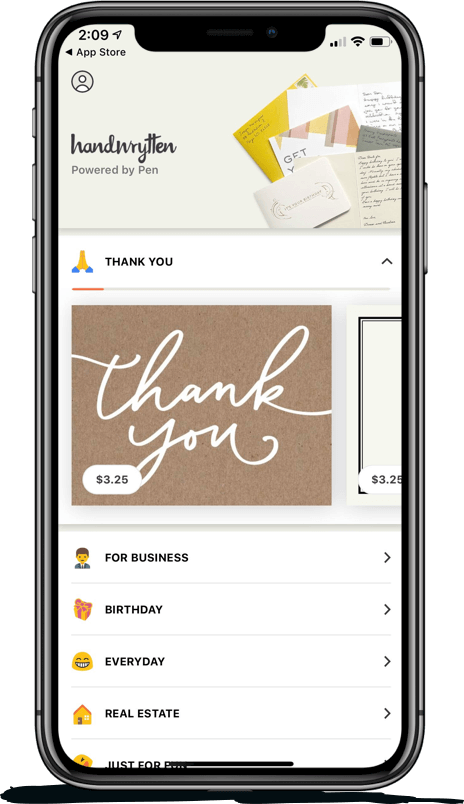
Scale your handwritten outreach, creating positive impressions and long lasting bond.
Sign Up Today!

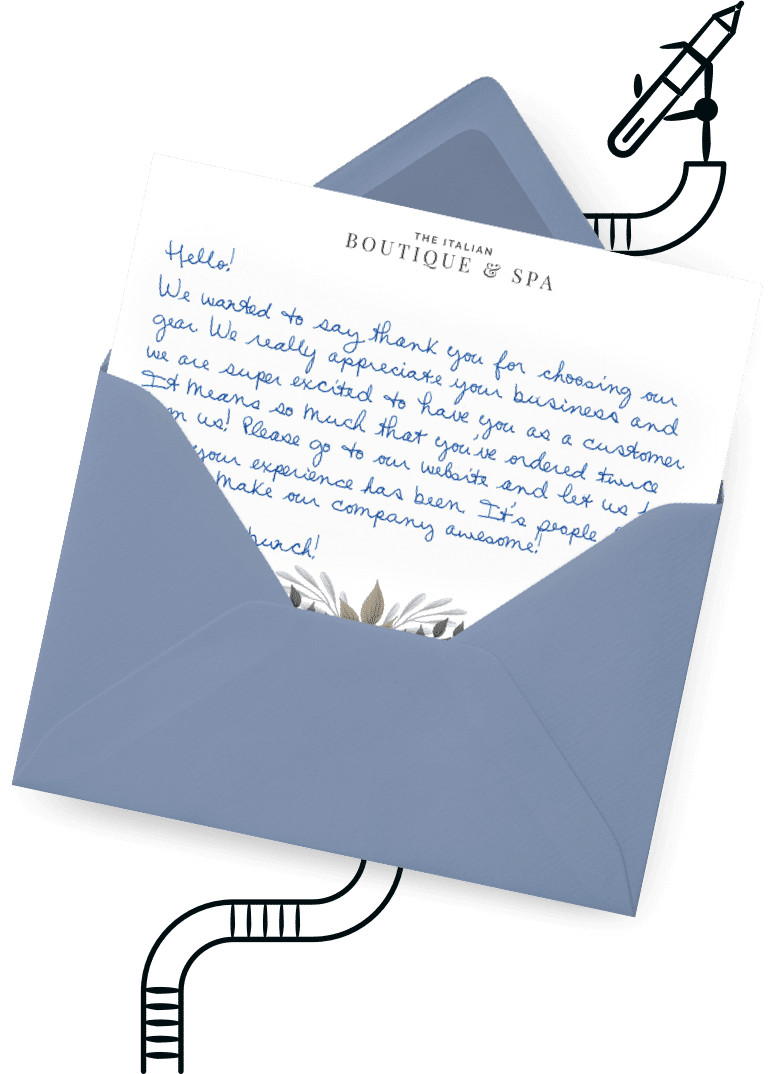

Over 100 designs to choose from or design your own. Our online card customizer makes it simple.
Check Out Our Cards!




Thank you.
