


Most SaaS customers who cancel never fully gave the product a chance. The onboarding experience is why.
To reduce SaaS churn, most companies look in the expected places: better product tutorials, more comprehensive knowledge bases, faster support response times, optimized email sequences. All of these matter. None of them address the real reason early churn happens at the rate it does.
The first 90 days of a SaaS subscription aren’t primarily a product adoption problem. They’re a relationship problem. New customers are making a continuous, largely unconscious evaluation of whether this platform — and the company behind it — is worth their ongoing investment. And the inputs to that evaluation aren’t just functional. They’re emotional. Does this company seem invested in my success? Do real people work here who care whether I get value from this? Am I a customer or a number?
When the answer to those questions is ambiguous — when every interaction feels automated, templated, and indistinguishable from the onboarding experience of every other SaaS platform — the bar for cancellation drops. It’s not that the product failed. It’s that the relationship never started.
The most effective way to reduce SaaS churn in the first 90 days isn’t a better drip campaign. It’s a moment of genuine human connection in a customer journey that typically contains none.
Early churn is the most expensive problem in SaaS — not just because of the lost revenue, but because of what it represents. A customer who cancels in month two didn’t fail to find value. They failed to find it fast enough, or they didn’t feel supported enough during the window when adoption is hardest and habits are still forming.
The factors that drive early cancellation are well-documented: difficulty implementing the product, uncertainty about whether it solves the actual problem, and — most commonly — a feeling of being unsupported during a period when support matters most. The third factor is the one that’s most directly addressable and most frequently ignored.
Most SaaS companies invest heavily in the first two — better UX, clearer tutorials, faster time-to-value — while treating the support experience as an automated email sequence problem. The customer receives a welcome email. Then a “getting started” email. Then a “have you tried this feature?” email. All automated. All looking functionally identical to the onboarding sequences from the last three platforms they tried.
To reduce SaaS churn effectively, you need something that breaks this pattern — something that arrives outside the inbox, outside the product, and outside the context the customer has already categorized as automated vendor communication.
A handwritten card arriving in a new customer’s mailbox within the first week of onboarding does something that no email sequence can replicate: it creates a moment of genuine surprise that reframes the entire customer relationship.
The customer’s first response isn’t to evaluate the message. It’s to feel something — curiosity, appreciation, a mild but real sense that this company is different from the others. That emotional response, however brief, changes the context in which everything else about the onboarding experience is processed. The product tutorial lands differently when the customer is already disposed toward the brand. The support interaction goes better when the customer believes the people on the other side actually care. The renewal decision is made differently when the customer has a physical reminder of the company’s investment in their success sitting on their desk.
This is why a handwritten note is one of the most efficient tools available to reduce SaaS churn in the first 90 days. It costs a few dollars per customer. It takes seconds to trigger through an automated workflow. And the impression it creates — that this is a company run by real people who value real relationships — compounds through every subsequent interaction in the onboarding journey.
Handwrytten’s robotic pen-and-ink technology makes this scalable at any volume. Every card is produced with real pen on real paper, personalized with the customer’s name and a message tailored to the onboarding moment, triggered automatically through CRM integrations with platforms like Salesforce, HubSpot, and Zapier. The human touch is genuine. The process is entirely automated.
The moments that carry the most weight in early SaaS retention are the ones where the customer is making an implicit evaluation of whether the relationship is worth continuing. Handwritten outreach at these specific touchpoints resets that evaluation in your favor.
At account activation. The welcome note is the highest-leverage touchpoint in the entire onboarding journey — arriving when the customer’s enthusiasm is highest and their impression of the brand is most malleable. A handwritten card at this stage signals from the very beginning that this platform is different.
“Welcome aboard — we’re genuinely excited to have you with us. Our team is invested in your success from day one, and we’re here whenever you need us. Looking forward to seeing what you build.”
After an onboarding call or kickoff meeting. A handwritten follow-up note after a product demo or kickoff call reinforces the relationship built during that interaction and signals that the human connection extends beyond the scheduled meeting.
“Thank you for the time you invested in today’s call — it was genuinely helpful to understand your goals. We’re fully committed to helping you get there. Don’t hesitate to reach out as you get started.”
At the first milestone achievement. Completing a first integration, launching a first campaign, or reaching a meaningful usage threshold is a natural moment to celebrate — and a powerful opportunity to reinforce the customer’s sense of progress and their connection to your brand.
“Congratulations on completing your first integration — that’s a meaningful milestone and a real signal of the momentum you’re building. We’re glad to be part of it.”
During enterprise client onboarding. High-value accounts with multiple stakeholders and complex implementation requirements benefit most from the relational investment that a handwritten note represents. A personalized card to each key decision-maker in an enterprise account is one of the most cost-effective relationship investments in the SaaS sales cycle.
The most effective onboarding notes are brief, warm, and specific enough to feel written for the individual rather than sent to a list. These examples provide a starting framework:
The tone across all of these is the same: genuine, human, and invested without being performative. The goal isn’t to impress — it’s to connect.
A single handwritten welcome note is a good start. A sequenced handwritten outreach strategy built across the full 90-day onboarding window is what actually moves the needle on churn rates.
Days 1–7: Welcome note. Sent at account activation, this sets the relational tone for everything that follows.
Days 14–21: Check-in note. A brief, warm acknowledgment that the customer is two weeks in — celebrating any progress they’ve made and reinforcing your team’s availability.
Day 30: First milestone recognition. Tied to a specific usage milestone or completion milestone in the product, this reinforces progress and makes the customer feel seen for the effort they’ve invested.
Day 60: Relationship deepening. A note that references something specific about the customer’s use case or goals — demonstrating that your team is paying attention and that the relationship is evolving.
Day 90: Retention moment. As the customer approaches their first renewal decision, a handwritten note expressing genuine appreciation for their first 90 days creates a relational anchor that the renewal email sequence alone cannot provide.
Each of these touchpoints can be triggered automatically through Handwrytten’s platform based on account activation date, milestone completion events, or CRM data — running in the background while your team focuses on product and growth.
The downstream business impact of a systematic handwritten onboarding strategy is measurable across several dimensions:
Lower early churn rates. Customers who receive genuine human outreach during onboarding cancel at lower rates than those who experience purely automated journeys — because the emotional investment in the relationship raises the bar for cancellation.
Higher product adoption. Customers who feel supported are more likely to invest the effort required to fully adopt a SaaS product — which is the most reliable predictor of long-term retention.
Stronger expansion revenue. Customers who feel valued during onboarding are more likely to expand their usage, upgrade their plan, and bring additional users or seats into the platform.
Better NPS and review scores. The handwritten note is the kind of unexpected gesture that ends up in NPS verbatim responses and G2 or Capterra reviews — influencing prospective customers before the first demo has taken place.
More referrals. Customers who feel genuinely appreciated refer others. The CAC implications of strong referral activity from a well-retained customer base are significant over any meaningful time horizon.
Why is early churn so common in SaaS despite significant onboarding investment? Because most onboarding investment goes into product and process — tutorials, email sequences, documentation — while the relational dimension of the customer experience is left to automation. Customers who don’t feel genuinely supported during onboarding cancel not because the product failed them, but because the relationship never developed enough to give them a reason to stay through the early friction.
How does a handwritten note specifically help reduce SaaS churn? It creates a genuine emotional connection at the moment the customer is most receptive to forming one — the beginning of the relationship. That connection changes the context in which everything else about the onboarding experience is processed and raises the emotional bar for cancellation.
Can handwritten onboarding cards be fully automated? Yes. Handwrytten integrates with Salesforce, HubSpot, Zapier, Shopify, and other platforms, allowing onboarding notes to be triggered automatically at account activation, milestone completion, or any other CRM event. Once the workflow is configured, it runs for every new customer without any manual effort.
When in the onboarding journey do handwritten notes have the most impact? The highest-leverage moments are account activation, post-onboarding call follow-up, first milestone achievement, and the 90-day retention window. Each represents a natural inflection point in the customer’s evaluation of whether the relationship is worth continuing.
Is this approach cost-effective for high-volume SaaS businesses? Yes. The per-card cost through Handwrytten is a fraction of the customer acquisition cost for a new SaaS subscriber. When measured against the lifetime value difference between a retained customer and a churned one, the ROI of a systematic handwritten onboarding program is consistently positive — often significantly so within the first quarter of implementation.
The most effective way to reduce SaaS churn in the first 90 days isn’t a better product tutorial or a more sophisticated email sequence. It’s a moment of genuine human connection in a customer journey that typically contains none — a handwritten note that arrives outside the inbox, outside the automation, and outside the context the customer has already learned to filter.
That moment costs a few dollars and takes seconds to trigger. What it produces in early retention, long-term loyalty, and the cumulative business value of customers who stayed when they might otherwise have left is worth considerably more.
Start Sending → handwrytten.com


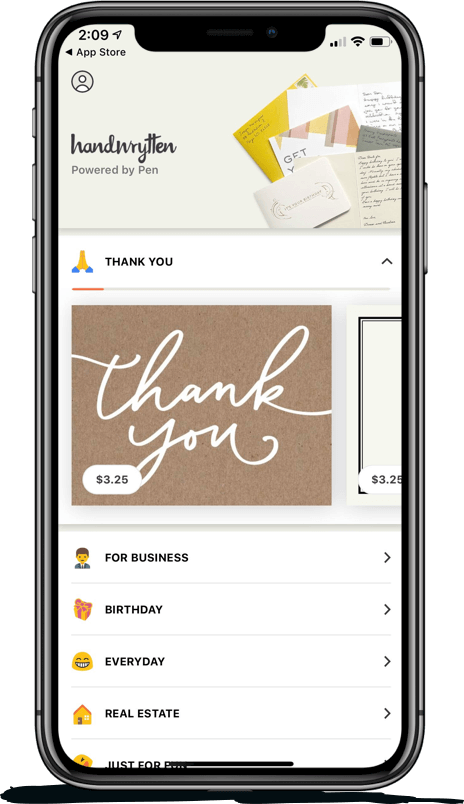
Scale your handwritten outreach, creating positive impressions and long lasting bond.
Sign Up Today!

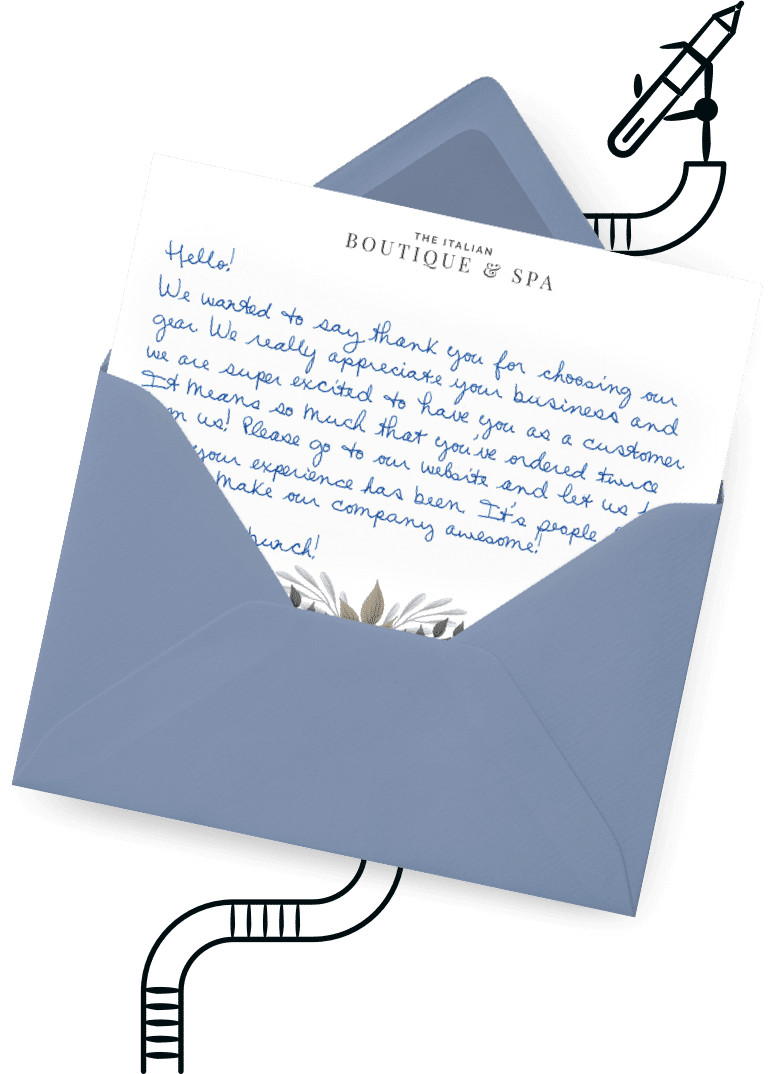

Over 100 designs to choose from or design your own. Our online card customizer makes it simple.
Check Out Our Cards!




Thank you.
