



The first impression your onboarding makes is set before the first meeting, the first email, and the first login. Make it count.
Handwritten cards onboarding programs are one of the most underleveraged tools in the modern client and employee experience — and one of the most impactful when deployed at exactly the right moment. The onboarding window is where relationships are either built or merely begun. It’s where a new client decides whether they made the right choice, where a new employee forms their first real impression of the culture they’ve joined, and where the emotional foundation of a long-term relationship is either established or left to chance.
Most onboarding experiences are logistical. System access. Orientation schedules. Welcome emails. Compliance checklists. All necessary — and none of it communicates the one thing that determines whether the onboarding experience is remembered positively or forgotten entirely: that this organization genuinely values the specific person who just joined it.
Handwritten cards for onboarding change that. They arrive before the logistics begin or alongside them, in a format that signals individual attention in a way that no digital message can replicate. They say, before anything else has been said: we noticed you, we’re glad you’re here, and this relationship matters to us.
That signal — delivered at the most receptive moment in any new relationship — is what handwritten cards onboarding programs create. And the relationships that begin with that signal look measurably different from the ones that begin without it.
The onboarding experience occupies a unique psychological position in any new relationship. Whether it’s a new client who just signed a contract, a new employee who just accepted an offer, or a new subscriber who just made their first purchase, the person in the onboarding window is simultaneously at their most excited and their most uncertain.
They’ve made a decision. They believe it was the right one. But they haven’t yet accumulated the experience that would confirm that belief — which means the early impressions they form carry disproportionate weight in how they evaluate the relationship going forward. A positive early impression creates a bias toward the relationship that persists through the inevitable friction that follows. A neutral or negative one creates doubt that’s much harder to reverse than it would have been to avoid.
Handwritten cards for onboarding exploit this window deliberately. A card that arrives at the beginning of the relationship — before the first invoice, before the first support ticket, before the first difficult conversation — plants a positive emotional anchor that colors everything that follows. The client who starts the relationship having received a handwritten welcome note approaches the first challenge with a different baseline than the one who received only a digital confirmation email. The employee who finds a handwritten card on their desk on day one arrives at their first difficult week with a different emotional reservoir to draw from.
That’s the leverage point of a strong handwritten cards onboarding strategy. And it’s available to any organization willing to use it.
Client onboarding is where the investment of months of sales effort is either validated or undermined. A client who signs a contract has made a significant decision — financial, strategic, and often personal — and the first weeks of the new relationship are when they’re most actively looking for evidence that it was the right one.
Most client onboarding experiences provide evidence of operational competence: a professional kickoff call, a clear implementation timeline, access to the right systems and contacts. What they rarely provide is evidence of genuine care — the feeling that the organization views this client as a valued partner rather than a successfully closed deal.
Handwritten cards for onboarding close that gap immediately. They arrive as the first communication after the contract is signed — or even before the kickoff call — and communicate something that the kickoff agenda never can: that a real person at this organization took a specific moment to acknowledge this specific client’s decision to partner with them.
Sample client onboarding card — professional services: “Welcome — we’re genuinely excited to begin this partnership. The team has been looking forward to working with you, and we’re committed to making this everything you’re hoping it will be. Thank you for the trust you’ve placed in us.”
Sample client onboarding card — SaaS or technology: “Welcome to [Platform]. We’re thrilled to have you on board and genuinely invested in your success from day one. If there’s ever anything you need as you’re getting started, we’re here — a real person, not a chatbot. Looking forward to what we build together.”
Sample client onboarding card — e-commerce: “Thank you for your first order — it means more than a standard confirmation email can express. We hope [product] exceeds your expectations, and we’d love to have you back.”
Sample client onboarding card — financial services: “Welcome — we’re honored by the trust you’ve placed in us with something as important as your financial future. Our commitment is to earn that trust every single day. We’re glad you’re here.”
Pro tip: Send handwritten cards for onboarding before the kickoff call if possible — so the physical card arrives before the first meeting takes place. The client who walks into a kickoff call having already received a handwritten welcome note arrives with a warmer disposition than the one who hasn’t.
The employee onboarding experience sets the tone for everything that follows — the quality of the new hire’s engagement, their likelihood of passing the 90-day mark successfully, and the first impression they form of the culture they’ve joined. Most organizations handle new hire onboarding competently at the logistical level and inadequately at the relational one.
A new employee’s first day is filled with information — systems, processes, policies, introductions. Very little of it tells them anything about whether this is an organization that genuinely values the people who work for it. Handwritten cards onboarding programs answer that question before it’s been asked — in the most compelling format available.
For in-office new hires, a handwritten card waiting on the desk when they arrive on day one creates a first impression that no orientation packet ever has. It signals that someone thought about their arrival specifically, that their first day was anticipated rather than merely scheduled, and that this is an organization where people are acknowledged as individuals.
Sample employee onboarding card — from leadership: “Welcome to the team — we’ve been looking forward to your arrival. What you bring to this organization matters, and we’re committed to making sure you have everything you need to do your best work. We’re glad you’re here.”
Sample employee onboarding card — from direct manager: “Welcome — I’m genuinely excited to work together. I’ve heard great things about you and I’m looking forward to getting to know you and supporting your growth here. Don’t hesitate to reach out about anything as you’re getting settled.”
For remote new hires, a handwritten card mailed to their home before their first day carries even more weight — because the physical gesture bridges the distance that remote onboarding almost universally fails to close. A new remote employee who receives a handwritten card at home before starting develops a sense of belonging before a single meeting has taken place.
Sample remote employee onboarding card: “Welcome — even though we may not be in the same building, we want you to know that your arrival has been genuinely anticipated. The team is excited to have you, and we’re committed to making sure you feel fully part of things from day one. Looking forward to working together.”
A single welcome card is a strong start. A sequenced handwritten cards onboarding experience across the full 90-day window — the period that determines whether a new client or employee reaches long-term engagement or exits early — is a systematic relationship-building strategy.
Here’s a framework that works for both client and employee onboarding experiences:
Day 1 — Welcome card. Sets the relational tone before any logistical communication has occurred. Communicates genuine excitement and individual acknowledgment. This is the most critical touchpoint in any handwritten cards onboarding program.
Day 14 — Check-in card. Two weeks in, a brief handwritten check-in acknowledges that the organization is paying attention to the new relationship and genuinely interested in how the onboarding experience is going.
For clients: “Two weeks in — hoping everything is going smoothly. We’re here for anything you need.” For employees: “Two weeks in already — hope you’re settling in well. We’re here for any questions.”
Day 30 — First milestone acknowledgment. A card recognizing the first meaningful milestone — a completed integration, a successful first project, a first month of employment — reinforces progress and makes the new client or employee feel seen for their early effort and achievement.
Day 60 — Relationship deepening. A card that references something specific about the client’s use case or the employee’s early contributions demonstrates that the organization has been paying attention and that the onboarding experience is developing into a genuine relationship.
Day 90 — Retention moment. As a client approaches their first renewal decision or an employee passes the critical 90-day mark, a handwritten acknowledgment of what’s been accomplished together creates a positive emotional anchor for the decision that follows.
Each of these touchpoints can be automated through Handwrytten’s platform — triggered by milestone dates, onboarding stage completions, or time-based events — so the handwritten cards onboarding sequence runs consistently for every new client and employee without any manual initiation from your team.
The onboarding experience looks different across industries — but the role of handwritten cards for onboarding is consistently high-impact wherever genuine relationships matter.
The period immediately following a closing is one of the most emotionally significant in a real estate client’s experience. A handwritten welcome-home card arriving within days of closing acknowledges the milestone personally and plants the seed for the referral relationship that follows.
“Welcome home — it was a genuine privilege to be part of this journey with you. I hope this home brings you everything you’ve imagined and more. Please don’t hesitate to reach out for anything, even years from now.”
Client onboarding in financial services carries particular emotional weight — clients have trusted the advisor with something deeply personal. Handwritten cards onboarding programs in this sector set the relational tone for long-term advisory relationships that digital alternatives simply cannot establish.
“Welcome — we’re honored by the confidence you’ve placed in us. Our commitment is to earn that trust continuously, and we’re genuinely looking forward to the partnership ahead.”
New patient onboarding is an opportunity most practices never take. A handwritten welcome card to a new patient creates a patient onboarding experience that almost no competitor is providing.
“Welcome to our practice — we’re glad you chose us for your care. Your health and comfort are our genuine priorities, and we look forward to supporting you.”
New user onboarding in SaaS is almost entirely digital — which is exactly what makes handwritten cards for onboarding so impactful. In a product category where every onboarding experience looks identical, a physical card creates a brand moment that competitors cannot replicate.
“Welcome to [Platform] — we’re genuinely invested in your success and want to make sure you get the full value of what we’ve built. A real person is always available if you need anything beyond what the documentation covers.”
New donor onboarding is one of the highest-leverage applications of handwritten cards onboarding programs — because first-time donors are deciding, in the weeks after their first gift, whether this organization is worth a long-term relationship.
“Thank you for your first gift to [Organization] — it means more than a standard receipt can express. What you’ve made possible with this contribution is [specific impact], and we’re grateful you’ve chosen to be part of what we do.”
The onboarding window is time-sensitive — a welcome card that arrives three weeks after a client signs or two weeks after an employee starts has lost most of its impact. Scaling a handwritten cards onboarding program without sacrificing timeliness requires automation infrastructure that most manual approaches can’t provide.
Handwrytten’s platform solves that problem. CRM integrations with Salesforce, HubSpot, Shopify, and other platforms allow handwritten cards onboarding touchpoints to be triggered automatically when a new contact is added, a contract is signed, a first purchase is made, or a new hire start date is reached. Handwrytten’s robotic pen-and-ink technology produces genuinely handwritten cards — real pen, real paper, real ink — personalized with the recipient’s name and a message tailored to their specific onboarding context, and mailed within one to two business days of the trigger event.
Custom handwriting fonts built from leadership’s or team members’ actual handwriting mean every card looks like it came directly from the person it’s signed by. Branded stationery and logo integration ensure every piece reflects the organization’s visual identity. And the full 90-day handwritten cards onboarding sequence can be configured once and run automatically for every new client and employee going forward.
When exactly should handwritten cards onboarding programs send the first card? As close to the beginning of the relationship as possible — ideally arriving on or before day one for employees, and within 48 hours of contract signing for clients. The earlier the card arrives in the onboarding experience, the stronger the first impression it creates and the more it influences the emotional baseline for everything that follows.
Should handwritten cards for onboarding come from leadership or the direct point of contact? Both work — and combining them creates an even stronger onboarding experience. A card from the direct manager or account manager feels personal and immediately relational. A card from senior leadership signals that the new relationship is valued at the organizational level. For high-value clients and new employees, both is worth the investment.
Can handwritten cards onboarding programs be fully automated? Yes. Handwrytten’s platform integrates with CRM and HRIS systems to trigger onboarding cards automatically based on contract dates, start dates, or first purchase events. The entire 90-day handwritten cards onboarding sequence can be configured once and run consistently for every new relationship without any manual effort.
What’s the most important element of an effective handwritten onboarding card? Specificity. A card that references something real about the new client or employee — the specific decision they made, the specific product they purchased, the specific role they’re joining — communicates genuine individual attention in a way that generic warmth never can. One specific detail elevates a pleasant onboarding experience into a memorable one.
How do handwritten cards for onboarding affect long-term retention? Significantly. The emotional baseline established in the onboarding window persists — clients who begin the relationship feeling genuinely valued retain at higher rates, and employees who experience genuine welcome in their first days engage more deeply and stay longer. Handwritten cards onboarding programs are one of the most cost-effective retention investments available precisely because they work at the moment when the relationship is most malleable.
The onboarding experience is the first chapter of every relationship your organization builds — and like any first chapter, it sets the expectations, the emotional tone, and the foundation that everything following it is built on. Handwritten cards onboarding programs don’t just make that chapter nicer. They make it more likely that the story continues — longer, more deeply, and with the kind of mutual investment that no digital communication could have established in that same critical window.
Better onboarding starts with a handwritten card. Everything else builds from there.
Start Sending → handwrytten.com


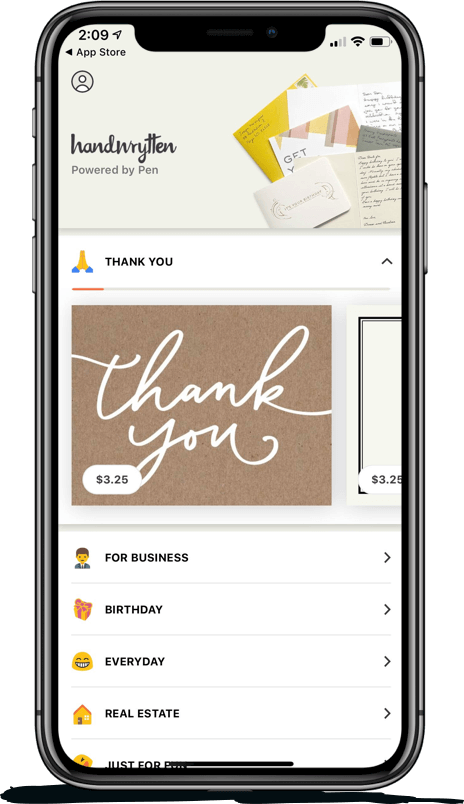
Scale your handwritten outreach, creating positive impressions and long lasting bond.
Sign Up Today!

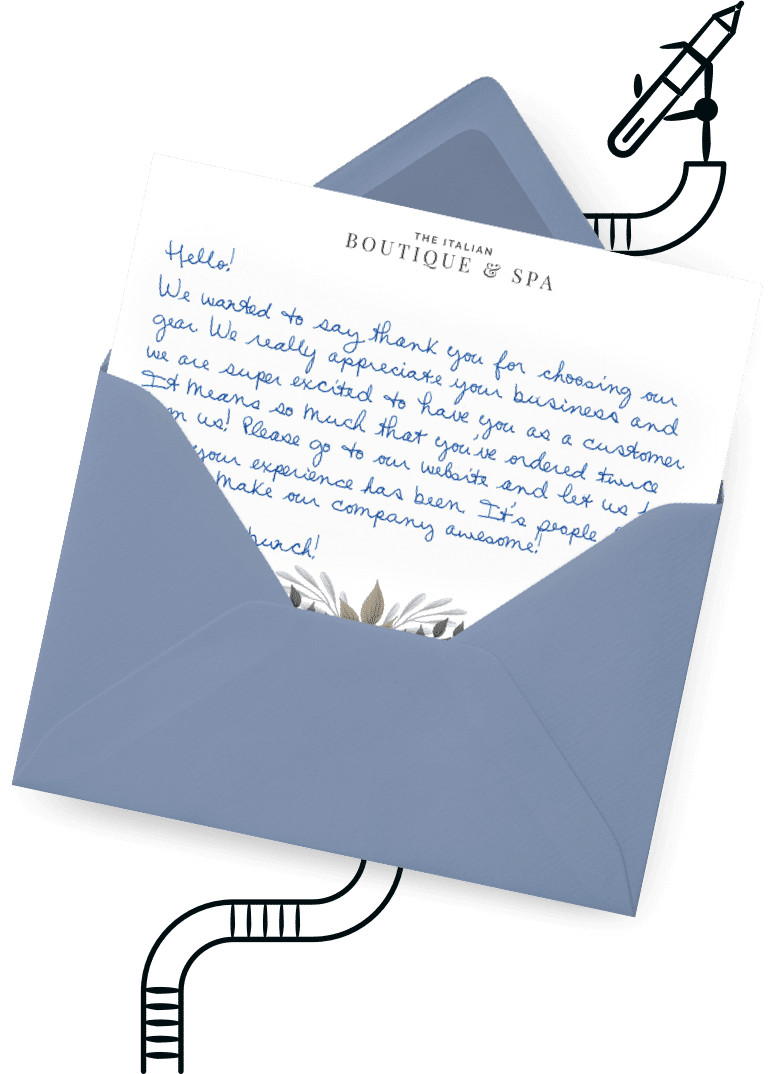

Over 100 designs to choose from or design your own. Our online card customizer makes it simple.
Check Out Our Cards!




Thank you.
