



The financial advisors who grow the fastest aren’t the ones with the biggest advertising budgets. They’re the ones whose clients feel most genuinely valued.
Marketing tips for financial professionals almost always focus on the wrong thing — digital advertising spend, social media presence, SEO strategy, content marketing. These channels have their place. But the financial advisors, CPAs, and accounting firms that consistently outperform their peers on the metrics that matter most — client retention, referral activity, lifetime client value — almost universally share a different characteristic: they invest disproportionately in the quality of their existing client relationships rather than in the volume of their prospect outreach.
The reason is arithmetic. A retained client generates revenue without acquisition cost. A referred client arrives pre-trusting, pre-qualified, and significantly more likely to stay long-term. The financial advisor marketing strategies that produce these outcomes aren’t the most sophisticated ones — they’re the most consistent and most genuinely personal ones. And the format that creates the most personal impressions most reliably is one that most financial professionals have entirely overlooked: the handwritten card.
These five proven marketing tips for financial professionals cover the touchpoints that sustain retention, generate referrals, and build the kind of genuine individual loyalty that no digital campaign produces at the same cost.
Trust is the primary competitive currency in financial services — and trust is built through the consistent experience of feeling genuinely valued as an individual rather than managed as an account. Most financial advisor marketing focuses on demonstrating competence: market commentary, performance updates, educational content, and thought leadership that communicates expertise. All of this is necessary and appropriate.
What’s missing from most financial advisor marketing programs is the relational layer — the consistent, personal, individual acknowledgment that communicates genuine care for the client beyond the portfolio. Clients who feel genuinely valued don’t shop their relationship when a competitor calls. Clients who feel like accounts do.
The marketing tips for financial professionals in this guide address that relational layer specifically — providing the touchpoints, the messages, and the practical guidance to build the individual loyalty that sustains financial practices through market cycles, competitive pressure, and the inevitable friction of long-term client relationships.

The onboarding window is the highest-leverage moment in the entire financial advisor marketing calendar — and the one most consistently handled with operational competence and relational inadequacy. Most financial professionals nail the procedural elements of new client onboarding: account setup, investment policy statements, initial planning sessions, welcome packets. Almost none nail the relational element.
A new financial services client has made one of the most significant trust decisions available to a person — handing their financial future to someone they’re still in the process of getting to know. The advisor who acknowledges that decision with a genuinely personal, physical gesture in the first 48 hours creates a relational foundation that shapes every subsequent interaction.
A handwritten welcome card arriving within 48 hours of account opening communicates something that no welcome email sequence ever does: that this client’s decision to trust this advisor with their financial future was noticed and genuinely appreciated by a real person who took specific time to express it.
Sample new client welcome messages:
“Welcome — we’re genuinely honored by the trust you’ve placed in us with something as important as your financial future. Our commitment is to earn that trust continuously, starting right now. We’re looking forward to building something meaningful together.”
“Thank you for choosing us — and for the trust that comes with that decision. We don’t take it lightly. Our whole team is invested in your success from day one, and we’re here for every question, every concern, and every milestone ahead.”
“Welcome to [Firm Name]. The decision you made takes real confidence — and we’re committed to making sure every interaction you have with us reflects the seriousness with which we take that responsibility. Thank you. We’re glad you’re here.”
Financial advisor marketing pro tip: Automate welcome cards through Handwrytten’s CRM integrations — configured to trigger automatically when a new account is opened in your practice management system. Every new client receives a genuine handwritten welcome card without any manual effort from your team.
Tax season is the most universally stressful period in the financial professional calendar — for practitioners and clients alike. Most financial advisor marketing goes quiet during this window as practices focus entirely on execution. The financial professionals who use tax season as a relationship-building opportunity rather than simply a service delivery period create impressions that competitors who go silent never generate.
The marketing tips for financial professionals that produce the strongest tax season results aren’t about demonstrating technical competence — clients already expect that. They’re about demonstrating genuine human care for the experience of the season from the client’s perspective. A mid-season “thank you for your patience” card, a post-filing appreciation note, or a pre-season preparation card that arrives with warmth and individual acknowledgment communicates care for the person behind the tax return.
Sample tax season messages:
Pre-season:
“Tax season is approaching — and we wanted to reach out personally to let you know we’re prepared and ready to make this as smooth as possible for you. We’ll be in touch soon with everything you need. In the meantime, we’re here for any questions.”
Mid-season:
“We’re in the thick of tax season, and we wanted to take a moment to say — thank you for your patience, your responsiveness, and your trust. You make our work genuinely rewarding. We’re almost there.”
Post-filing:
“Your return is filed — and we wanted to reach out personally to say thank you for another season of genuine partnership. Your diligence makes our work better, and we’re grateful for the trust you continue to place in us. See you next year — or sooner, if you need anything.”
Financial advisor marketing pro tip: A modest gift card included with the post-filing thank-you card — to a coffee shop, a restaurant, or a flexible platform — transforms a standard acknowledgment into a memorable gesture that clients consistently mention in referral conversations.
One of the most actionable marketing tips for financial professionals is also one of the most consistently overlooked: the mid-year check-in that arrives not as a newsletter or a market commentary but as a genuine, personal, individual acknowledgment that communicates ongoing investment in the client relationship outside of tax season and year-end.
The mid-year window — typically June or July — is when most financial advisor marketing goes quiet. Clients haven’t heard anything personal since tax season. The next scheduled touchpoint is the year-end holiday card. That four to five month gap is where client relationships drift — quietly, almost imperceptibly, until the competitor call that gets taken because the incumbent advisor feels distant.
A mid-year handwritten check-in card that arrives in a client’s home mailbox in June or July — warm, personal, and completely free of commercial content — creates a disproportionately strong impression precisely because nothing else is competing for the client’s attention in that window.
Sample mid-year check-in messages:
“We’re halfway through the year — and we wanted to reach out personally to say that we’ve been thinking about your financial goals and how the year is tracking. If you’d like a mid-year review or simply want to talk through how things are going, we’d love to connect. Hope summer is treating you well.”
“Just a personal note from your team to say — we’re thinking of you. Summer tends to be a time when financial planning conversations take a back seat to everything else life offers. We’re here whenever you’re ready to reconnect — and looking forward to finishing the year strong together.”
“Happy summer, [Name] — we hope the year has been going exactly as you’d hoped. We’ve been monitoring your portfolio actively and have some thoughts worth sharing whenever the timing works for you. No urgency — just a genuine check-in from people who are genuinely invested in your success.”
Financial advisor marketing pro tip: Segment your client base before the mid-year window — identifying clients approaching retirement, clients who experienced significant life changes in the first half of the year, and clients whose portfolios have had notable performance in either direction — and calibrate mid-year messages for each segment. Targeted financial advisor marketing produces significantly stronger engagement than broadcast outreach.
The referral is the highest-value outcome in financial advisor marketing — and the most reliable way to generate referrals is also the simplest and most consistently underinvested: making clients feel genuinely, individually appreciated on a consistent basis throughout the year.
The psychology behind referral generation in financial services is straightforward. Clients refer advisors they trust — and trust is built through the consistent experience of feeling valued as an individual rather than managed as an account. A client who receives a genuinely personal, handwritten appreciation note every quarter — carrying no commercial agenda, expressing genuine individual gratitude for the specific relationship — develops a felt sense of loyalty that expresses itself naturally as referral behavior.
These quarterly appreciation notes are among the highest-return marketing tips for financial professionals available — because they cost almost nothing to produce through Handwrytten’s platform and generate the referral activity that represents the lowest cost-per-acquisition client in any financial practice.
Sample quarterly appreciation messages:
Q1:
“As the first quarter closes, we wanted to reach out personally to express how much your continued trust means to us. The beginning of the year is a good moment to say — we’re genuinely invested in your financial success, and we’re grateful for the relationship we’ve built. Thank you.”
Q2:
“Halfway through the year and we wanted to take a moment to say — we’re grateful for you. The partnership we’ve built is something we value deeply, and we don’t take for granted that you’ve chosen to continue it. Thank you for another quarter of genuine trust.”
Q3:
“As we head into the final stretch of the year, we wanted to reach out personally to express genuine appreciation for everything your relationship means to us. Your trust is something we work to earn every day. Thank you for continuing to place it in us.”
Q4:
“The year is almost over — and before it closes, we wanted to make sure you heard directly from us how much this relationship means. What we’ve built together this year is something we’re proud of. Thank you — genuinely.”
Financial advisor marketing pro tip: Keep quarterly appreciation notes completely free of any referral ask or commercial content. The notes that generate the most referral activity are the ones that never ask for them — because the genuine, agenda-free appreciation they communicate is precisely what activates the reciprocity effect that makes clients want to refer.
Year-end holiday outreach is the most universally deployed of all marketing tips for financial professionals — and the most universally generic. Every financial advisor sends a holiday card. Most of them look and feel identical: a printed card with a company logo, a generic seasonal message, and a stamped signature from someone the client has never met.
The financial advisor marketing holiday outreach that stands out in a mailbox full of identical printed cards is the one that arrives in genuine handwriting, carries a specific individual message, and communicates something no printed card ever can: that a real person thought specifically about this specific client at this specific time of year.
A handwritten holiday card from a financial advisor — personalized with the client’s name, referencing something real about the relationship or the year, and arriving before the holiday rush overwhelms the mailbox — creates an impression that printed alternatives simply don’t generate. Clients notice. Clients mention it. And clients who receive genuinely personal holiday outreach from their financial advisor refer at significantly higher rates than those who receive the standard printed card.
Sample year-end and holiday messages:
“As the year closes, I wanted to reach out personally to express how genuinely grateful I am for your continued trust. What we’ve accomplished together this year is something I’m proud of — and it reflects the commitment you’ve brought to the relationship as much as anything I’ve done. Thank you. Wishing you and your family a wonderful holiday season.”
“Another year of partnership — and another year of genuine gratitude for the trust you place in me. Working with clients like you is exactly why I do what I do. Happy holidays from our whole team. We look forward to everything the new year brings.”
“The end of the year is a natural moment to reflect on what matters — and the relationships that make this work meaningful always come to mind first. You’re one of those relationships. Thank you for another year of trust, partnership, and genuine connection. Wishing you a wonderful holiday season.”
Financial advisor marketing pro tip: Include a QR code in the holiday card linking to your scheduling calendar — framed as an easy way to book a new year planning session. A handwritten holiday card that generates a year-opening planning appointment creates direct, measurable ROI from the outreach while maintaining the genuine relational quality of the gesture.
The most effective implementation of these marketing tips for financial professionals isn’t deploying each one independently — it’s building them into a systematic annual calendar that ensures every client receives every touchpoint at the right moment, regardless of how busy the practice is or how full the pipeline gets.
A practical financial advisor marketing calendar built on these five strategies:
January — New year appreciation note. A personal note expressing genuine enthusiasm for the year ahead and gratitude for the continued relationship.
February/March — Tax season outreach. Pre-season preparation card, mid-season appreciation note, post-filing thank-you.
June/July — Mid-year check-in. Personal, agenda-free acknowledgment of the relationship with an offer to connect for a mid-year review.
September — Q3 appreciation note. Genuine, individual appreciation with no commercial content.
November/December — Year-end holiday card. Personalized, handwritten holiday outreach that arrives before the seasonal rush.
This five-touchpoint annual calendar — executed consistently, in genuine handwriting, with individual personalization — produces the client retention and referral generation outcomes that most financial advisor marketing programs aim for and few consistently achieve.
The operational challenge of executing these marketing tips for financial professionals consistently — writing individual messages, addressing envelopes, managing mailing logistics for dozens or hundreds of client relationships simultaneously — is precisely what causes most financial professionals to simplify their outreach to a single annual holiday card.
Handwrytten removes that barrier. Using robotic pen-and-ink technology that produces genuinely handwritten cards — real pen, real paper, real ink — Handwrytten’s platform makes it possible to execute a complete financial advisor marketing program at any client volume without any manual writing effort from your team.
CRM integrations with Salesforce, Redtail, Wealthbox, HubSpot, and Zapier allow every touchpoint in the annual calendar to be triggered automatically — each card personalized with the client’s name, relationship context, and a message calibrated to the specific moment. Custom handwriting fonts built from your own signature ensure every card looks like it came directly from you. And Handwrytten’s compliance-friendly workflow allows message templates to be reviewed and approved before deployment — ensuring every piece of outreach meets the regulatory requirements of your practice environment.
How many outreach touchpoints should financial professionals send per year?
Four to six touchpoints per year is the standard recommendation — enough to maintain consistent individual presence without overwhelming clients with communication. The five marketing tips for financial professionals in this guide provide a natural framework for that cadence across the annual calendar.
Are handwritten cards compliant for financial advisor marketing?
Yes — cards focused on relationship appreciation, personal acknowledgment, and life milestone recognition rather than specific investment recommendations or performance claims are broadly compliant across most regulatory environments. Have message templates reviewed by your compliance team before deployment, and use Handwrytten’s campaign logging to maintain the communication records most regulatory environments require.
What’s the most important element of effective financial advisor marketing outreach?
Specificity. The marketing outreach that produces the strongest retention and referral outcomes is the kind that references something real and individual about the specific client — their milestone, their achievement, their specific relationship with the advisor. Generic financial advisor marketing produces generic results. Individual acknowledgment produces loyalty.
Can financial advisor marketing cards be automated without losing personal quality?
Yes. Handwrytten produces genuinely handwritten cards — real pen on real paper — triggered automatically through CRM integrations, with each card personalized for the individual client. The automation handles the consistency and scale. The genuine handwriting and individual personalization preserve the quality that makes financial advisor marketing effective.
Should financial advisor marketing cards include promotional content?
No — and this is one of the most important of all the marketing tips for financial professionals. The outreach that builds the deepest loyalty is completely free of commercial content. Appreciation notes, check-ins, and holiday cards that arrive with no agenda beyond genuine acknowledgment of the relationship create the trust that sustains clients through competitive pressure and market volatility. Any commercial content belongs in a separate communication.
The financial professionals who build the most durable practices aren’t the most visible ones — they’re the most present ones. Present not just during tax season and year-end, but throughout the year, in the quiet windows when no commercial agenda is driving the outreach, in a format that communicates individual attention in a way that digital channels perpetually reach for and rarely achieve.
Five touchpoints. One calendar year. The clients worth keeping are the ones worth showing up for.
Start Sending → handwrytten.com
Editor’s note: This article was revised in June 2026


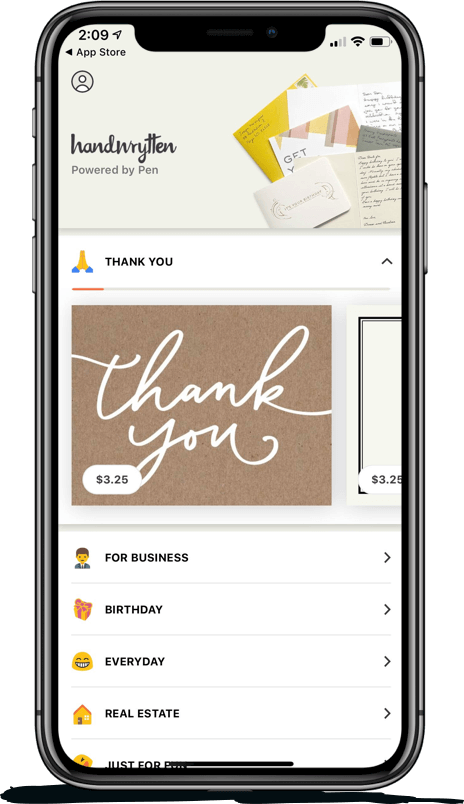
Scale your handwritten outreach, creating positive impressions and long lasting bond.
Sign Up Today!



Over 100 designs to choose from or design your own. Our online card customizer makes it simple.
Check Out Our Cards!




Thank you.
