



The most powerful referral tool in your business isn’t a program or an incentive. It’s a principle wired into human behavior for thousands of years.
The reciprocity effect is one of the most well-documented principles in social psychology — and one of the most underleveraged mechanisms in modern business marketing. First articulated by sociologist Alvin Gouldner and later popularized by Robert Cialdini in his landmark work on influence, the reciprocity effect describes the deeply human tendency to want to return a favor when one has been received. When someone does something genuinely kind for us — without expectation of return — we feel a powerful, often unconscious drive to give something back.
In a business context, that drive expresses itself most commonly as referral behavior. A client who receives a handwritten note — unexpected, personal, and completely free of commercial agenda — doesn’t just feel appreciated. They feel a pull toward reciprocation. And the most natural way for a satisfied client to reciprocate the gesture of genuine appreciation from a business they already trust is to send that business someone they know.
That’s the referral engine most businesses never deliberately build — because most businesses never deliberately trigger the reciprocity effect. Here’s how to change that.
The reciprocity effect isn’t about quid pro quo. It isn’t about explicitly offering something in exchange for a referral, or creating a formal referral program with incentives and tracking. Those approaches can work — but they operate through a completely different psychological mechanism, one that activates calculated thinking rather than genuine emotional response.
The reciprocity effect operates below that level. It’s triggered not by an offer but by an experience — specifically, the experience of receiving something that feels genuinely generous, unexpected, and personally directed. When those three conditions are met, the brain responds with a felt sense of obligation that isn’t uncomfortable or transactional — it feels like gratitude, and it seeks expression through action.
That action is almost always prosocial. People who experience the reciprocity effect don’t typically respond by writing a check or making a formal gesture. They respond by saying good things about the person who surprised them — to colleagues, to friends, to anyone who mentions a relevant need. The referral that results isn’t something they feel manipulated into. It’s something they genuinely want to do, because the underlying emotional experience was genuinely positive.
This is what makes the reciprocity effect such a powerful referral driver — and what makes handwritten notes for business the most efficient trigger for it available. A handwritten note meets all three conditions: it’s generous, it’s unexpected, and it’s personal. The reciprocity effect that follows is real, felt, and frequently expressed as exactly the kind of word-of-mouth referral that no advertising budget can replicate.
Not all gestures trigger the reciprocity effect equally. The strength of the reciprocal response is directly proportional to the perceived effort, thoughtfulness, and personal nature of the original gesture. A generic email thank-you triggers mild positive sentiment. A personalized handwritten note triggers something considerably stronger.
The reason is what the handwritten note communicates before a single word is read. The physical format — real pen, real paper, real ink — signals that someone chose to spend time on this specific person. In a world where automated digital communication is the default, that choice is conspicuous. Recipients understand intuitively that a handwritten note required more than clicking send. That understanding is the foundation of the reciprocity effect that follows.
Several specific qualities of handwritten notes amplify the reciprocity effect beyond what other gestures produce:
Physical presence. A handwritten note exists in the recipient’s physical environment. It sits on a desk, gets pinned to a bulletin board, or gets kept in a drawer. Its physical persistence means it continues generating positive associations — and reinforcing the reciprocity effect — long after a digital message would have been forgotten.
Specificity. A handwritten note that references something real about the recipient — a recent achievement, a specific interaction, a milestone in the relationship — communicates that genuine individual attention was paid. That specificity dramatically increases the perceived thoughtfulness of the gesture and the strength of the reciprocal response.
Unexpectedness. The reciprocity effect is strongest when the triggering gesture arrives without warning. Handwritten notes for business are unexpected precisely because so few businesses send them — which means the surprise element that amplifies the reciprocity effect is built into the format itself.
No visible agenda. The reciprocity effect is most powerfully triggered by gestures that carry no obvious commercial intent. A handwritten note sent purely to express appreciation — with no offer, no call to action, no promotional hook — communicates generosity in its purest form. That purity is what makes the reciprocal response strongest.
Understanding the mechanism is one thing. Seeing how it plays out in real business relationships is another. Here’s the sequence through which the reciprocity effect converts a handwritten note into a referral:
The note arrives. A client, customer, or partner receives a handwritten note from your business — at a meaningful moment, with a personal message, and with no commercial agenda attached. The physical format and the unexpected timing immediately signal that this is different from standard business communication.
The emotional response activates. The recipient feels genuinely appreciated — not processed, not managed, not marketed to, but actually seen and valued as a person. That emotional experience is positive, memorable, and disproportionately strong relative to the size of the gesture that triggered it.
The reciprocity effect engages. The felt sense of gratitude that follows genuine appreciation creates an unconscious drive toward reciprocation. The recipient doesn’t consciously think “I should refer someone to this business” — but the inclination is there, present and active, waiting for the right moment to express itself.
The referral moment arrives. A colleague mentions they’re looking for exactly what your business provides. A friend asks for a recommendation. A social media post invites suggestions. The recipient — already primed by the reciprocity effect — thinks of your business first, mentions it warmly, and delivers the kind of word-of-mouth referral that carries more persuasive weight than any advertising message.
The cycle compounds. The referred prospect, when they become a client and receive their own handwritten note, experiences the reciprocity effect themselves — and the referral pipeline that began with a single thoughtful gesture becomes self-sustaining.
The reciprocity effect is most strongly activated when the gesture arrives at a moment of genuine emotional significance — a time when the recipient is already thinking about the relationship and most receptive to a personal acknowledgment. These are the highest-impact timing windows for handwritten notes referrals:
Immediately after a significant purchase or transaction. The post-purchase window is when a client’s positive feelings about their decision are highest — and when a handwritten note expressing genuine appreciation for their trust arrives with maximum emotional relevance. The reciprocity effect activated at this moment is often expressed as an enthusiastic recommendation to the next person who asks.
After a milestone in the relationship. A client anniversary, a loyalty milestone, or a business achievement worth celebrating are all moments when a handwritten acknowledgment signals that your business tracks these things because the relationship genuinely matters. That signal is powerfully reciprocity-activating.
During a difficult period. A note sent to acknowledge a challenge a client is navigating — without any commercial angle — communicates the kind of genuine human care that triggers the reciprocity effect more strongly than almost any positive gesture. The client who receives a handwritten note of support during a hard time becomes one of your most enthusiastic advocates.
After a referral has already been made. Acknowledging an existing referral with a handwritten note — expressing sincere gratitude for the trust it represents — triggers the reciprocity effect in both directions. The referrer feels appreciated, which makes future referrals more likely. And the referred prospect, who hears that their referrer was acknowledged so personally, arrives already impressed by your business before the first conversation.
Completely unexpectedly. The strongest reciprocity effect trigger is the note that arrives for no particular reason — a quiet acknowledgment of the relationship itself, sent on an ordinary day with no milestone attached. The unexpectedness is the point. A gesture that requires no occasion to prompt it communicates the purest form of genuine appreciation — and produces the strongest reciprocal response.
Formal referral programs — incentive-based systems that reward clients for sending new business — are legitimate and can be effective. But they operate through a fundamentally different psychological mechanism than the reciprocity effect, and understanding the difference matters for how you design your referral strategy.
A referral program activates calculated reciprocity — the explicit exchange of a referral for a reward. The client knows why they’re referring and what they get for doing so. The referral is real, but it’s transactional — and transactional referrals carry different persuasive weight than organic ones. The prospect who arrives through a transactional referral knows, on some level, that their referrer had a financial incentive. That knowledge subtly reduces the social proof value of the recommendation.
The reciprocity effect activates spontaneous reciprocity — the organic desire to return a genuine kindness with a genuine act of advocacy. The client who refers someone after receiving a handwritten note isn’t doing it for a reward. They’re doing it because they genuinely want to share their positive experience — and that motivation is transparent to the prospect they’re referring. The social proof value of an organic, enthusiasm-driven referral is significantly higher than that of an incentive-driven one.
This doesn’t mean referral programs are wrong. It means that handwritten notes for business trigger a referral mechanism that formal programs cannot replicate — and that the two approaches are more complementary than competitive. A business that combines a formal referral program with a systematic handwritten outreach strategy gets the explicit incentive and the organic reciprocity effect working simultaneously — and that combination consistently outperforms either approach alone.
The challenge with deliberately triggering the reciprocity effect is scale. Sending genuinely personal, thoughtful handwritten notes to every meaningful client at every meaningful moment isn’t feasible as a manual process — and the moment it becomes inconsistent, the reciprocity effect stops being triggered reliably.
Handwrytten solves that problem. Using robotic pen-and-ink technology that produces genuinely handwritten notes — real pen, real paper, real ink — at any volume, Handwrytten makes it possible to trigger the reciprocity effect systematically across your entire client base, at the moments that matter most, without any manual effort from your team.
CRM integrations with Salesforce, HubSpot, Shopify, Zapier, and other platforms allow handwritten notes for business to be triggered automatically based on the moments most likely to activate the reciprocity effect: a new purchase, a milestone anniversary, a referral received, a loyalty threshold reached. Each card is personalized with the recipient’s name and a message tailored to the specific moment — because specificity is what amplifies the reciprocity effect beyond a generic gesture.
The result is a systematic reciprocity effect strategy — one that runs consistently in the background, reaches every meaningful relationship in your network, and generates the kind of organic referral activity that compounds over time into a self-sustaining pipeline.
The messages that most reliably activate the reciprocity effect share three qualities: they’re specific, they’re genuine, and they carry no commercial agenda. Here are examples calibrated for different relationship contexts:
Post-purchase: “Thank you for your trust — we don’t take it for granted. If there’s ever anything we can do to make your experience even better, we’re always here.”
Client anniversary: “[X] years. We genuinely appreciate every one of them and the trust you’ve placed in us throughout. Thank you for being such an important part of what we do.”
After a referral: “We heard from [referred person] — thank you for thinking of us. That kind of trust means more than we can easily express. We’re going to take great care of them.”
Unexpected appreciation: “No particular reason for this note other than genuine appreciation for the relationship. Thank you for being the kind of client that makes this work worthwhile.”
During a difficult period: “We heard you’re navigating a challenging stretch right now and wanted to reach out — not to sell anything, just to say we’re thinking of you and we’re here if there’s anything we can do.”
What is the reciprocity effect and how does it apply to business referrals? The reciprocity effect is the psychological principle that describes the human tendency to want to return a genuine kindness. In a business context, it means that clients who receive unexpected, personal, agenda-free gestures — like handwritten notes — feel a natural drive toward reciprocation, most commonly expressed as referral behavior. The reciprocity effect isn’t manufactured — it’s triggered by the genuine quality of the gesture that precedes it.
Why do handwritten notes trigger the reciprocity effect more powerfully than digital messages? Because they meet the three conditions that most strongly activate the reciprocity effect: genuine effort, unexpected arrival, and personal direction. A handwritten note signals that someone spent real time on this specific person — a signal that digital messages, however warm, cannot replicate. That perception of genuine individual attention is what triggers the strongest reciprocal response.
How is the reciprocity effect different from a formal referral incentive program? A referral program activates calculated reciprocity — a deliberate exchange of referral for reward. The reciprocity effect activates spontaneous reciprocity — the organic desire to return a genuine kindness with genuine advocacy. Both can generate referrals, but the organic referrals produced by the reciprocity effect carry stronger social proof value because they’re driven by authentic enthusiasm rather than financial incentive.
When should handwritten notes be sent to most effectively trigger the reciprocity effect? The highest-impact timing windows are immediately after a significant purchase, at relationship milestones, during difficult periods, after a referral has already been made, and — most powerfully — completely unexpectedly on an ordinary day with no particular occasion attached. The unexpectedness of the last category produces the strongest reciprocity effect response.
Can the reciprocity effect strategy be automated without undermining its authenticity? Yes. Handwrytten’s platform produces genuinely handwritten notes — real pen, real paper — personalized for each recipient and triggered automatically through CRM integrations. The automation handles the consistency and scale. The genuine handwriting and individual personalization preserve the authentic quality that triggers the reciprocity effect in the first place.
The reciprocity effect has been driving human behavior since long before marketing existed. It doesn’t require a program, an incentive structure, or a campaign budget. It requires a genuine gesture, delivered at the right moment, in a format that communicates real human attention.
A handwritten note is that gesture. The referrals that follow are the reciprocity effect doing exactly what it has always done — returning genuine kindness with genuine advocacy, one relationship at a time.
Start Sending → handwrytten.com


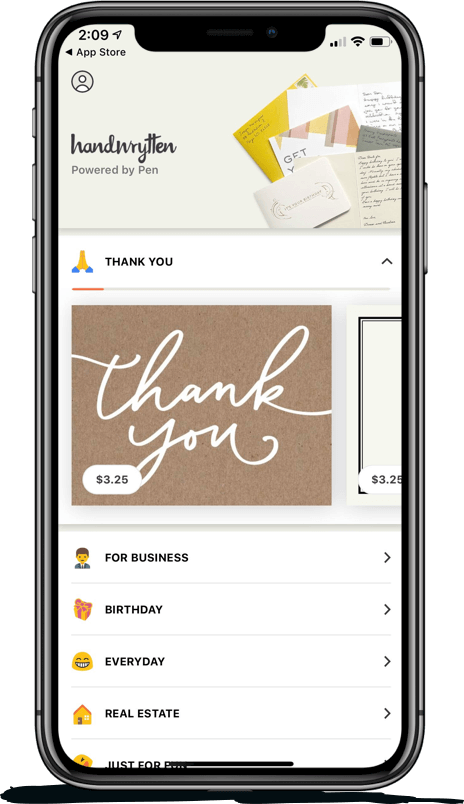
Scale your handwritten outreach, creating positive impressions and long lasting bond.
Sign Up Today!



Over 100 designs to choose from or design your own. Our online card customizer makes it simple.
Check Out Our Cards!




Thank you.
