



In financial services, the brands that win on retention don’t just deliver returns. They deliver relationships.
The FinTech Loyalty Loop is rapidly becoming one of the most important retention frameworks in modern financial services — and the brands that understand it are quietly building the kind of client loyalty that digital-only competitors simply cannot replicate. As AI-driven communication becomes the norm and digital experiences blur together into a sea of indistinguishable touchpoints, the financial brands that stand out are the ones that introduce something genuinely different into the client relationship: a human touch, delivered at the right moment, in a format that signals genuine care rather than automated efficiency.
Handwritten mail is that differentiator. In a sector where trust is the primary competitive currency and high-LTV clients have every reason to be skeptical of anything that feels manufactured, a physical handwritten note cuts through the noise in a way that no email, push notification, or in-app message can match. It arrives as something real — held in someone’s hands, written with real pen on real paper — and it communicates the one thing that affluent financial clients value most: that they matter as individuals, not as account balances.
This guide covers the complete FinTech Loyalty Loop framework — what it is, how it works, where handwritten mail fits into each stage, and how financial brands of every size can build it into a systematic retention strategy that compounds over time.
The FinTech Loyalty Loop is a continuous retention framework built on meaningful, consistent interactions — not one-and-done transactions. Unlike the traditional marketing funnel, which treats conversion as the endpoint, the FinTech Loyalty Loop treats conversion as the beginning. Every stage of the loop is designed to deepen the client relationship, increase the perceived value of the financial brand, and create the kind of emotional loyalty that sustains high-LTV relationships through market volatility, competitive pressure, and the inevitable friction that every long-term financial relationship encounters.
The FinTech Loyalty Loop operates across four stages — each one feeding into the next, creating a compounding cycle of trust, engagement, and advocacy that becomes more valuable with every revolution.
Stage 1 — Welcome and Onboarding. The first impression a new client forms of a financial brand is set in the days and weeks immediately following account opening. Clear guidance, trust-building communication, and a personal acknowledgment of the client’s decision to trust the brand with something as significant as their financial future establish the relational tone for everything that follows.
Stage 2 — Engagement and Education. Financial brands deepen client value through proactive insights, personalized market commentary, relevant alerts, and support that demonstrates genuine investment in the client’s financial outcomes — not just the management of their assets.
Stage 3 — Delight and Unexpected Value. This is the stage where the FinTech Loyalty Loop most clearly differentiates premium financial brands from commoditized ones. Thoughtful, unexpected touchpoints — arriving outside of scheduled communication cadences, carrying no commercial agenda, and communicating pure appreciation — make high-LTV clients feel genuinely seen and valued in a way that standard service delivery never can.
Stage 4 — Advocacy and Renewal. Clients who have moved through the first three stages of the FinTech Loyalty Loop don’t just stay — they expand their relationship, increase their assets under management, and actively refer others. One delight moment fuels the next, creating a loop that compounds in value with every cycle.
Handwritten mail fits powerfully into every stage of the FinTech Loyalty Loop — but it’s most distinctive and most impactful in Stage 3, where the unexpected gesture creates the emotional impression that sustains everything else.
High-LTV financial clients are among the most heavily marketed-to individuals in any consumer category. They receive premium communications from wealth managers, private banks, investment platforms, and insurance providers constantly — most of it sophisticated, professional, and indistinguishable from the next piece. They’ve developed a high tolerance for polished digital communication and an equally high capacity to ignore it.
Handwritten mail fintech outreach breaks that pattern at the level of format rather than content. Before a single word is read, a handwritten card communicates something that no digital message in the client’s portfolio of financial communications has communicated: that a specific person at this organization took specific time for this specific individual. That signal — arriving in a physical format that no email can replicate — creates a quality of attention and emotional engagement that sophisticated digital campaigns cannot manufacture.
Several specific qualities make handwritten mail fintech outreach particularly effective for high-LTV client retention:
It signals premium, high-touch service. Handwritten communication is the format of personal relationships — of people who matter enough to someone that they took the time to write by hand. In a financial context, that signal communicates the kind of exclusivity and individual attention that affluent clients expect and rarely experience.
It cuts through AI fatigue. The financial services inbox is increasingly full of AI-generated communication — sophisticated, personalized, and immediately recognizable as machine-produced. A handwritten note arrives as something genuinely human in an environment of increasingly inhuman efficiency, and that contrast is felt before the card is opened.
It builds emotional trust. Real pen strokes on real paper communicate authenticity in a sector where authenticity is one of the most valuable and most frequently compromised brand attributes. Clients who receive handwritten mail fintech outreach consistently report higher trust and satisfaction scores than those who receive only digital communication.
It supports long-term retention. The FinTech Loyalty Loop is a long game — and handwritten mail is one of the few communication formats that creates impressions durable enough to sustain relationships through the extended periods between major financial milestones.
The onboarding window is where high-LTV clients form their first real impression of a financial brand beyond the sales process — and where the emotional foundation of a long-term relationship is either established or left to chance. Most financial brands handle onboarding competently at the procedural level and inadequately at the relational one.
A handwritten welcome note — arriving within the first week of account opening or the completion of onboarding documentation — communicates something that no digital confirmation email, no welcome packet, and no onboarding call can replicate: that a specific person at this organization noticed this specific client’s arrival and considered it worth a personal gesture.
Sample onboarding handwritten mail fintech messages:
“Welcome — we’re honored by the trust you’ve placed in us with something as important as your financial future. Our commitment is to earn that trust continuously, starting right now.”
“Thank you for choosing to work with us. We’re genuinely excited about this partnership and committed to making sure every step of the journey reflects the level of service you deserve.”
“Welcome to [Brand]. Your financial goals matter to us specifically — not just as objectives to manage but as outcomes we’re genuinely invested in helping you achieve. We’re glad you’re here.”
Pro tip: Tie the handwritten welcome note to a specific milestone in the onboarding process — the completion of account documentation, the arrival of initial funding, or the scheduling of the first advisor call. Specificity communicates attentiveness and elevates the perceived value of the gesture.
The engagement stage of the FinTech Loyalty Loop is primarily driven by the quality and relevance of digital communication — market insights, personalized alerts, portfolio updates, proactive advisory contact. Handwritten mail fintech outreach plays a supporting role in this stage rather than a primary one — but it plays that role with outsized impact when deployed at the right moments.
A handwritten note acknowledging a significant market event — arriving during a period of volatility with a message of genuine reassurance and confidence — communicates something that a broadcast email from the same brand cannot. It says: we thought of you specifically during this moment. We know this is relevant to your situation. And we wanted to reach out in a format that reflects how seriously we take that.
Sample engagement stage messages:
“We know recent market conditions have created some uncertainty, and we wanted to reach out personally to say that we’re watching closely, thinking of you specifically, and here for any conversation you’d like to have.”
“A quick note to acknowledge the current environment and reiterate our commitment to your financial objectives. We’re monitoring your portfolio actively and will be in touch shortly — but wanted to make sure you heard from us personally first.”
Stage 3 is where the FinTech Loyalty Loop most powerfully differentiates premium financial brands — and where handwritten mail fintech outreach creates its most lasting impressions. The delight stage is defined by unexpected, agenda-free touchpoints that arrive outside of scheduled communication cadences and carry no commercial objective beyond the simple communication of genuine appreciation.
The psychology behind Stage 3 is the reciprocity effect: genuine, unexpected appreciation triggers a felt sense of gratitude that expresses itself as loyalty, advocacy, and the kind of emotional commitment to a financial brand that outlasts any product feature or fee structure.
The highest-impact delight touchpoints for the FinTech Loyalty Loop:
Client anniversaries. A handwritten note marking one year, three years, or a decade of working together acknowledges the tenure of a relationship that most financial brands take entirely for granted.
“A decade. We don’t take that lightly — and we wanted to make sure you know that. Thank you for a decade of trust and partnership. It has meant more to us than a standard communication can express.”
Portfolio milestones. When a client reaches a significant financial milestone — a portfolio threshold, a savings goal, a net worth achievement — a handwritten note marks the moment in a way that a system-generated alert never can.
“Congratulations on reaching this milestone — your discipline and consistency have built something real and significant. We’re genuinely proud to have been part of the journey.”
Year-end appreciation. A handwritten year-end card arriving before the December communications surge occupies an almost entirely uncontested space in a high-LTV client’s mailbox — and creates the kind of warm seasonal impression that sustains relationships through the Q1 reassessment period when clients are most likely to evaluate their financial relationships.
“As the year closes, we wanted to reach out personally to express our genuine gratitude for your continued trust. It has been a privilege — and we’re looking forward to everything ahead.”
Client birthdays. A handwritten birthday card from a financial brand is so rare as to be almost universally memorable — and communicates genuine attention to the person behind the account in a way that no other touchpoint achieves.
“Wishing you a wonderful birthday from everyone at [Brand]. It’s a pleasure to work with you — and today felt like the right moment to say so.”
During difficult periods. A handwritten note acknowledging a period of personal difficulty — a loss, a health challenge, a significant life transition — communicates the kind of human care that transforms a financial relationship into something that feels genuinely personal.
“We heard you’re navigating a difficult stretch and wanted to reach out personally — not to discuss anything financial, but simply to say that we’re thinking of you and here for whatever you need.”
The advocacy stage of the FinTech Loyalty Loop is where satisfied clients become active brand advocates — referring others, expanding their own product usage, and providing the kind of testimonial evidence that no marketing campaign can manufacture. Handwritten mail fintech outreach supports this stage through two specific functions.
Referral activation. A handwritten note expressing genuine appreciation for an existing relationship — and gently communicating openness to new referrals — produces referral conversations without the transactional discomfort of a formal referral request program.
“Thank you for your continued trust and partnership. If you know someone in your circle who might benefit from the kind of relationship we’ve built together, we’d be honored to extend that same care to them.”
Renewal reinforcement. As a client approaches a renewal decision — a contract anniversary, a product renewal window, a fee discussion — a handwritten note arriving ahead of that conversation creates the emotional warmth that makes the renewal conversation significantly more comfortable for everyone involved.
“As we approach our anniversary together, we wanted to take a moment to express how genuinely grateful we are for the relationship we’ve built. We’re committed to earning your continued trust — and looking forward to the next chapter.”
The operational challenge of handwritten mail fintech outreach at scale is the same one every financial brand faces: the volume of high-LTV client relationships makes a manual handwriting program unsustainable, but the personal quality that makes handwritten mail effective in the first place can’t be sacrificed for efficiency.
Handwrytten solves that problem. Using robotic pen-and-ink technology that produces genuinely handwritten notes — real pen, real paper, real ink — Handwrytten makes it possible to execute every stage of the FinTech Loyalty Loop at any volume, with each note personalized for the individual recipient and triggered automatically through CRM integrations.
Integrations with Salesforce, HubSpot, and other financial CRM platforms allow handwritten mail fintech touchpoints to be triggered automatically based on account events — new account openings, milestone completions, anniversary dates, birthday records, portfolio threshold achievements, and any other data point logged against a client record. Each note is produced in genuine handwriting, personalized with the client’s name and a message tailored to the specific moment, and mailed without any manual effort from the advisory team.
For financial institutions with compliance requirements, Handwrytten’s SOC 2 compliance and enterprise security protocols ensure that client data is handled with the same rigor that financial brands apply to every other aspect of their operations.
Can handwritten notes be triggered automatically based on account events in the FinTech Loyalty Loop? Yes. Handwrytten integrates with CRMs and marketing platforms to trigger handwritten mail fintech outreach based on virtually any account event — deposits, milestone completions, anniversary dates, portfolio thresholds, or any other data point logged in your client records.
Is Handwrytten secure enough for financial institutions and wealth management firms? Yes. Handwrytten is SOC 2 compliant and follows strict security protocols — making it trusted by banks, registered investment advisors, family offices, and enterprise-level FinTech organizations managing sensitive client data.
How does handwritten mail fintech outreach fit into existing communication cadences? As a complement to — not a replacement for — digital communication. The most effective FinTech Loyalty Loop programs layer handwritten mail into existing lifecycle marketing at the specific moments where physical, personal outreach creates the strongest impression: onboarding, milestones, delight touchpoints, and advocacy activation.
How do financial brands measure ROI from handwritten mail in the FinTech Loyalty Loop? The most relevant metrics are retention rate among clients who received handwritten outreach versus those who didn’t, NPS differential between the two cohorts, referral attribution rate among clients who received handwritten mail fintech touchpoints, and AUM growth among high-LTV accounts in the program.
What compliance considerations apply to handwritten mail fintech outreach? Handwritten notes should avoid specific investment recommendations, performance guarantees, or language that could be construed as financial advice outside of a regulated advisory relationship. Messages focused on appreciation, relationship acknowledgment, and genuine personal care are broadly compliant across most financial regulatory environments — but specific compliance review by your legal and compliance team is always recommended before deploying any client communication program.
The FinTech Loyalty Loop isn’t a new concept — the idea that client retention is built through continuous, meaningful interaction rather than one-time acquisition has been the foundation of relationship banking for generations. What’s new is the context: a digital-first environment where every financial brand is fighting for attention through the same channels with the same tools, and where the brands that introduce something genuinely different — something physical, personal, and human — occupy a space that no competitor is filling.
Handwritten mail fintech outreach is that differentiator. Built into every stage of the FinTech Loyalty Loop, it creates the kind of impressions that sustain high-LTV relationships through market cycles, competitive pressure, and the long periods between major financial milestones when loyalty is either quietly built or quietly lost.
Start Sending → handwrytten.com
Editor’s note: This article was revised in June 2026


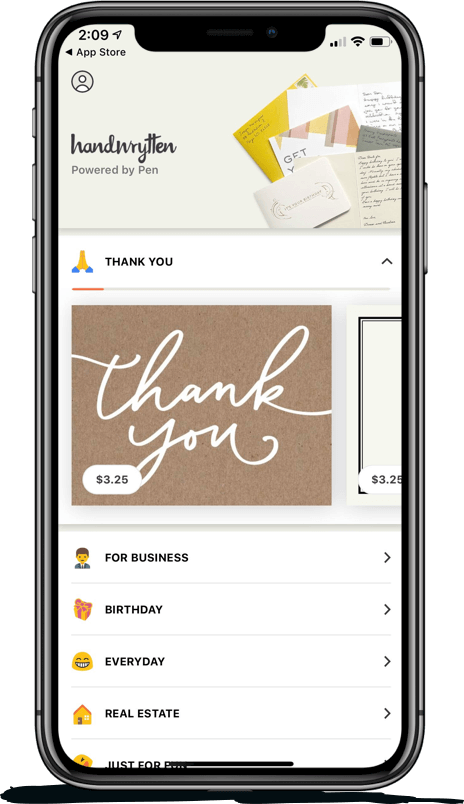
Scale your handwritten outreach, creating positive impressions and long lasting bond.
Sign Up Today!

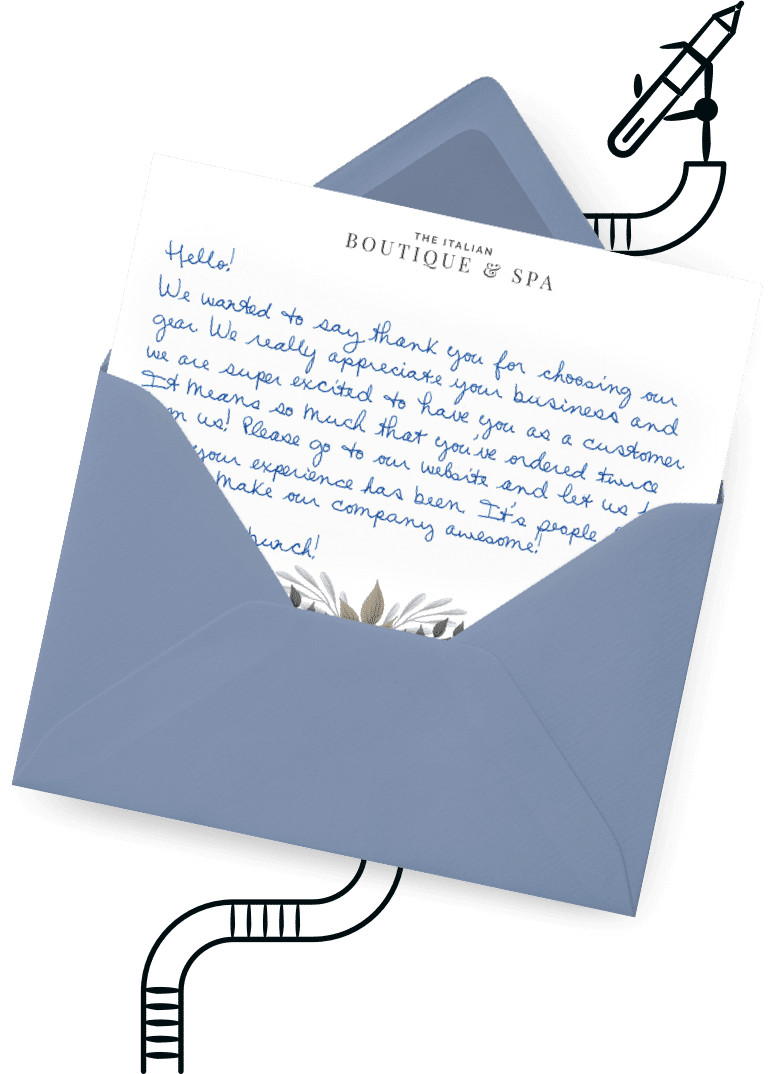

Over 100 designs to choose from or design your own. Our online card customizer makes it simple.
Check Out Our Cards!




Thank you.
