


Gratitude is everywhere. Genuine gratitude — specific, personal, and delivered in a format that communicates real effort — is rare. That’s the opportunity.
Make every thank you count is a principle that most businesses endorse in theory and underdeliver on in practice. The intention behind thanking clients, customers, employees, and donors is almost universally genuine — the gap is in execution. A generic email acknowledgment, a printed form letter, or an automated text message all communicate the same thing regardless of the warmth of their language: that the thank you was produced by a system rather than expressed by a person. And gratitude produced by a system doesn’t build loyalty.
Genuine gratitude — specific, individual, delivered in a format that communicates real effort — does something fundamentally different. It creates the felt sense of being personally seen and specifically valued that is the foundation of every lasting business relationship. And the format that delivers that felt sense most reliably, at any scale, is the handwritten card — physical, personal, and impossible to mistake for mass communication.
This guide covers how to build a systematic thank you campaign that genuinely makes every thank you count — across clients, customers, employees, donors, and every relationship that sustains a business or organization long-term. The approach is multi-step, strategic, and built around the specific touchpoints that create the deepest loyalty at each stage of every relationship.
The thank you campaign failure most organizations experience isn’t a failure of intention — it’s a failure of format and specificity. Most thank you campaigns deploy generic appreciation in digital formats that communicate efficiency rather than genuine individual care. The recipient of a beautifully designed thank you email knows, implicitly, that the same email went to everyone in the same segment. The format itself undermines the message.
To make every thank you count, the format needs to match the sentiment. Genuine individual appreciation requires a format that communicates individual effort — and in the landscape of modern business communication, nothing communicates individual effort as reliably as a physical, handwritten card that arrives in someone’s mailbox.
The thank you campaigns that build real loyalty aren’t the ones with the highest production values or the most sophisticated automation. They’re the ones that create the felt sense of genuine individual acknowledgment at the specific moments in the relationship when that acknowledgment matters most. The multi-step framework in this guide is built around exactly those moments.
A thank you campaign that makes every expression of gratitude count isn’t a single touchpoint — it’s a deliberate sequence of acknowledgments delivered at the specific moments in a relationship when gratitude creates the strongest impressions. Each step serves a distinct purpose, and the cumulative effect of the full sequence is significantly greater than any individual touchpoint in isolation.
Step 1: Define what you’re grateful for — specifically. The most common thank you campaign mistake is expressing gratitude generically rather than specifically. “Thank you for your business” is appreciated but forgettable. “Thank you for trusting us with [specific thing]” is remembered. Before building any thank you campaign, identify exactly what quality of this specific relationship is being acknowledged — and make sure that specificity shows up in the message.
Step 2: Identify the right moments. Every relationship has moments when gratitude creates stronger impressions than others — when the recipient is most emotionally attuned to how the relationship is going and most receptive to genuine acknowledgment. New client onboarding, project completion, loyalty milestones, seasonal moments, and unexpected no-occasion gestures all represent high-impact thank you campaign touchpoints.
Step 3: Match the format to the moment. Not every thank you moment requires a handwritten card — some are better served by a quick email or a brief phone call. The principle is to use the most personal format appropriate to the specific moment and relationship. For the moments that matter most, the handwritten card is almost always the right choice.
Step 4: Build the sequence. A thank you campaign that makes every thank you count is a sequence of touchpoints, not a single gesture. Map the specific moments in each relationship type where a thank you creates value, and build a multi-step program that ensures every meaningful moment is covered consistently.
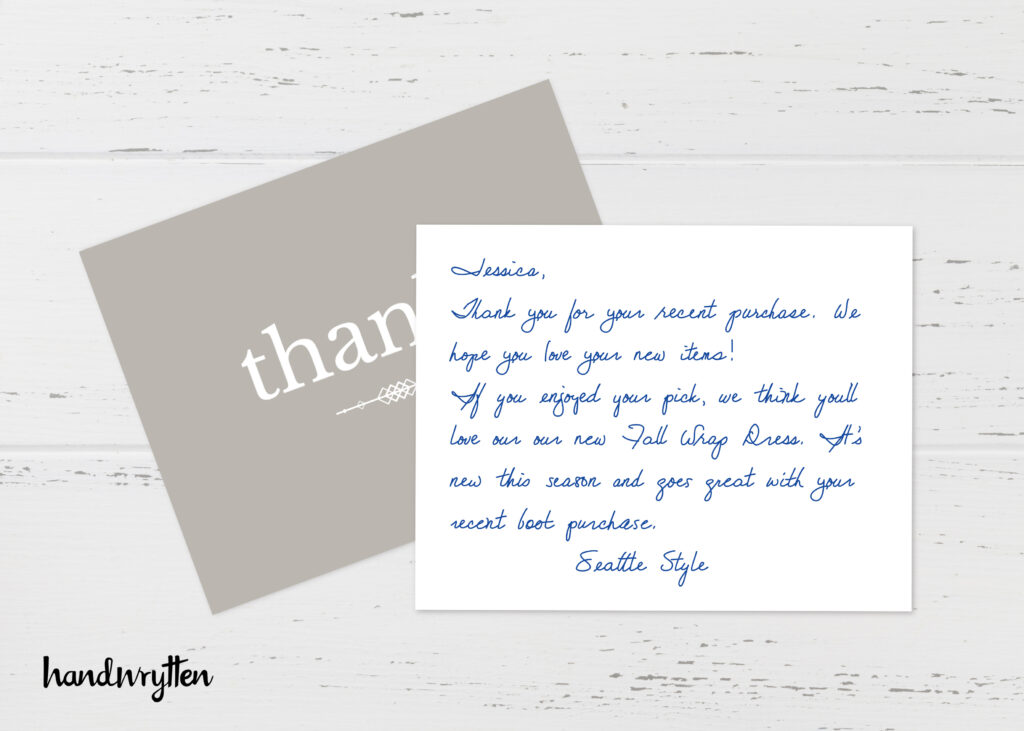
The client thank you campaign that makes every thank you count across the full lifecycle of a business relationship requires touchpoints at four distinct moments — each one serving a different relational function and creating a different quality of impression.
Touchpoint 1 — The new client welcome (Day 1-2):
The first thank you in any client relationship sets the tone for everything that follows. A handwritten welcome card arriving within 48 hours of the first engagement communicates individual acknowledgment at the moment when the client is most attuned to whether this organization is worth a long-term relationship.
“Welcome — we’re genuinely grateful for the trust you’ve placed in us. Our commitment is to make sure that trust is rewarded with every interaction we have. We’re looking forward to building something meaningful together. Thank you.”
Touchpoint 2 — The milestone acknowledgment (30-90 days):
A thank you campaign note that arrives at the first significant milestone in the client relationship — project completion, 30-day check-in, first renewal — communicates ongoing investment in the relationship beyond the initial onboarding enthusiasm.
“Reaching [specific milestone] together felt like the right moment to reach out personally and say — thank you. For your engagement, your trust, and the partnership you’ve brought to this relationship from the beginning. We’re genuinely proud of what we’ve accomplished together.”
Touchpoint 3 — The no-occasion appreciation note (3-6 months):
The no-occasion thank you is the most powerful touchpoint in any client thank you campaign — because it arrives without any commercial trigger, communicating genuine individual care that has nothing to do with the transaction cycle.
“No particular occasion for this note — just a genuine moment of appreciation for the relationship we’ve built and the trust you continue to extend. Working with clients like you is exactly why we do what we do. Thank you.”
Touchpoint 4 — The anniversary thank you (12 months):
A thank you campaign note on the first anniversary of the client relationship marks the milestone specifically and communicates ongoing gratitude for the tenure of the partnership.
“One year of working together — and we wanted to make sure you heard directly from us how much that means. Thank you for a year of genuine partnership. We’re looking forward to everything ahead.”
For e-commerce and retail businesses, the customer thank you campaign that makes every thank you count combines post-purchase acknowledgment with loyalty recognition and the occasional surprise-and-delight gesture that creates the social sharing and word-of-mouth activity that sustains customer acquisition at manageable costs.
Touchpoint 1 — Post-purchase welcome (immediate):
“Thank you for your order — and for the trust that comes with it. We hope [product] exceeds every expectation. If there’s anything we can do to make your experience better, we’re here.”
Touchpoint 2 — First repeat purchase recognition (second order):
“You’re back — and we couldn’t be more grateful. Thank you for trusting us with a second order. Your loyalty means more than a standard confirmation email can express. We’re committed to earning it with every purchase.”
Touchpoint 3 — Loyalty milestone acknowledgment (5th order or 1-year mark):
“Five orders in — and we wanted to take a moment to say thank you specifically. Your loyalty has been genuine and consistent, and we’re grateful for every order. As a small token of our appreciation, we’ve included a little something inside.”
Touchpoint 4 — Surprise-and-delight note (unexpected, no trigger):
“No particular reason for this note — just a genuine moment of appreciation for a customer who has become one of our favorites. Thank you for supporting what we’re building. It means more than you know.”
The employee thank you campaign that makes every thank you count is built around the same principle as every other relationship-building program — but with the specific stakes of employee retention, engagement, and the organizational culture that sustains performance over time. Employees who feel genuinely valued stay longer, perform better, and contribute more actively to the culture that sustains everything else.
Touchpoint 1 — New hire welcome (Day 1):
“Welcome — we’ve been looking forward to your arrival. What you bring to this team matters, and we’re committed to making sure you have everything you need to do your best work. We’re genuinely glad you’re here.”
Touchpoint 2 — Project completion recognition (immediately after):
“What you brought to [specific project] was exceptional — and we wanted to make sure you heard that directly, not in a meeting recap but in a format that reflects how genuinely significant we think it was. Thank you. Well done.”
Touchpoint 3 — Work anniversary acknowledgment (annually):
“[X] years on this team — and we don’t take that for granted. Thank you for the commitment that represents and for everything you’ve brought to this organization in that time. We’re grateful for you.”
Touchpoint 4 — Holiday appreciation note (year-end):
“As the year closes, I wanted to reach out personally to say how much your contribution has meant. This year asked a lot — and you delivered consistently. Thank you. Happy holidays.”
For nonprofit organizations, the donor thank you campaign that makes every thank you count is the single most important investment in the development calendar — because donor retention is primarily a function of how genuinely valued donors feel between campaigns, not how compelling the campaigns themselves are.
Touchpoint 1 — First gift acknowledgment (within 48 hours):
“Thank you for your first gift to [Organization] — it means more than a standard receipt can express. What you’ve made possible is [specific impact], and we’re genuinely grateful you’ve chosen to be part of what we do.”
Touchpoint 2 — Impact update note (30-60 days):
“We wanted to reach out personally to share what your support has made possible since your gift. [Specific impact]. That outcome exists because of donors like you — and we didn’t want another month to pass without making sure you knew that directly.”
Touchpoint 3 — Recurring milestone acknowledgment:
“One year of monthly giving — and we want to make sure you know how much that consistency means. Your ongoing commitment creates the kind of sustained impact that one-time gifts simply can’t. Thank you for a full year of genuine partnership.”
Touchpoint 4 — Seasonal appreciation note (no ask):
“This Thanksgiving, we’re reflecting on the generosity that makes our work possible — and your name comes to mind with genuine gratitude. Thank you for everything. No ask here — just appreciation.”
A real estate thank you campaign that makes every thank you count follows the client through the full transaction arc and beyond — creating the post-close relationship that generates the referrals that sustain long-term production.
Step 1 — Post-showing appreciation: “Thank you for your time today — and for the trust you’re placing in us to help find the right home. We’re genuinely invested in this search.”
Step 2 — Post-offer thank you: “Thank you for trusting our guidance through the offer process. We’re working hard on your behalf and genuinely excited about what’s ahead.”
Step 3 — Post-close welcome home: “Welcome home — officially. It was a genuine privilege to be part of this journey. Please reach out for anything, now or years from now.”
Step 4 — Anniversary follow-up: “One year since closing day — and we’ve been thinking about you. We hope [address] has brought everything you were hoping for.”
A healthcare thank you campaign acknowledges patients as whole people rather than appointments in a schedule — creating the relational warmth that sustains practice loyalty through the inevitable friction of long-term patient relationships.
Step 1 — New patient welcome: “Welcome to [Practice Name] — we’re honored to be your healthcare team and committed to providing care that reflects how much your wellbeing matters to us.”
Step 2 — Post-procedure follow-up: “We’ve been thinking about you since your visit and wanted to check in personally. We hope recovery is going smoothly. We’re here for any questions.”
Step 3 — Preventive care reminder: “A personal note to let you know it’s time for your annual wellness visit. Preventive care is the best investment you can make — and we’d love to see you.”
Step 4 — Holiday appreciation: “Happy holidays from our whole team — and thank you for trusting us with your care this year. It’s a privilege we don’t take lightly.”
A professional services thank you campaign makes every thank you count by treating each client engagement as the beginning of a long-term relationship rather than a time-bounded project.
Step 1 — Project kickoff appreciation: “Thank you for choosing us for [project]. We’re genuinely invested in delivering something you’ll be proud of — and grateful for the opportunity.”
Step 2 — Milestone acknowledgment: “Halfway through [project] and we wanted to reach out personally to say — thank you for the partnership you’ve brought to this. It makes everything better.”
Step 3 — Project completion thank you: “[Project] is complete — and we’re proud of what we built together. Thank you for your trust, your engagement, and the quality of partnership you brought to every step.”
Step 4 — Post-project check-in: “It’s been a few months since we wrapped [project] and we wanted to check in personally. We hope the results have continued to deliver. We’re always here for what comes next.”
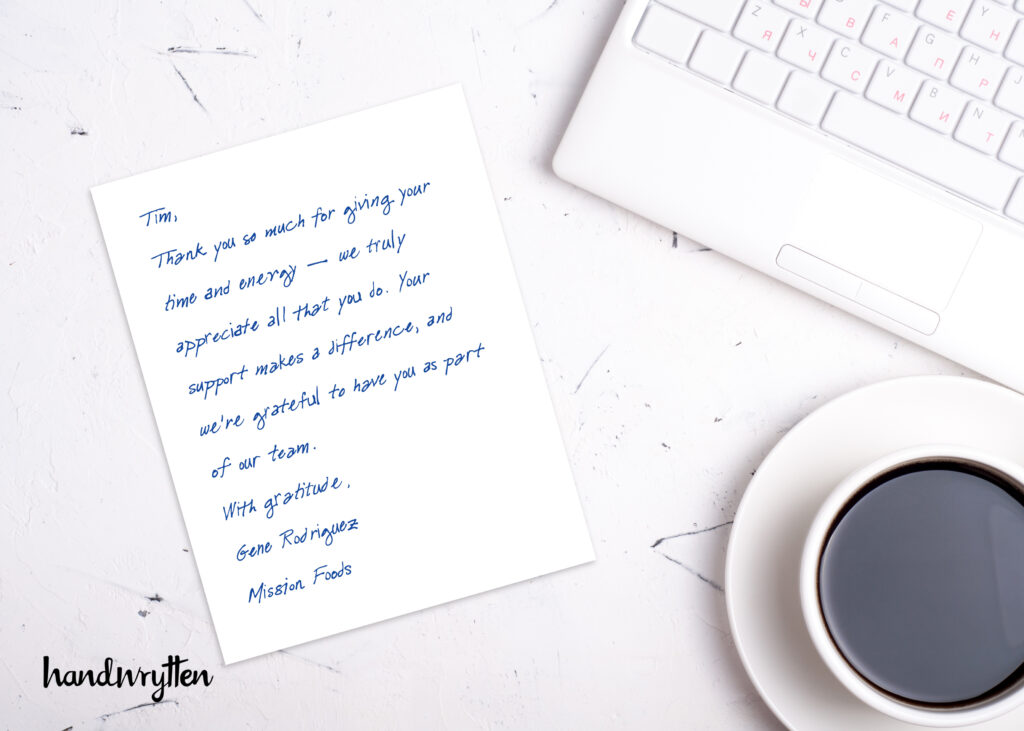
The operational challenge of making every thank you count across multiple relationship types, multiple touchpoint moments, and any volume of recipients is precisely what prevents most organizations from executing genuine, consistent gratitude programs. Writing individual notes, managing timing, coordinating mailing — the manual effort required is simply not feasible alongside everything else on the operational calendar.
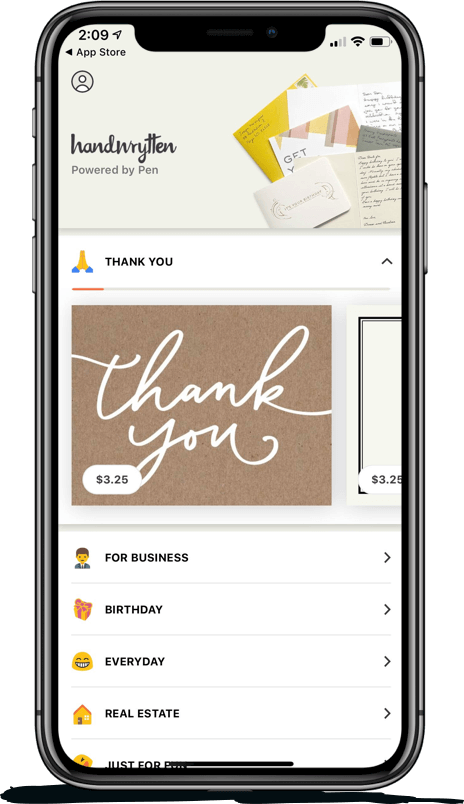
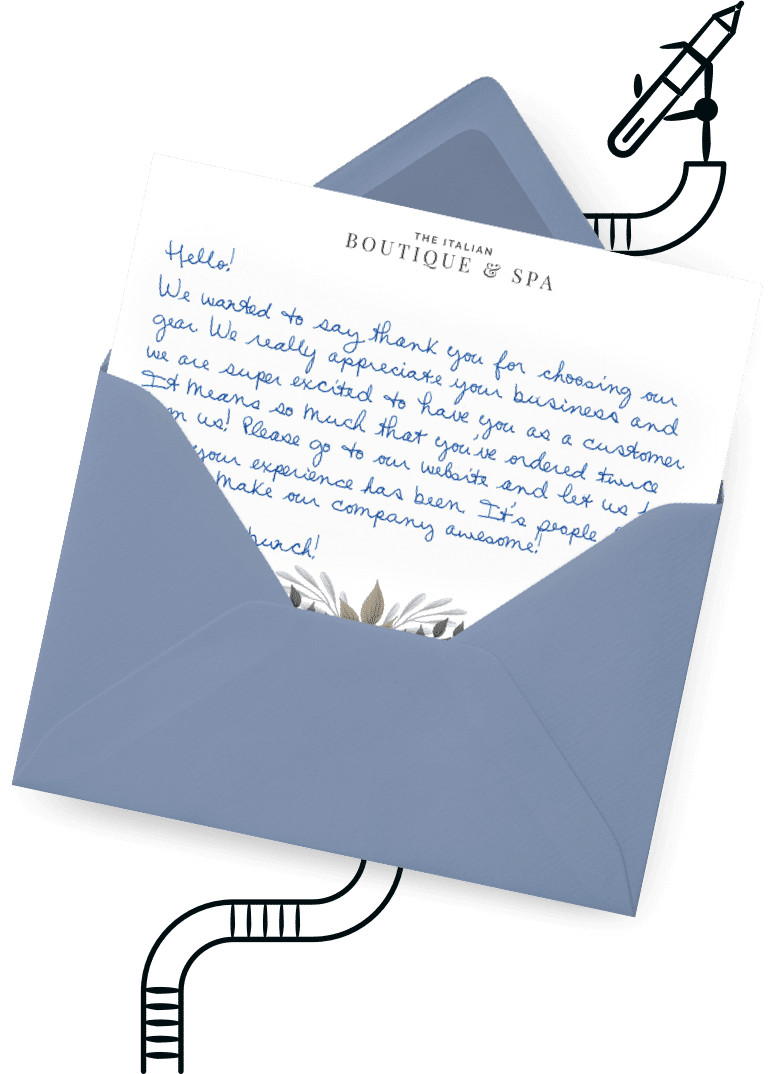
Handwrytten removes that barrier entirely. Using robotic pen-and-ink technology that produces genuinely handwritten cards — real pen, real paper, real ink — Handwrytten’s platform makes it possible to make every thank you count at any volume, triggered automatically through CRM integrations with Salesforce, HubSpot, Shopify, Zapier, and other platforms.
Configure the trigger — a new account opened, a project marked complete, an anniversary date reached, a donation processed — and Handwrytten handles everything else. Each card arrives in genuine handwriting, personalized with the recipient’s name and a message calibrated to the specific moment, without any manual effort from your team. Multiple handwriting styles, branded stationery options, and gift card inclusions ensure every piece feels individually crafted — because the handwriting process itself is genuine.
The result is a thank you campaign that runs systematically in the background — making every thank you count at every meaningful moment, for every person in every relationship, without requiring anyone to remember to send a card.
How many touchpoints should a thank you campaign include?
Three to five touchpoints across the relationship lifecycle produces the strongest loyalty and referral outcomes — enough to create a pattern of consistent individual acknowledgment without overwhelming recipients. The campaigns outlined in this guide average four touchpoints per relationship type, spaced to hit the highest-impact moments in each relationship arc.
Should every thank you campaign touchpoint be a handwritten card?
No — and the most effective thank you campaigns layer handwritten cards with digital touchpoints strategically. Use email for operational communication and information delivery. Use handwritten cards for the moments that require genuine individual impression — first contact, significant milestones, no-occasion appreciation, and year-end acknowledgment. The handwritten card is the premium touchpoint reserved for the moments that matter most.
Can thank you campaigns be personalized at scale?
Yes. Handwrytten’s dynamic personalization fields pull recipient names, relationship context, milestone details, and any other CRM data into each card automatically — producing the individual quality that makes thank you campaigns effective at any volume.
How do you measure whether a thank you campaign is working?
Track four metrics: client retention rate among recipients vs. non-recipients, referral attribution rate from the campaign audience, repeat purchase rate for customer audiences, and response rate to campaign touchpoints. The correlations between systematic handwritten thank you campaigns and these metrics are almost always clear — and expressing them in revenue terms builds the strongest case for program investment.
What’s the most important element of a thank you campaign that builds real loyalty?
Specificity and consistency. A thank you campaign that references something real and specific about the individual relationship — and that arrives consistently at every meaningful moment rather than sporadically when someone remembers — creates the cumulative impression of genuine individual care that real loyalty is built on. Neither element alone is sufficient. Both together are transformative.
Gratitude is not a scarce resource — but genuine, specific, consistently delivered gratitude in a format that communicates real individual effort is rarer than it should be. The organizations that make every thank you count aren’t the ones that feel the most grateful. They’re the ones that have built the systems to express that gratitude consistently, personally, and in a format that creates lasting impressions.
The thank you campaign is the system. Handwrytten is what makes it scalable. The loyalty it builds is what makes everything else possible.
Start Sending → handwrytten.com
Editor’s note: This article was revised in June 2026


Scale your handwritten outreach, creating positive impressions and long lasting bond.
Sign Up Today!


Over 100 designs to choose from or design your own. Our online card customizer makes it simple.
Check Out Our Cards!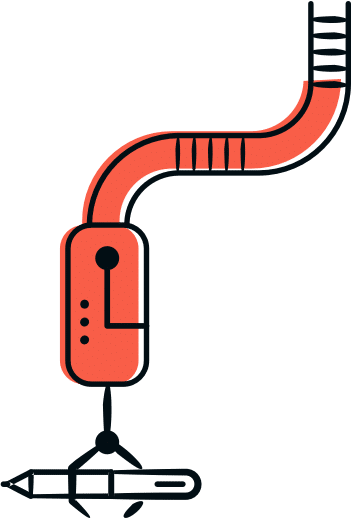




Thank you.
