


Your CRM knows exactly when to reach out. Handwriting changes how that outreach feels.
Handwriting as a CRM trigger is the strategic integration that most organizations using CRM automation have never considered — and the one that produces the most disproportionate impression at every key moment in the customer lifecycle. CRM platforms are extraordinarily good at identifying the right moments for outreach: the client anniversary, the churn risk signal, the closed deal, the dormant account, the high-intent behavior that precedes a purchase decision. What most CRM automation workflows do with those moments is send another email — another message competing for attention in the most crowded communication channel available.
The problem isn’t the automation. The problem is the output. Email automation is expected, processed efficiently, and forgotten. Handwriting as a CRM trigger produces something fundamentally different: a genuine, physical, individually written card that arrives in the recipient’s mailbox at exactly the moment the CRM identified as meaningful, in the format that communicates individual human care rather than automated sequence management.
The result is CRM automation that doesn’t feel automated — outreach that arrives with the timing precision of a sophisticated workflow and the emotional impact of a personally written note. This guide covers five strategic applications of handwriting as a CRM trigger, with the messages, implementation approach, and business case for each.
The case for handwriting as a CRM trigger starts with a straightforward observation about attention and impression. Email inboxes are managed environments — recipients process email efficiently, filtering for relevance and deleting aggressively. A well-crafted automated email from a thoughtful CRM workflow gets approximately the same quality of attention as every other email in the inbox: a subject line scan, a brief read if it clears the relevance filter, and a quick deletion or archive.
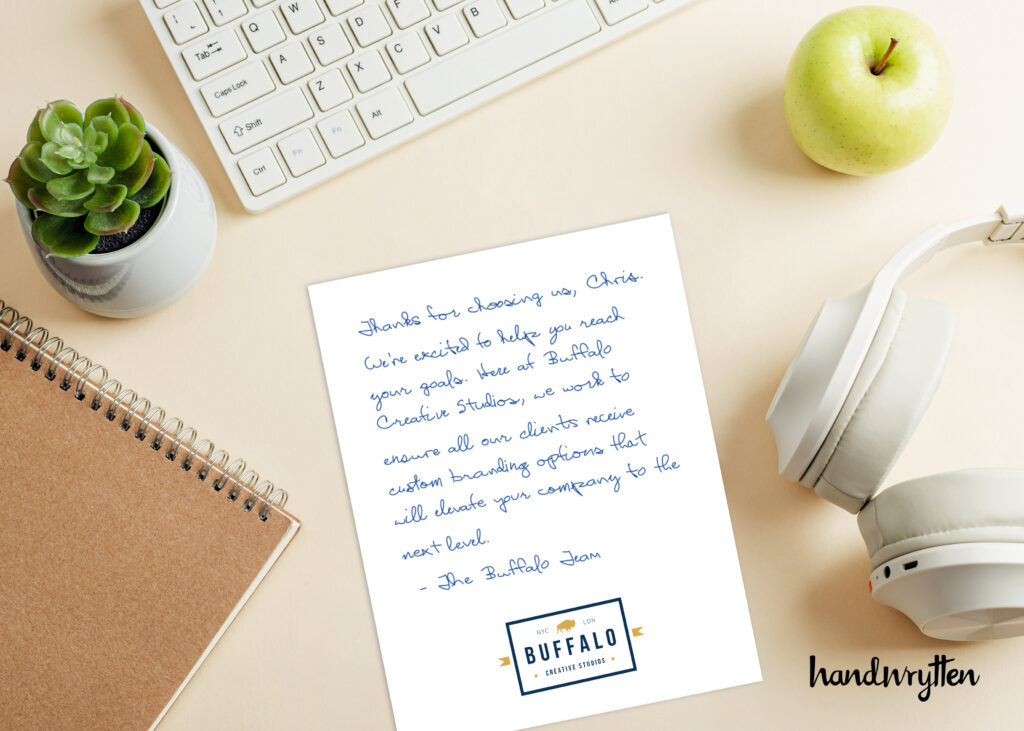
A handwritten card arriving in a physical mailbox receives a categorically different quality of attention — because the format signals individual effort before the envelope is opened, arrives in a channel with almost no competitive noise, and creates a physical object the recipient holds and reads in a way they never hold and read an email. The same CRM data point that triggers an automated email can trigger a handwritten card through Handwrytten’s platform — with the same precision timing, the same personalization fields, and the same scalability, but producing an impression that email automation never achieves.
This is the strategic value of handwriting as a CRM trigger: it doesn’t replace CRM automation — it transforms its output from expected digital communication into unexpected physical acknowledgment that creates genuine individual impressions at the moments that matter most.
Handwrytten’s robotic pen-and-ink technology produces genuinely handwritten CRM trigger cards — real pen, real paper, real ink — through native integrations with Salesforce, HubSpot, Zapier, and other platforms. Every card is personalized with dynamic fields from CRM data and mailed without any manual effort from your team.
The first and most consistently high-impact application of handwriting as a CRM trigger is the automatic acknowledgment of client milestones — the anniversary dates, renewal moments, onboarding completions, and account expansions that CRM platforms track precisely and most organizations completely underutilize.
Client milestone data is available in almost every CRM. The one-year anniversary of a client relationship, the completion of an onboarding sequence, the signing of a renewal contract, the expansion of an account to a new tier — all of these are data points that exist in the system, generate no outreach, and represent missed opportunities to communicate something that sustains client loyalty more reliably than any marketing campaign.
A handwritten card triggered automatically when a client milestone is reached communicates something that no email automation achieves: that the organization tracks these moments because the relationship matters, and that the milestone is worth a specific, physical, individual gesture of acknowledgment. That communication is the foundation of genuine client loyalty.
Why this trigger works:
Milestone moments are when clients are most emotionally attuned to how the organization they’ve chosen treats them. A client reaching their one-year anniversary with a vendor is subconsciously evaluating the relationship — and a genuine handwritten acknowledgment arriving at exactly that moment communicates investment in the relationship at precisely the right time.
CRM data points to trigger on:
CRM handwritten note messages for milestones:
One-year anniversary:
“One year — and we’re more grateful for this partnership now than when it began. Thank you for the trust you’ve placed in us over the past twelve months. We’re genuinely invested in making the next year even stronger. Happy anniversary.”
Contract renewal:
“Thank you for renewing — genuinely. The fact that you chose to continue means more than a standard confirmation email can express. We’re committed to earning that decision every day of the year ahead.”
Onboarding completion:
“You’ve completed onboarding — and we wanted to mark the moment with something more personal than a system notification. Welcome to the next phase of what we’re building together. We’re here for everything ahead.”
Account expansion:
“Congratulations on the expansion — and thank you for the increased trust that represents. We take that seriously and are committed to delivering everything the growth deserves. Exciting things ahead.”
The second application of handwriting as a CRM trigger is the response to high-intent behavioral signals — the website visits, pricing page views, demo engagements, and content interactions that CRM and marketing automation platforms track as purchase intent indicators.
Most organizations respond to high-intent signals with automated email sequences — a follow-up email after a pricing page view, a nurture sequence triggered by a demo request, a re-engagement series for returning visitors. These responses are expected, easily filtered, and rarely produce the pattern interruption that moves a prospect from research to conversation.
Handwriting as a CRM trigger at high-intent moments produces something different: a genuine physical card that arrives days after the digital behavior, in a channel the prospect isn’t expecting any business communication through, communicating individual attention in a format that email can never replicate. A prospect who visited a pricing page and received a personalized handwritten card three days later has a story worth telling — and a significantly different impression of the organization than one who received another automated follow-up email.
Why this trigger works:
High-intent moments are when prospects are most open to moving forward — and the organization that shows up in an unexpected format at that moment creates a disproportionate impression that sustains through the consideration period.
CRM data points to trigger on:
CRM handwritten note messages for high-intent moments:
Pricing page engagement:
“[Name] — we noticed you’ve been exploring what we offer, and we wanted to reach out personally rather than with another automated email. If there are questions we can answer or a conversation worth having, we’re genuinely here for it. No pressure — just a real note from real people.”
Abandoned demo request:
“[Name] — we noticed you started a demo request and wanted to follow up personally. We’d love to show you what we can do whenever the timing feels right. No urgency — just an open invitation whenever you’re ready.”
Return visit after inactivity:
“[Name] — we’re glad you came back. Whatever brought you back to us, we wanted to reach out in a format that doesn’t feel like every other follow-up you’ve received. We’re here when the timing is right.”
The third application of handwriting as a CRM trigger is one of the highest-return use cases available — the proactive, empathetic outreach to at-risk clients at the moment CRM data identifies declining engagement, usage drops, or renewal risk.
Most churn prevention workflows are email-heavy — a re-engagement series triggered by declining usage, a renewal reminder sequence for approaching contract dates, a customer success check-in email when support ticket volume increases. These approaches communicate the right intention and almost always feel like automated retention management to the recipient — because they are, and experienced clients recognize the pattern.
Handwriting as a CRM trigger in churn prevention contexts produces something categorically different: a genuine, warm, individually written card that communicates concern for the relationship rather than concern for the renewal. A client who receives a handwritten card during a period of declining engagement experiences something unexpected — individual acknowledgment at a moment when they were probably expecting either silence or a sales call. That unexpected warmth is what creates the re-engagement opportunity that email sequences rarely produce.
Why this trigger works:
At-risk clients are in a state of diminished engagement — which means the intervention that reaches them needs to clear a higher bar than a client who is actively engaged. A handwritten card clears that bar because it arrives in a format that communicates genuine individual investment rather than automated retention management.
CRM data points to trigger on:
CRM handwritten note messages for churn risk:
Declining usage:
“[Name] — we noticed things have been quieter lately on your end, and we wanted to reach out personally rather than send another automated check-in. If there’s something we can be doing better, or something getting in the way of getting value from what we’ve built together, we genuinely want to know. We’re here.”
Renewal approaching with low engagement:
“[Name] — your renewal is coming up, and before any conversation about contracts, we wanted to reach out as people who value this relationship and want to make sure you’re getting everything you need from it. What would make the next year better? We’d love to hear.”
Key stakeholder gone quiet:
“[Name] — it’s been a while since we’ve connected, and we wanted to reach out personally to say that the relationship matters to us — beyond the account metrics. If there’s anything we can do better, or if the timing for a conversation has shifted, we’re here whenever you’re ready.”
The fourth application of handwriting as a CRM trigger is one of the most operationally simple and strategically impactful available — the automatic handwritten welcome card triggered the moment a deal is marked closed-won in the CRM.
The post-sale moment is the highest point of new client emotional receptivity in the entire customer lifecycle — the moment when a buyer has made a decision they feel good about and is most attuned to signals that confirm or undermine that decision. Most organizations handle this moment with an automated welcome email and an onboarding sequence invitation. A handwritten welcome card arriving two to three days after the deal closes — warm, specific, and completely free of operational content — creates the first unexpected gesture of genuine individual care that new client relationships are built on.
The impression this card creates isn’t just pleasant. It’s strategically significant — because the client who receives a genuine handwritten welcome card has a specific, memorable story about their new vendor relationship from day one. That story gets shared internally, sets the emotional tone for onboarding, and creates the goodwill that sustains the relationship through the inevitable friction of early implementation.
Why this trigger works:
The closed-won moment is when enthusiasm is highest — for both the new client and the selling team. A handwritten card triggered automatically at deal close captures that enthusiasm in a physical format that arrives precisely when the client’s receptivity to positive reinforcement is at its peak.
CRM data points to trigger on:
CRM handwritten note messages for closed-won:
Deal closed:
“Welcome — and thank you for choosing us. We don’t take that decision lightly, and we’re genuinely committed to making sure you feel that in every interaction ahead. We’re excited about what we’re going to build together.”
First invoice sent:
“Your first invoice is on its way — and so is this note, because we wanted the beginning of our working relationship to include something more personal than a payment confirmation. Thank you for your trust. We’re here for everything ahead.”
Account activated:
“You’re officially in. And we wanted to mark the moment with something that feels like the partnership we intend to be — genuine, personal, and invested in your success from day one. Welcome aboard.”
Executive welcome:
“[Name] — welcome to the [Company] family. I wanted to reach out personally at the start of this relationship to say that your success is something our whole team takes seriously. We’re glad you chose us. Please reach out directly whenever you need anything.”
The fifth application of handwriting as a CRM trigger is the re-engagement of dormant accounts — the lapsed customers, cold leads, and inactive clients that most organizations either ignore entirely or attempt to reach through the same email sequences that failed to maintain engagement in the first place.
Dormant accounts represent significant unrealized revenue — relationships that existed, delivered value at some point, and went quiet for reasons that are rarely permanent. The challenge is that re-engaging a dormant account through digital channels requires the communication to clear the same filtering mechanisms that every other email faces — and in the case of an account that has already drifted from the relationship, the filtering is often higher.
Handwriting as a CRM trigger for dormant re-engagement bypasses those filtering mechanisms entirely. A genuine handwritten card arriving in a lapsed client’s mailbox — warm, agenda-free, and communicating genuine individual acknowledgment rather than automated re-engagement tactics — creates a pattern interruption that email sequences almost never produce. The recipient’s immediate experience is: someone took the time to write and mail a card, which means the relationship still matters enough to warrant that effort. That impression is what reopens the conversation.
Why this trigger works:
Dormant accounts went quiet for a reason — and re-engaging them requires an approach that communicates genuine relationship investment rather than commercial reactivation. A handwritten card communicates the former. An automated email communicates the latter.
CRM data points to trigger on:
CRM handwritten note messages for dormant re-engagement:
Inactive client:
“[Name] — it’s been a while, and we wanted to reach out personally rather than through another automated sequence. We genuinely value the relationship we built and wanted to make sure you knew the door is always open. No pressure, no pitch — just a real note from people who think about the clients who matter to us.”
Lapsed customer:
“[Name] — we noticed you haven’t been back in a while, and we wanted to reach out in a format that felt more like a genuine hello than a re-engagement campaign. We’d love to earn your business again whenever the timing feels right. And if there’s something we could have done better, we’d genuinely welcome that feedback.”
Cold lead:
“[Name] — we connected a while back, and we didn’t want to let more time pass without reaching out personally. Whatever the timing looked like when we last spoke, we wanted to make sure you knew we’re still here and still interested in the conversation whenever it makes sense for you.”
Lapsed donor:
“[Name] — we’ve been thinking about the generosity you showed to this mission — and we wanted to reach out personally to say thank you, regardless of what comes next. Your past support made a real difference. We’re grateful for it.”
The most effective implementations of handwriting as a CRM trigger aren’t one-off campaigns — they’re systematic programs that cover every key moment in the customer lifecycle with an appropriately timed, appropriately personalized handwritten touchpoint.
Building that program requires deliberate decisions in four areas:
Trigger mapping. Identify every key moment in your customer lifecycle where a handwritten card would create a stronger impression than digital outreach — and map each to the specific CRM data point that fires it. Milestone dates, stage changes, behavior thresholds, engagement drops, and inactivity flags all provide clean trigger points for CRM handwritten notes.
Message template development. Develop message frameworks for each trigger — warm, specific, and genuinely free of commercial pressure. The message template is where the human judgment lives. The automation is what delivers it consistently.
Personalization configuration. Map dynamic fields — client names, milestone specifics, relationship context, account details — to CRM data points so every card feels individually written even at scale.
Integration setup. Handwrytten’s native integrations with Salesforce, HubSpot, Zapier, and other platforms allow every trigger to fire automatically — each card produced in genuine pen-and-ink handwriting, personalized for the individual recipient, and mailed without any manual effort from your team.
How does handwriting as a CRM trigger actually work technically?
Handwrytten integrates with CRM and marketing automation platforms through native connections and Zapier. When a defined trigger fires in your CRM — a deal stage change, a milestone date, a behavior threshold, an inactivity flag — it automatically initiates a card order in Handwrytten with the relevant personalization data pulled from the CRM record. Handwrytten produces and mails the card within one to two business days.
Can CRM handwritten notes be fully personalized even at scale?
Yes. Dynamic personalization fields pull any data point from the CRM record — names, company names, milestone specifics, account details, relationship context — into each card automatically. Every card reads as individually written because the personalization is genuine, even when the underlying message template is consistent across a segment.
Does handwriting as a CRM trigger work for B2C as well as B2B?
Yes — and some of the highest-return applications are in B2C contexts. Post-purchase welcome cards triggered by Shopify order data, loyalty milestone cards triggered by purchase count thresholds, and re-engagement cards triggered by inactivity windows all produce strong results in consumer-facing e-commerce and retail contexts.
How do CRM handwritten notes compare to email in response rates?
Handwritten notes consistently generate higher response rates than email at equivalent trigger moments — because the format clears the attention filtering that email has trained recipients to apply efficiently. The differential is most pronounced in churn prevention and dormant re-engagement contexts, where email sequences have often already failed before the handwritten card is deployed.
Can gift cards or inserts be included with CRM triggered handwritten notes?
Yes. Handwrytten supports gift card inclusions and branded inserts at any volume — making it possible to pair a handwritten note with a tangible expression of appreciation at key moments like closed-won welcomes and loyalty milestones.
Evaluating which handwritten card service has the deepest CRM integrations? See our full handwritten card service comparison for 2026 covering Salesforce, HubSpot, Shopify, Klaviyo, Blackbaud, and more.
Handwriting as a CRM trigger doesn’t replace the automation your team has built — it transforms what that automation produces. The same data points, the same timing logic, the same personalization fields that power your email sequences can power a handwritten outreach program that creates genuinely individual impressions at every moment your CRM identifies as meaningful.
The CRM knows when. Handwriting changes how. Together they create something that neither produces alone — automated outreach that actually feels human.
Start Sending → handwrytten.com
Editor’s note: This article was revised in July 2026


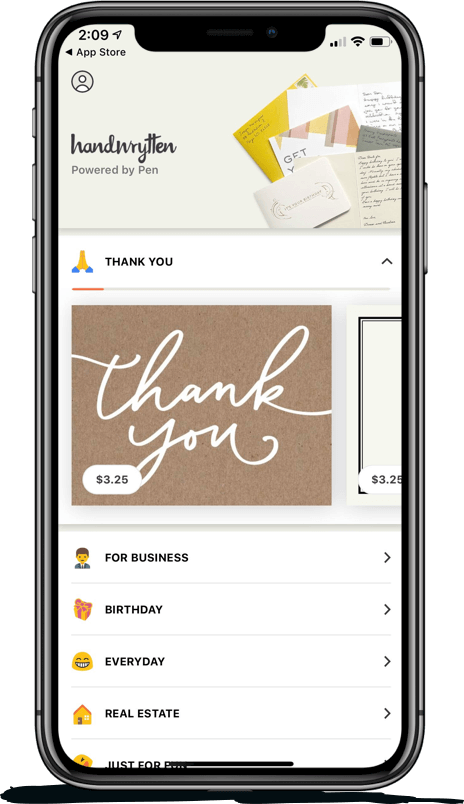
Scale your handwritten outreach, creating positive impressions and long lasting bond.
Sign Up Today!


Over 100 designs to choose from or design your own. Our online card customizer makes it simple.
Check Out Our Cards!




Thank you.
