



Most cold outreach gets ignored. Almost nobody ignores a Halloween card from someone they’ve never met.
A Halloween card cold prospect strategy is one of the most underutilized tools in B2B sales — and one of the most effective when executed with the right tone and timing. Cold prospecting is hard not because salespeople don’t know how to write a good email, but because the people worth reaching have learned to filter everything that looks like cold outreach before they’ve finished reading the subject line. Executives, business owners, and decision-makers at the level worth targeting have seen every angle. They know when they’re being worked. And they’ve become extraordinarily efficient at ignoring it.
The solution isn’t a better email. It’s a completely different channel, arriving at a completely unexpected moment, with a tone that almost nobody in sales has the confidence to use: genuine, self-aware humor. A Halloween card cold prospect outreach campaign does exactly that — arriving in a physical format, at a seasonally unexpected moment, with a message that makes the recipient smile before they’ve decided whether to respond.
And the prospect who smiles at your outreach is already in a different category than the one who deletes it.
October sits in an interesting position in the B2B calendar. Q4 planning is underway, budgets are being finalized, and decision-makers are actively thinking about what they want to accomplish before year-end. It’s a window of genuine commercial relevance — but it’s also a window when everyone else is pushing hard with the same urgency-driven Q4 messaging.
A Halloween card cold prospect approach gives you a completely different angle. Halloween carries no commercial pressure in a B2B context — no gift expectations, no year-end urgency, no awkward professional obligation. It’s a moment of seasonal levity that almost everyone appreciates, and that almost no sales professional thinks to use as a cold prospect outreach touchpoint.
That gap is the opportunity. A Halloween card arriving on a prospect’s desk at a moment when their guard is lower, their inbox isn’t saturated with holiday campaigns, and the sheer unexpectedness of receiving a spooky-themed card from someone they’ve never met is enough to generate the one thing cold prospect outreach almost never gets: genuine curiosity about who sent it.
Humor disarms in a way that professional polish cannot. A cold prospect outreach email that’s well-written, well-researched, and carefully personalized is still processed as a sales attempt — because that’s what it is, and the recipient knows it. A Halloween card that leads with a seasonal pun and only mentions a business conversation in passing is processed as something else entirely: a person with enough confidence and self-awareness to try something genuinely different.
That perception — of a salesperson who isn’t following a playbook, who is secure enough to be funny rather than formal — is one of the most disarming first impressions in prospecting. It communicates personality, creativity, and a level of social intelligence that a perfectly formatted cold prospect outreach email never can.
The physical format amplifies everything. A Halloween card cold prospect campaign arrives in the prospect’s physical environment — on a desk, in a mailbox, in a space that no email ever occupies. It gets picked up, turned over, read by someone who is curious rather than defensive. And when the message is genuinely funny, the card often gets shown to a colleague, mentioned in a conversation, or left on a desk where it continues making an impression for days.
That’s the kind of first touchpoint that makes every subsequent cold prospect outreach significantly more likely to land.
The Halloween card cold prospect approach isn’t right for every target — but for the right ones, it’s one of the most effective cold prospect outreach tools available.
Creative and marketing professionals. Anyone who works in a creative field values originality and has seen enough generic outreach to deeply appreciate when someone does something different. A Halloween card demonstrates the kind of thinking that creative professionals respect — immediately differentiating you from every other vendor in their inbox.
Senior executives and C-suite targets. High-level executives are the most heavily targeted people in any sales funnel — and the most immune to standard cold prospect outreach. A Halloween card works precisely because it’s so far outside what they expect to receive that it bypasses the automatic filtering that kills most prospecting attempts at this level.
Entrepreneurs and business owners. People who built something from scratch tend to appreciate the audacity of an unconventional approach. A Halloween card cold prospect strategy signals the kind of confidence and creativity that entrepreneurs often look for in the people and companies they want to work with.
Anyone in a relationship-driven industry. Real estate, financial services, recruiting, consulting — fields where the relationship itself is the product respond particularly well to cold prospect outreach that leads with personality rather than pitch.
The balance is delicate but achievable: genuinely funny without being unprofessional, seasonally specific without being gimmicky, and light on the ask without burying it entirely. A few principles for effective Halloween card cold prospect messaging:
Lead with the holiday, not the pitch. The Halloween card is not a Halloween-themed sales email. The seasonal element should carry most of the card. The business ask — if it appears at all — should feel like an afterthought, not the reason for the gesture.
Make the humor self-aware. The best Halloween card cold prospect messages acknowledge the audacity of the approach. A line like “I realize this is an unusual way to introduce myself” signals social intelligence and makes the recipient feel like they’re in on the joke rather than being worked.
Keep the ask extremely low-pressure. This is not a card asking for a demo or a discovery call. It’s a card asking for permission to exist in someone’s awareness — a follow-up conversation, a quick call if timing is ever right, or simply a name they’ll recognize when the next cold prospect outreach touchpoint arrives.
Use a real name and a specific reason for reaching out. Even in a funny Halloween card cold prospect message, one specific detail about why you’re reaching out to this person elevates the impression from charming to genuinely smart.
“Happy Halloween, [Name]. I figured a handwritten card from someone you’ve never met was spooky enough to fit the season — and different enough to be worth reading.
I’m [Your Name] at [Company]. I work with [relevant industry or type of company] and think there might be a conversation worth having when the timing is right.
No tricks. Just a genuine hello and the hope that this card ends up on the desk rather than the recycling bin. I’ll follow up — but only if you haven’t blocked me by then.
Happy haunting, [Your Name]”
“Happy Halloween, [Name] — I’ve been a ghost in your industry for years, and I figured it was time to make myself known.
I’m [Your Name] from [Company]. I’ve followed your work on [specific project or achievement] and would love to connect when you have five minutes that aren’t already haunted by deadlines.
No pressure, no pitch — just a conversation with someone who admires what you’re building.
Frighteningly yours, [Your Name]”
“Happy Halloween, [Name]. I realize sending a handwritten card is either bold or bizarre — I’m choosing to believe it’s bold.
I’m [Your Name] at [Company]. We help [type of business] with [specific value proposition], and I think what we do might be genuinely useful to what you’re building at [their company].
If that sounds worth a conversation — even a short one — I’d love to hear from you. If not, I hope the card at least made the day slightly more interesting.
[Your Name]”
“Happy Halloween, [Name]. I’ve sent a couple of emails into the void and started to wonder if I’d become a ghost myself.
I’m [Your Name] — we connected briefly earlier this year about [specific context]. I still think there’s something worth discussing, but I’ll leave it in your hands.
If October feels like the wrong time, I completely understand. If not — you know where to find me.
[Your Name]”
“Happy Halloween, [Name]. I hope you’ll forgive the unconventional outreach — I’ve found that a handwritten card at this time of year is the one thing that actually gets read.
I’m [Your Name] at [Company]. We work with [type of organization] to [specific value], and I believe there’s a conversation worth having between us when the time is right.
No urgency, no pressure — just a genuine introduction and a hope that this card brings a small moment of levity to an otherwise busy October.
Warm regards, [Your Name]”
A single Halloween card cold prospect message to a high-value target is a strong individual play. A systematic campaign reaching fifty to one hundred targeted accounts simultaneously is a meaningful pipeline investment — and one that Handwrytten’s platform makes operationally straightforward.
Using robotic pen-and-ink technology that produces genuinely handwritten cards with real pen on real paper, Handwrytten allows cold prospect outreach campaigns to run at any volume with each card personalized for the individual recipient. CRM integrations with Salesforce, HubSpot, and Zapier allow campaign lists to be uploaded and triggered automatically, with delivery timed to arrive in the final two weeks of October when the Halloween card cold prospect strategy has the highest seasonal relevance.
Campaign best practices:
Segment by tone. The playful message that works for a creative director won’t land the same way with a CFO. Two or three Halloween card cold prospect message variations matched to prospect type will significantly outperform a single message sent to everyone.
Follow up within a week of delivery. The Halloween card creates the opening. A brief email or LinkedIn message referencing the card a week later captures the conversation it created. “I sent you something slightly unusual last week” — and let the recipient’s recognition of it do most of the work.
Include a soft call to action. A QR code linking to a brief video introduction, a personalized landing page, or a simple calendar link gives curious prospects an easy next step that doesn’t feel like a commitment.
Track results. Note which accounts received Halloween card cold prospect outreach and monitor engagement in the weeks following delivery. Response rates, LinkedIn connections, and inbound calls or emails will make the case for scaling the program next October.
Time the delivery carefully. Cards should arrive in the third or fourth week of October — close enough to Halloween to feel timely, early enough not to compete with last-minute chaos. Account for Handwrytten’s one-to-two business day production window when planning your send date.
Use premium card quality. A Halloween card on cheap stock undermines the impression before it’s read. High-quality paper and a well-designed seasonal card signal the same level of attention to detail you want associated with your brand throughout the cold prospect outreach process.
Keep the design fun but professional. Subtle seasonal elements — a tasteful ghost, a Halloween color palette, a clever illustrated border — work better than loud novelty designs. The goal is charming, not costume party.
Don’t overthink the message. The Halloween card cold prospect messages that perform best sound like a confident, self-aware person wrote them. Write it in your voice, make it genuinely funny if you can, and send it.
Is a Halloween card cold prospect strategy appropriate for all industries? Most, but not all. Creative, technology, real estate, financial services, marketing, and entrepreneurial targets tend to respond very well to Halloween card cold prospect outreach. Highly conservative regulated industries may warrant a warmer, more professional tone that nods to the season without leaning into humor. Know your audience and calibrate accordingly.
How many cards should I send in a Halloween card cold prospect campaign? Start with your highest-priority cold accounts — the targets you’ve struggled to break through with digital outreach. Fifty to one hundred cards is a manageable first campaign that produces enough data to justify scaling next October.
Should I include anything extra with the Halloween card cold prospect message? Generally keep the card itself clean — the Halloween card cold prospect strategy works best when it leads with humor and personality rather than promotional material. A QR code linking to a brief personalized video adds value without undermining the tone.
How do I follow up after sending a Halloween card cold prospect outreach piece? Wait until the card has likely been delivered — typically five to seven business days after your send date — then reach out via email or LinkedIn referencing the card. Keep the follow-up as light as the card itself: “I sent something slightly spooky your way last week — hoping it arrived and maybe even made you smile.”
Can Handwrytten produce Halloween-themed cards at scale for a cold prospect outreach campaign? Yes. Handwrytten supports custom card designs, seasonal themes, and bulk campaigns with individual personalization — so a Halloween card cold prospect campaign reaching any number of targeted accounts can be executed without manual effort from your team.
For the complete Halloween cards for business strategy beyond cold outreach, see Halloween Cards That Scare Up New Business.
Cold prospect outreach is a crowded, difficult game — and the people worth reaching have gotten very good at ignoring it. A Halloween card cold prospect strategy doesn’t ask permission to stand out. It just does. It arrives in an unexpected format, at an unexpected moment, with an unexpected tone — and in doing so creates the one thing every cold outreach campaign is ultimately trying to generate: a reason for the prospect to feel something about the person who sent it.
That feeling is where the relationship starts. Everything else follows from there.
Start Sending → handwrytten.com


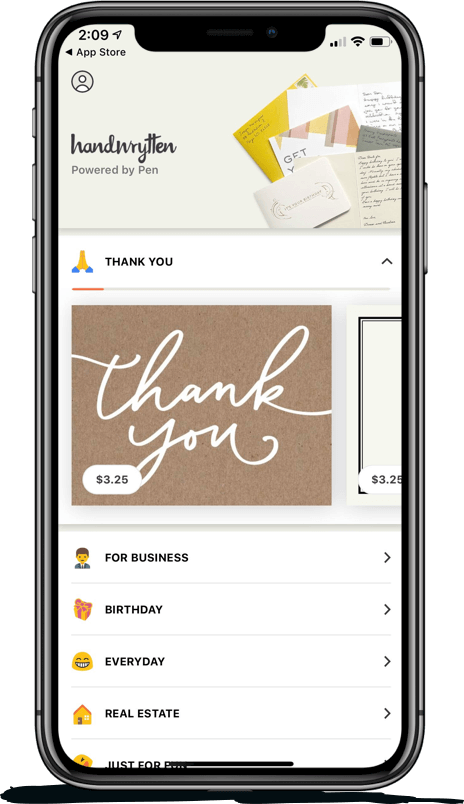
Scale your handwritten outreach, creating positive impressions and long lasting bond.
Sign Up Today!

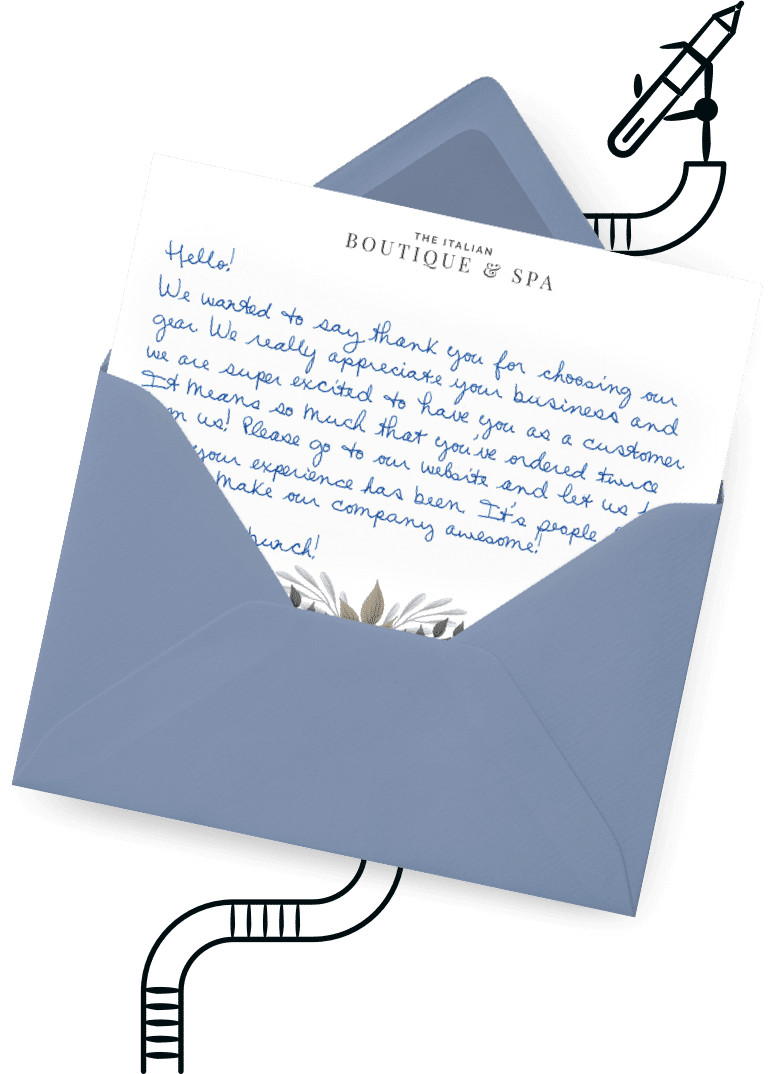

Over 100 designs to choose from or design your own. Our online card customizer makes it simple.
Check Out Our Cards!




Thank you.
