


Customers don’t remember everything about an experience. They remember how it started and how it ended.
For businesses, this has a direct and practical implication. The quality of your product, the efficiency of your process, and the strength of your middle-touchpoint communication all matter — but none of them matter as much as the impression you make when a customer first encounters your brand and the impression you leave when the interaction concludes.
Get those two moments right, and customers come back. They refer others. They become the kind of advocates no advertising budget can manufacture. Get them wrong — or simply leave them unattended — and even an otherwise strong experience can fail to generate the loyalty it should.
Here’s how to see your brand through your customers’ eyes at both of these critical moments, and what to do about what you find.
First impressions form faster than most businesses realize. Research suggests the window is measured in seconds — and once formed, first impressions are remarkably resistant to revision. A customer who encounters friction, confusion, or indifference in their first interaction with your brand doesn’t usually give it another chance to explain itself.
That speed makes intentionality at the first touchpoint non-negotiable.
Brand presentation. Before a customer reads a word of your copy or speaks to anyone on your team, they’ve already formed an opinion based on what they see. Your visual identity — logo, website design, packaging, physical environment — communicates professionalism, trustworthiness, and relevance faster than any message you send. Inconsistency or carelessness at this level undermines everything that follows.
Responsiveness. How quickly and how helpfully your business responds to initial inquiries sends a powerful signal about how the customer will be treated if they commit to the relationship. Slow responses or generic acknowledgments communicate that the customer isn’t a priority — and they’ll act accordingly.
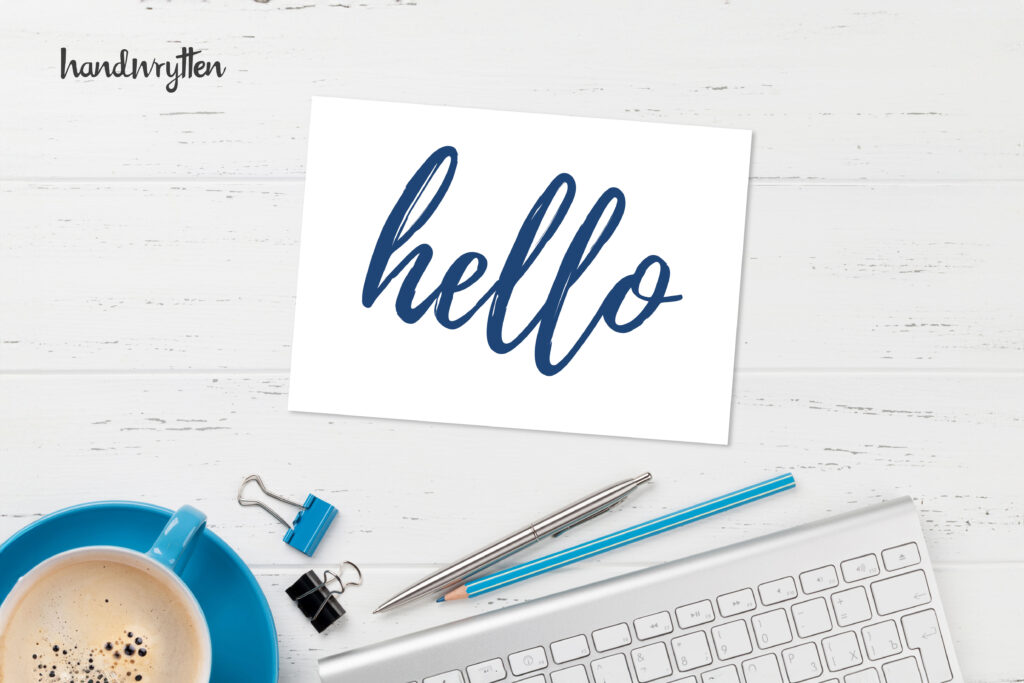
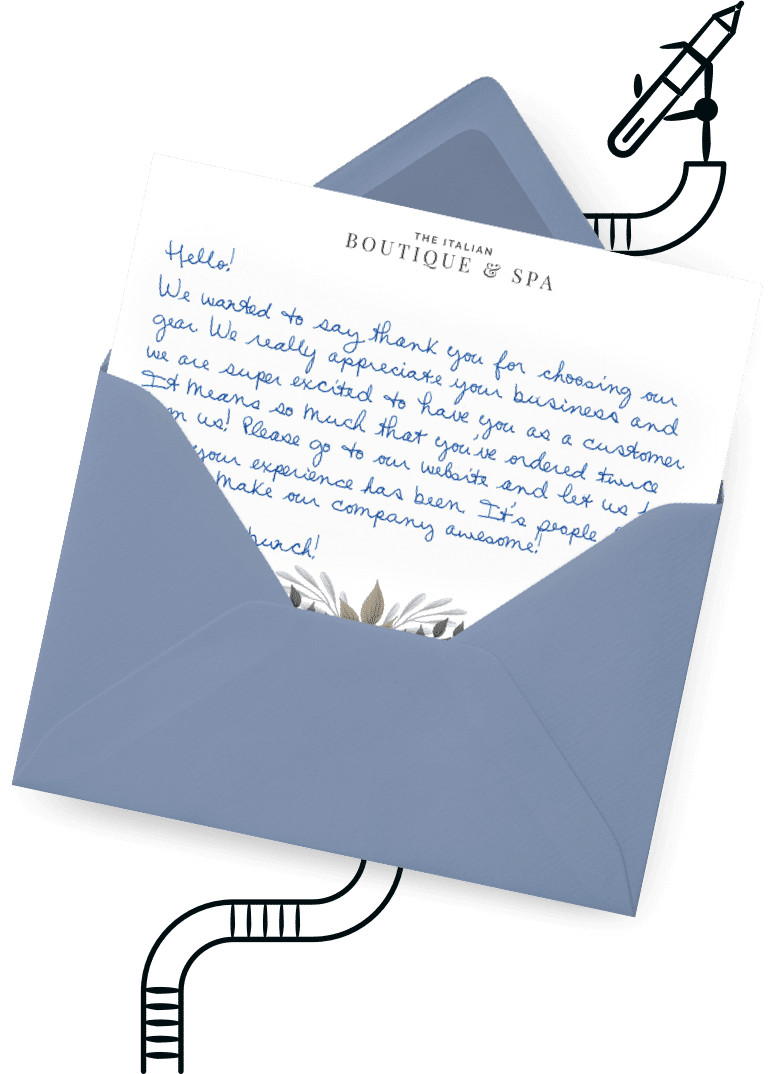
Personalization. In a marketplace where mass communication is the norm, the experience of feeling individually recognized is rare enough to be genuinely memorable. A handwritten welcome note arriving with a first order, or a personalized onboarding card sent to a new client, does something that a well-designed email sequence cannot: it signals that a real person acknowledged this specific customer’s decision to choose you.
A customer who forms a strongly positive first impression doesn’t just feel good in that moment — they enter the rest of the relationship with a bias toward your brand. They’re more forgiving of small mistakes, more receptive to future communication, and more likely to interpret ambiguous situations in your favor. That bias is enormously valuable, and it starts at the very first touchpoint.
If the first impression determines whether a customer gives you a chance, the last impression determines whether they come back — and whether they tell anyone about you.
The “last impression” isn’t necessarily the end of the customer relationship. It’s the most recent meaningful touchpoint: the conclusion of a purchase, the end of a service engagement, the final communication in a sequence. Whatever that moment is, it carries outsized weight in how the customer will remember the overall experience.
A genuine follow-up. Most businesses stop communicating the moment the transaction is complete. That silence is a missed opportunity. A thoughtful follow-up — a thank-you note, a check-in after delivery, a card acknowledging the completion of a project — tells the customer that the relationship matters to you beyond the sale. That signal, delivered at the right moment, is one of the most efficient investments in customer retention a business can make.
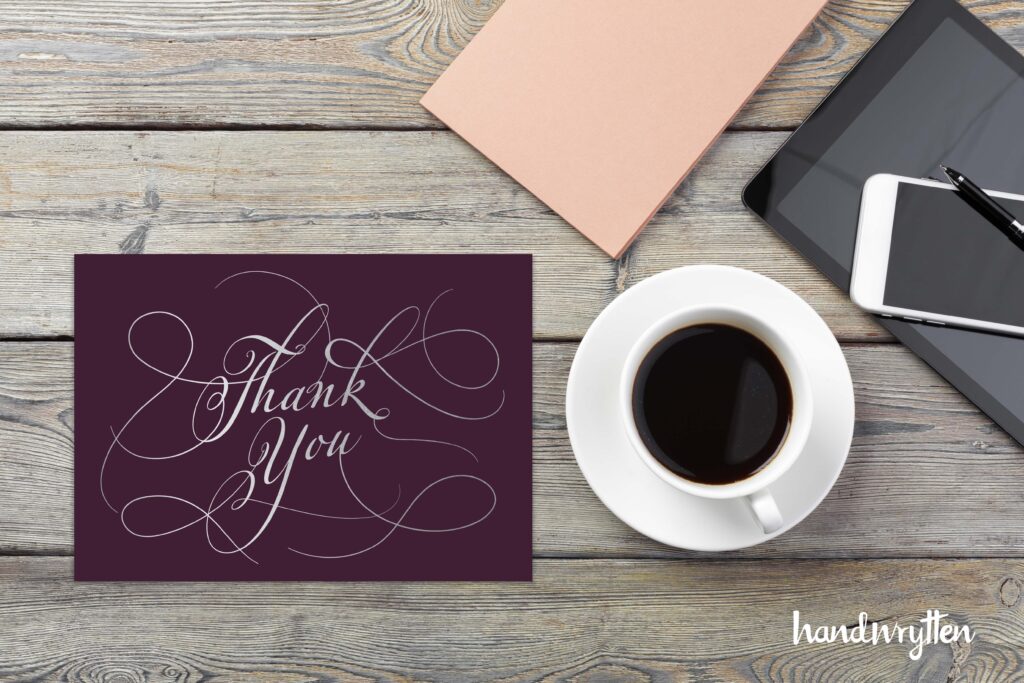
Exceeding expectations at the finish line. The end of an interaction is the moment most businesses relax. The best brands do the opposite — they put something extra into the conclusion of an experience precisely because they know how disproportionately it will be remembered. A handwritten thank-you card sent after a purchase, a service completion, or a client milestone costs very little and creates a lasting emotional impression that no automated message can replicate.
Specificity over generality. A follow-up that references the actual experience — the specific purchase, the specific project, something the customer mentioned — signals attention in a way that generic outreach never does. The more specific the acknowledgment, the more valued the customer feels.
First and last impressions don’t just individually matter — they function together as the emotional frame around the entire customer experience. Customers who feel welcomed at the beginning and genuinely appreciated at the end are not just satisfied customers. They’re emotionally connected ones.
That distinction matters more than most businesses recognize. Emotionally connected customers have significantly higher lifetime value than merely satisfied ones — they spend more, stay longer, and refer more actively. The emotional bookend effect is one of the most reliable drivers of that connection.
Handwritten notes from Handwrytten are uniquely effective at both moments. At the beginning of a relationship, a handwritten welcome card signals that this brand is different — that it sees customers as individuals and is willing to demonstrate that through a gesture that costs real effort. At the end of an interaction, a handwritten thank-you card creates the kind of warm, lasting final impression that keeps the relationship alive in the customer’s mind long after the transaction is complete.
New customer onboarding. A handwritten welcome note arriving with a first order or at the start of a client engagement sets the relational tone immediately. It communicates: we noticed you chose us, and that matters to us.
Post-purchase follow-up. A thank-you card sent after a purchase — not the automated confirmation email, but a physical, handwritten note — is the single most underutilized retention tool in most businesses’ arsenals. It turns a transaction into a moment.
Service completion. When a project ends, a service concludes, or a milestone is reached, a handwritten note acknowledging the work and expressing genuine appreciation closes the loop in a way that makes the next conversation easier to start.
Long-term customer recognition. Anniversary cards, holiday outreach, and milestone acknowledgments for long-tenured customers reinforce that the relationship is ongoing — not just active when there’s something to sell.
Special occasions. Birthdays, significant life events, and personal milestones, when acknowledged by a brand, create the kind of emotional connection that transforms customers into advocates. These moments are easy to miss and disproportionately valuable when you don’t.
The exercise of seeing your brand through your customers’ eyes starts with an honest audit of those two critical moments. What does a customer experience in the first thirty seconds of encountering your brand? And what’s the last impression they carry away from their most recent interaction?
Most businesses, when they do this honestly, find gaps — not because of indifference, but because the middle of the customer journey absorbs most of the operational attention, and the edges get less intentional care than they deserve.
Closing those gaps doesn’t require a complete overhaul. It requires deliberate investment in the moments that matter most — and the recognition that a physical, personal, handwritten gesture at those moments will consistently outperform digital alternatives in both emotional impact and measurable retention outcomes.
Why do first and last impressions matter more than what happens in between? Because of how human memory works. People disproportionately remember the beginning and end of experiences — a well-documented psychological pattern. For businesses, this means that even a strong middle experience can be undermined by a weak opening or closing touchpoint, and that investing in those two moments delivers outsized returns.
How do handwritten cards improve first impressions specifically? They signal personalization and effort at the moment when a customer is most open to forming an opinion about your brand. A handwritten welcome note communicates that your business sees customers as individuals — a distinction that most brands fail to make at the very first touchpoint.
When is the best time to send a handwritten card? The highest-value moments are at the beginning of a new customer relationship, immediately following a purchase or service completion, during significant personal or professional milestones, and at seasonal touchpoints like holidays and anniversaries. Any moment where genuine appreciation is appropriate is a moment where a handwritten card adds value.
Can handwritten cards be sent at scale without losing their personal quality? Yes. Handwrytten uses robotic pen-and-ink technology to produce genuinely handwritten cards — personalized for each recipient, produced with real ink on real paper — at any volume. The personal quality isn’t simulated; it’s built into the medium itself.
How does this approach affect customer retention over time? Customers who feel emotionally connected to a brand have measurably higher lifetime value, lower churn rates, and significantly higher referral activity than those who are merely satisfied. Consistent, thoughtful investment in first and last impressions is one of the most reliable drivers of that emotional connection.
Your brand is defined in the minds of your customers by the moments they remember most clearly. Make sure those moments — the first and the last — are earning the relationship they’re capable of building.
Start Sending → handwrytten.com
Editor’s note: This article was revised in May 2026


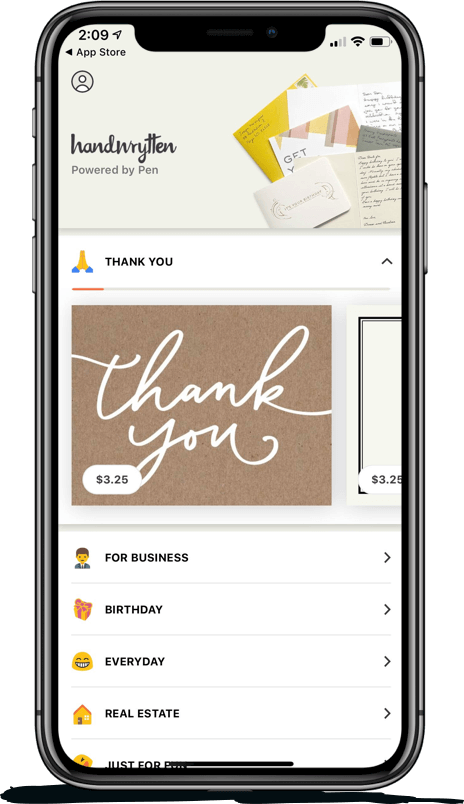
Scale your handwritten outreach, creating positive impressions and long lasting bond.
Sign Up Today!


Over 100 designs to choose from or design your own. Our online card customizer makes it simple.
Check Out Our Cards!




Thank you.
