


The right words at the wrong time land differently than the right words at the right time. Here’s how to get both right.
When to send a thank you card — timing matters more than most people realize. A handwritten note that arrives within days of a meaningful interaction feels immediate, intentional, and genuine. The same note arriving three weeks later feels like an obligation that someone finally got around to. The sentiment may be identical. The impact is not.
Whether you’re thanking a client after a meeting, acknowledging a donor’s generosity, recognizing a referral, or simply responding to a kindness someone showed you, the timing of your thank you card shapes how it’s received just as much as the words inside it. This guide breaks down exactly when to send — across every context — so your appreciation never misses its moment.
The sweet spot for most thank you cards is within 24 to 72 hours of the event or interaction. Sending within this window keeps the gesture relevant, closely connected to the moment you’re acknowledging, and unmistakably intentional.
When a card arrives shortly after a meeting, event, gift, or act of kindness, the recipient doesn’t have to reconstruct the context — you’re reaching them while the moment is still vivid. That immediacy is what makes the appreciation feel genuine rather than routine.
Business and professional examples:
Personal and customer-facing examples:
For businesses, this timing window carries particular weight. A handwritten thank you card arriving within a couple of days of a meeting, purchase, or partnership milestone reinforces positive impressions and keeps your brand top of mind at exactly the moment when the interaction is most likely to influence the next decision.
Pro tip: Immediately after a meeting or event, jot down two or three specific details — what was said, what stood out, what you genuinely appreciated. Then write the card within 72 hours while those details are still fresh. Specificity is what separates a memorable thank you from a forgettable one.
Customers, clients, friends, and supporters all want to feel seen — not just processed. A handwritten card sent after a purchase or gift signals that the transaction mattered beyond the revenue it represented, and that the person behind it is genuinely valued.
This is one of the most underleveraged touchpoints in customer experience. Most businesses send an automated confirmation email. Almost none send a handwritten card. That gap is your opportunity.
Business examples:
Personal examples:
Pro tip: Be specific about what you’re thanking them for. Mentioning the actual item, the exact gesture, or the precise help someone offered is what transforms a thank you card from polite to meaningful. Specificity signals that you actually paid attention — and that signal matters more than any eloquence in the message itself.
In professional settings, knowing when to send a thank you card — timing matters here as much as anywhere — can be the difference between being remembered and being quickly forgotten. A handwritten note sent after a meeting, a referral, or a collaboration adds a layer of thoughtfulness that emails and Slack messages simply cannot replicate.
Unlike a digital follow-up that gets buried in an inbox within hours, a physical card creates a tangible reminder of the connection. It sits on a desk, a credenza, or a bulletin board — quietly reinforcing your appreciation and keeping your name present in a way no notification can.
Handwrytten makes professional thank you outreach manageable at scale — writing, addressing, and mailing authentic handwritten cards so businesses can deliver timely appreciation without adding manual work to already full schedules. CRM integrations with platforms like Salesforce and HubSpot mean cards can be triggered automatically based on meeting outcomes, purchase milestones, or relationship touchpoints — so the right card goes out at the right time without anyone having to remember to send it.
Pro tip: Sending a thank you card after a pitch meeting — before the deal is done — is an advanced move that most people never make. It signals confidence, courtesy, and a level of professionalism that stands out regardless of how the pitch ultimately goes.
Some of the most meaningful thank you cards don’t follow a transaction or a formal interaction. They follow a quiet moment of kindness — a friend who checked in during a hard week, a colleague who covered for you, someone who simply showed up when it mattered.
These cards are often the ones that get kept the longest.
Pro tip: The more unexpected the thank you, the more powerful it lands. A card sent for no transactional reason — just genuine appreciation for who someone is or what they did — is often the most memorable piece of mail a person receives all year.
Life moves fast, and sometimes the thank you card that should have gone out in 72 hours is still sitting on your to-do list three weeks later. Send it anyway. A late thank you is significantly better than no thank you — and most people will appreciate the gesture regardless of timing.
The only adjustment needed is a brief, warm acknowledgment of the delay:
Pro tip: Don’t over-apologize. One sentence acknowledging the delay is enough — spend the rest of the card on the appreciation itself, which is what the recipient actually cares about.
Within 24–72 hours: Meetings, interviews, referrals, networking events, first purchases, donations, gatherings, acts of kindness — any interaction where immediacy signals genuine intention.
Within one week: Post-event follow-ups, vendor appreciation after a project completes, client milestone acknowledgments, employee recognition moments.
Within two to four weeks: Wedding thank you cards, post-conference outreach to a larger list, donor acknowledgment campaigns, onboarding follow-ups.
Even if late: Any thank you that hasn’t been sent yet. A delayed card with a warm acknowledgment of the timing is always better than silence.
The best time to send a thank you card is as soon as you’re thinking about it. The second-best time? Right now.
Whether you’re thanking a client, customer, supporter, friend, or teammate, a handwritten card shows that you value the relationship—and that you took time to say so.
The most common reason thank you cards don’t go out on time isn’t lack of intention — it’s lack of a system. Writing, addressing, and mailing individual cards while managing everything else that comes with running a business or a busy life is harder than it sounds.
Handwrytten’s robotic pen-and-ink technology solves that problem. Real handwriting, real pen, real paper — produced and mailed within one to two business days of your order, with domestic delivery in three to seven business days. Automated campaigns tied to purchase dates, meeting milestones, donation records, or CRM triggers mean the right card goes out at the right time without anyone having to manually initiate it. Custom handwriting styles — including fonts built from your own handwriting — ensure every card looks and feels genuinely personal regardless of volume.
When to send a thank you card — timing matters — and Handwrytten makes sure you never have to choose between timeliness and authenticity.
What if I don’t have time to handwrite each card myself? That’s exactly what Handwrytten is built for. Real handwriting robots produce and mail your cards — you type the message, Handwrytten handles everything else, including writing, addressing, stamping, and mailing.
Can I automate thank you cards for purchases, birthdays, or other recurring triggers? Yes. Handwrytten supports automated campaigns based on dates, purchase events, donation records, or CRM milestones — perfect for businesses and nonprofits with high-volume or recurring thank you needs.
Is a thank you email sufficient? For routine acknowledgments, yes. But when the goal is to make a genuine impression — after an important meeting, a significant purchase, a meaningful referral — a physical handwritten card consistently outperforms digital alternatives in memorability and perceived effort.
What if I don’t know what to write? Start with something specific about the interaction, express gratitude directly, and close warmly. Handwrytten also offers pre-written templates that can be personalized to match your voice and the context of the card.
Can I include a gift card or promotional insert? Yes. Handwrytten allows gift cards and custom inserts to be included with any card order — a simple way to elevate a thank you into something that feels like a genuine gift.
The best time to send a thank you card is the moment you’re thinking about it. The second best time is right now. Whether you’re acknowledging a client, a customer, a donor, a colleague, or a friend — a handwritten card sent with genuine intention, at the right moment, is one of the simplest and most reliable investments in a relationship you’ll ever make.
Start Sending → handwrytten.com


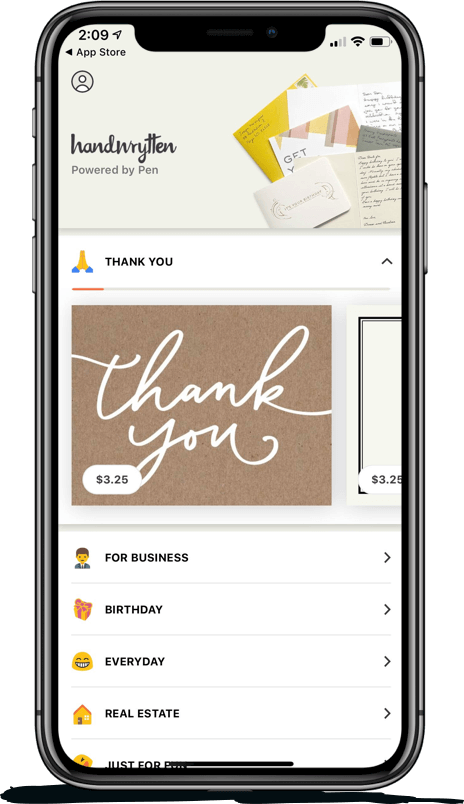
Scale your handwritten outreach, creating positive impressions and long lasting bond.
Sign Up Today!

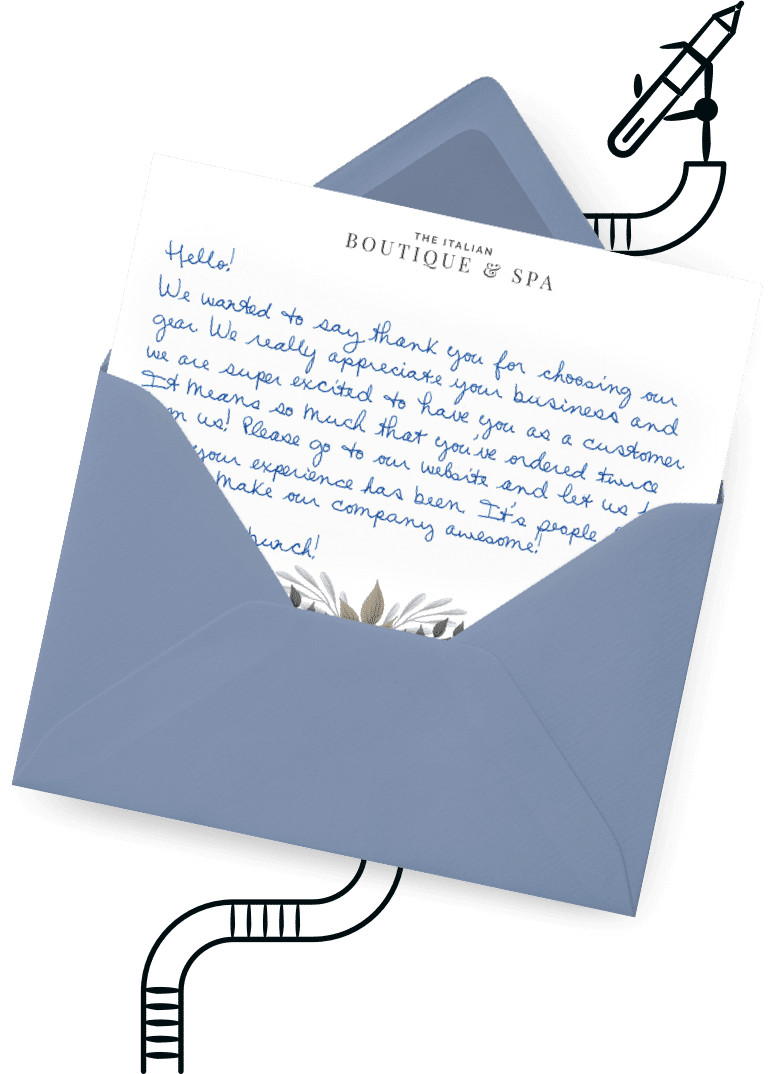

Over 100 designs to choose from or design your own. Our online card customizer makes it simple.
Check Out Our Cards!




Thank you.
