



Handwritten outreach feels powerful. Here’s how to prove it with numbers.
Handwritten campaign ROI is the argument that separates organizations that treat physical mail as a genuine strategic channel from those that treat it as an occasional gesture. The difference between the two isn’t the quality of the cards or the thoughtfulness of the messages — it’s whether anyone is measuring what the outreach actually produces.
Most organizations that run handwritten outreach programs know intuitively that they work. Clients respond differently. Retention improves. Referrals increase. But when budget conversations arrive and every line item needs to justify itself with data, intuition isn’t enough. And the handwritten outreach programs that can’t demonstrate their handwritten campaign ROI in measurable terms are the ones that get cut — not because they aren’t performing, but because nobody built the infrastructure to prove it.
This guide gives you the five metrics that prove handwritten campaign ROI with the precision and credibility that budget conversations, strategy reviews, and mid-year assessments require. Each metric is defined, explained, and paired with a practical framework for calculating it from your existing data.
The measurement challenge with handwritten campaign ROI has always been attribution. When a client renews their contract six weeks after receiving a handwritten anniversary card, the card doesn’t automatically appear in your CRM as the reason. When a prospect responds to a handwritten follow-up after ignoring five emails, the response gets logged but the channel that generated it often doesn’t. When a donor gives again after receiving a handwritten acknowledgment, the gift is tracked but the outreach that preceded it frequently isn’t.
This attribution gap is what keeps handwritten outreach in the discretionary column — not poor performance, but poor measurement infrastructure. The good news is that the tools to close that gap are available and increasingly straightforward to implement.
Handwrytten’s platform integrates with Salesforce, HubSpot, Shopify, Zapier, and other CRM and marketing platforms — logging every card sent, associating each one with the corresponding contact record, and creating the data foundation that makes handwritten outreach metrics calculable. QR codes and personalized URLs embedded in cards create direct response tracking. Campaign-specific promo codes attribute revenue to specific mailings. And the cohort comparison tools that CRM platforms provide allow treatment versus control analyses that reveal the retention, referral, and conversion differentials that constitute the strongest handwritten campaign ROI arguments.
Here are the five metrics that matter most.
Cost per conversion is the most fundamental handwritten outreach metric — and the one that most directly enables comparison between handwritten campaigns and the digital alternatives they complement or replace.
Cost per conversion calculates the total cost of a handwritten outreach campaign divided by the number of meaningful conversions it produces. A conversion can be defined as a response from a cold prospect, a renewed contract, a completed purchase, a referral that became a client, or any other outcome the campaign was designed to generate.
Total campaign cost ÷ number of conversions = cost per conversion
Total campaign cost includes card production costs, postage, any inserts or gift cards included, and the time investment in campaign setup. For campaigns run through Handwrytten, the per-card cost plus any additional elements provides a clean total.
Example: A re-engagement campaign sends 200 handwritten cards at $8 per card including postage — total cost $1,600. The campaign generates 28 responses, of which 14 convert to renewed conversations. Cost per conversion: $1,600 ÷ 14 = $114 per conversion.
The CPC calculation becomes most powerful when compared against the CPC of digital alternatives targeting the same segment. If an email re-engagement sequence costs $2 per contact and generates a 2% conversion rate, the email CPC is $100. If the handwritten campaign costs $8 per card and generates a 12% conversion rate, the handwritten CPC is $67. The handwritten campaign is more expensive per unit and significantly cheaper per outcome — and that math is the core of a compelling handwritten campaign ROI argument.
Pro tip: Run parallel campaigns to the same segment — half receiving handwritten outreach, half receiving email — and compare CPC directly. The controlled comparison produces the cleanest handwritten outreach metrics available.
Customer lifetime value differential is the most financially significant handwritten outreach metric — and the one that most convincingly frames handwritten outreach as revenue infrastructure rather than marketing expense.
LTV differential compares the average lifetime value of clients who received handwritten outreach against those who didn’t. If clients who received handwritten notes stay longer, spend more, and refer more than those who didn’t, the LTV differential represents the financial value that the handwritten outreach program created — and the revenue at risk if the program is eliminated.
Average LTV of treatment cohort − average LTV of control cohort = LTV differential
To calculate average LTV: multiply average annual revenue per client by average client tenure in years.
Example: Clients who received handwritten outreach have an average tenure of 4.2 years at $18,000 annual revenue — LTV of $75,600. Clients who didn’t receive handwritten outreach have an average tenure of 3.1 years at $17,500 annual revenue — LTV of $54,250. LTV differential: $75,600 − $54,250 = $21,350 per client.
Applied across a client base of 500 accounts in the treatment cohort, that LTV differential represents over $10 million in incremental value attributable to the handwritten outreach program.
LTV differential is the metric that reframes the handwritten campaign ROI conversation from cost defense to revenue opportunity. It answers the question every CFO eventually asks: “What would happen if we cut this program?” — with a specific financial number rather than a qualitative argument about relationships and culture.
Retention rate differential is the most actionable handwritten outreach metric for organizations focused on reducing churn — and the one that most directly connects physical mail to the business outcome that matters most in subscription, service, and recurring revenue models.
Retention rate by outreach cohort compares the percentage of clients who renewed or continued their relationship within a given period for those who received handwritten outreach versus those who didn’t.
Clients retained ÷ total clients in cohort × 100 = retention rate
Calculate this separately for your treatment cohort (received handwritten outreach) and your control cohort (did not receive handwritten outreach). The difference between the two rates is your retention rate differential.
Example: Treatment cohort of 300 clients: 261 renewed — retention rate 87%. Control cohort of 300 clients: 222 renewed — retention rate 74%. Retention rate differential: 13 percentage points.
At an average contract value of $20,000, that 13-point differential represents 39 additional retained clients — $780,000 in protected annual revenue.
Retention rate differential is the metric that converts most cleanly into financial language because it connects directly to revenue. Every percentage point of retention improvement has a dollar value that’s straightforward to calculate — and that calculation is the foundation of the strongest handwritten campaign ROI presentations.
Pro tip: Segment your retention analysis by the type and timing of handwritten outreach received. A client who received a handwritten note at onboarding and a work anniversary card may retain at a different rate than one who received only a post-purchase thank-you. The segmentation reveals which touchpoints in your campaign sequence drive the most retention value.
Referral attribution rate is the handwritten outreach metric most directly connected to acquisition — and one of the most compelling additions to a handwritten campaign ROI presentation because referrals are simultaneously the highest-value and lowest-cost acquisition channel available to most organizations.
Referral attribution rate tracks the percentage of new clients or customers who were referred by someone who had received handwritten outreach in the preceding 30 to 90 days. It connects the reciprocity effect — the psychological principle that genuine appreciation triggers advocacy — to measurable acquisition outcomes.
New clients referred by handwritten outreach recipients ÷ total new clients × 100 = referral attribution rate
To track this cleanly, tag every new client acquisition with a referral source in your CRM, and cross-reference referral sources against your handwritten outreach send records. Identify which referring clients had received handwritten outreach in the 30, 60, and 90 days before the referral occurred.
Example: In Q2, your organization acquired 85 new clients. Of those, 31 were referred by existing clients. Of those 31 referrers, 24 had received handwritten outreach in the preceding 90 days. Referral attribution rate: 24 ÷ 85 = 28% of all new client acquisition attributable to handwritten outreach-triggered referrals.
Referral attribution rate converts the referral benefit of handwritten outreach into an acquisition cost comparison. If your standard CAC is $3,500 and referral-sourced clients have an effective CAC of $400 (the cost of the handwritten card that triggered the referral), the acquisition cost savings per referral client is $3,100. Applied across 24 referral-attributed acquisitions, that’s $74,400 in acquisition cost savings attributable to the handwritten outreach program in a single quarter.
Response rate by channel comparison is the most straightforward handwritten outreach metric — and often the most immediately persuasive for audiences who are skeptical that physical mail can outperform digital in a measurable way.
Response rate by channel comparison directly contrasts the percentage of recipients who took a meaningful action — responding, clicking, calling, purchasing, scheduling — following handwritten outreach versus digital outreach targeting the same segment.
Number of responses ÷ number of cards sent × 100 = response rate
Calculate this for your handwritten campaigns and for comparable digital campaigns targeting equivalent segments. The comparison requires that both campaigns target similar audiences with similar objectives — a re-engagement campaign versus a re-engagement campaign, a cold prospect sequence versus a cold prospect card campaign.
Example: Cold prospect email sequence: 500 contacts, 18 responses — 3.6% response rate. Cold prospect handwritten card campaign: 500 contacts, 67 responses — 13.4% response rate. Handwritten outreach generates 3.7x the response rate at 2.8x the per-unit cost — producing a significantly lower cost per response.
Response rate comparison is the metric that most efficiently challenges the assumption that digital outreach is more cost-effective than physical mail. When the per-response cost calculation is run — accounting for the higher unit cost of handwritten cards against the significantly higher response rate they generate — handwritten campaign ROI almost always compares favorably.
Pro tip: Use QR codes and personalized URLs in your handwritten cards to make response tracking automatic and precise. Every scan or URL visit is timestamped and attributed to the specific card that generated it — giving you clean response rate data without requiring recipients to self-report their engagement.
The five metrics above tell the complete handwritten campaign ROI story — but only when they’re tracked consistently and presented together. A single metric in isolation is a data point. Five metrics telling a consistent story of superior retention, acquisition efficiency, referral generation, and conversion cost are a business case.
Here’s a practical framework for building a handwritten campaign ROI dashboard that makes the argument automatically:
Set up cohort tracking in your CRM. Tag every contact who receives a handwritten card with a campaign identifier. This creates the treatment cohort that enables every subsequent comparison.
Define your control cohort. Identify a comparable group of contacts who didn’t receive handwritten outreach — similar in size, relationship stage, and revenue potential. This is your baseline.
Pull the five metrics quarterly. CPC, LTV differential, retention rate differential, referral attribution rate, and response rate comparison — calculated from your CRM data and Handwrytten’s campaign records — every quarter.
Calculate the aggregate handwritten campaign ROI. Total revenue protected through retention differential plus total acquisition cost saved through referral attribution plus total campaign cost savings through CPC advantage, minus total campaign cost, expressed as a percentage return on investment.
Present it as a forward-looking investment case. Show what a 25% or 50% increase in handwritten outreach reach would produce in each metric category — turning the dashboard from a retrospective report into a prospective investment argument.
How do I start measuring handwritten campaign ROI if I have no historical data? Start building the measurement infrastructure now. Use Handwrytten’s CRM integrations to log every card sent going forward, create treatment and control cohorts from your existing contact base, and pull your first metric comparison after 90 days. Even a single quarter of clean data produces a meaningful handwritten campaign ROI story.
Which of the five metrics is most persuasive in a budget conversation? LTV differential tied to revenue impact — because it frames the handwritten campaign ROI conversation in terms of revenue at risk rather than program cost. When you can show that clients who received handwritten outreach have an LTV that’s $21,000 higher than those who didn’t, the cost of the program becomes almost irrelevant.
How do QR codes and PURLs improve handwritten outreach metrics tracking? They create automatic, precise attribution — connecting a specific physical card to a specific digital action without requiring any self-reporting from the recipient. Every scan or URL visit is timestamped and tagged, giving you clean response rate data and a direct link between the physical outreach and the digital engagement that followed.
Can I measure handwritten campaign ROI for employee recognition programs? Yes — though the metrics shift slightly. Instead of CPC and LTV, focus on retention rate differential (employees who received handwritten recognition versus those who didn’t), engagement score comparison, and referral rate for new hire candidates (employees who received recognition are more likely to refer candidates). The handwritten campaign ROI logic applies equally to internal and external programs.
How often should I run a handwritten campaign ROI analysis? Quarterly is the recommended cadence — frequent enough to identify trends and optimize campaign timing, infrequent enough that each analysis covers a meaningful volume of data. A mid-year review in June or July and a full-year review in December give you two strategic decision points annually where handwritten outreach metrics can inform budget planning and campaign strategy.
Handwritten campaign ROI isn’t a feeling. It’s a calculation — one that consistently demonstrates superior retention, lower acquisition costs, higher referral rates, and better conversion efficiency than the digital alternatives it complements. The organizations that measure it prove what the organizations that don’t measure it only sense: that physical, personal outreach produces outcomes that no email sequence, retargeting campaign, or recognition platform can replicate at the same cost per result.
Build the measurement infrastructure. Run the analysis. Let the numbers make the argument.
Start Sending → handwrytten.com


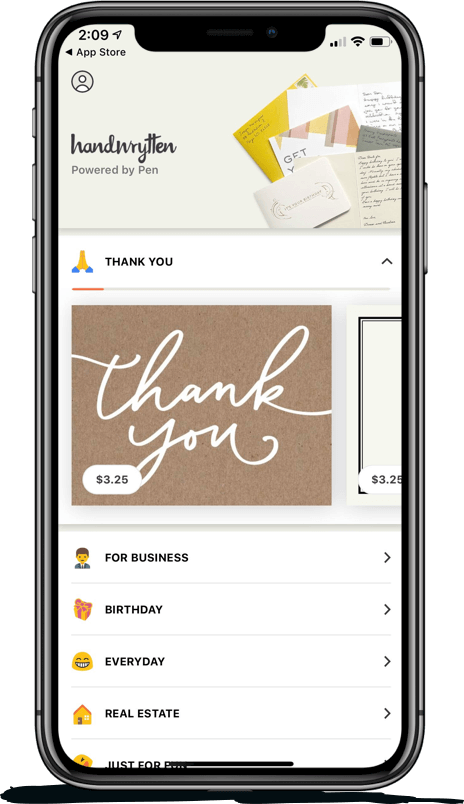
Scale your handwritten outreach, creating positive impressions and long lasting bond.
Sign Up Today!



Over 100 designs to choose from or design your own. Our online card customizer makes it simple.
Check Out Our Cards!




Thank you.
