


The dealerships consistently outselling their competitors aren’t necessarily the ones with the biggest marketing budgets. They’re the ones using the right mix of channels at the right moments.
Automotive marketing trends evolve faster than almost any other industry category — driven by technology shifts, changing consumer behavior, and the perpetual competitive pressure of a market where every dealership in a region is competing for the same buyers and the same inventory. Staying current with the trends that actually produce results — rather than the ones that generate buzz without generating leads — is one of the defining differences between dealerships that grow sustainably and those perpetually chasing last quarter’s numbers.
The automotive purchase journey has transformed fundamentally. The average car buyer now conducts extensive online research — comparing models, reading reviews, checking prices, and forming strong dealership preferences — before ever setting foot on a lot. The dealership that wins the relationship wins the sale long before the test drive happens. And the dealership that sustains that relationship after the sale wins the referrals and repeat business that drive long-term growth without proportional increases in acquisition cost.
This guide covers the proven automotive marketing trends that drive more sales — the digital strategies that create visibility, the relationship tools that build loyalty, and the physical outreach approaches that create the individual impressions that no digital campaign produces at the same depth.
The surface of automotive marketing trends changes constantly — platforms shift, algorithms update, consumer behaviors evolve, and the technology available to reach buyers improves every year. But the underlying drivers of dealership success are remarkably stable across all of these changes.
Dealerships win clients by being visible when buyers are searching, credible when buyers are evaluating, and remembered when buyers are ready to act. They retain clients by making every post-purchase interaction feel genuinely valued — not just adequately served. And they grow their businesses through referrals from clients who feel personally connected to the dealership, not just satisfied with a transaction.
The automotive marketing trends that produce durable results are the ones designed around those constants — visibility, credibility, presence, and genuine individual care — rather than around the specific tools available at any given moment. With that framework in mind, here are the proven automotive marketing trends producing the strongest results for dealerships building sustainable businesses.
The most significant shift in automotive marketing trends over the past decade isn’t a new channel or a new technology — it’s a fundamental reorientation from product-focused marketing to experience-focused marketing. The dealerships winning in today’s market understand that the customer experience at every touchpoint — from the first Google search to the post-delivery follow-up — is itself the primary marketing vehicle.
This means that investment in customer experience quality — in the quality of every interaction, digital and physical — produces marketing returns that paid advertising never matches at the same cost. A buyer who had an exceptional experience doesn’t just buy again. They tell others. They leave reviews. They become the organic marketing channel that sustains acquisition at a fraction of the cost of paid alternatives.
The practical implication for car dealership marketing strategy is straightforward: invest in the quality of every customer touchpoint, measure the customer experience at each one, and treat the post-purchase relationship as the highest-value marketing investment available.
The overwhelming majority of car buyers conduct extensive online research before visiting a dealership — researching models, comparing prices, reading reviews, and forming strong preferences about which dealerships are worth their time. For most buyers, the dealership’s digital presence is the first impression that determines whether they visit at all.
Automotive marketing trends in digital presence have evolved well beyond having a website. The dealerships generating the strongest organic lead quality are investing in:
Website experience optimization. A dealership website that functions as a true conversion tool — with high-quality inventory photography, intuitive search and comparison tools, easy inquiry options, mobile optimization, and fast load times — converts significantly more of its traffic into qualified leads than one that exists primarily as a digital brochure.
Virtual showroom experiences. Interactive tools that allow buyers to explore vehicles, configure options, compare models, and experience 360-degree interior views from home are increasingly becoming a standard expectation rather than a differentiator. Buyers who engage deeply with virtual showroom tools before visiting are further along in the purchase decision — which translates directly into shorter sales cycles and higher close rates.
Video walkthroughs. Short, genuine video walkthroughs of specific vehicles — narrated by the selling team, highlighting distinctive features, and showing the vehicle in honest detail — perform significantly better in online searches and social platforms than static photo galleries. For used vehicles specifically, a genuine video walkaround that addresses condition honestly builds more trust than any amount of polished marketing copy.
Of all the automotive marketing trends shaping digital lead generation, local SEO remains the most consistently underinvested relative to its return. A dealership that consistently appears at the top of local search results for high-intent queries — “used Toyota near me,” “[brand] dealership [city],” “best car dealership [neighborhood]” — captures buyer attention at the highest-intent moment in the purchase journey.
The local SEO automotive marketing investments that produce the strongest results:
Google Business Profile optimization. A fully optimized Google Business Profile — accurate hours and contact information, high-quality photos updated regularly, active review management, and regular posts about inventory and promotions — is the single highest-return local SEO investment available to most dealerships. The map pack result that appears when a buyer searches for a local dealership is determined primarily by Google Business Profile quality.
Neighborhood and city-specific content. Website pages that target the specific cities, neighborhoods, and communities a dealership serves — with locally relevant content, geographic keywords, and genuine local context — outperform generic national content in local search results.
Review volume and recency. Google’s local algorithm weights review volume and recency significantly — which means a systematic approach to generating genuine reviews from every satisfied customer is simultaneously a reputation management strategy and a local SEO strategy. A brief, warm, handwritten post-purchase card with a QR code linking directly to the Google review page generates response rates that automated email review requests consistently fail to match.
Video has moved from a differentiating automotive marketing trend to a baseline requirement for competitive visibility. Every major platform — YouTube, Instagram, TikTok, Facebook — prioritizes video content algorithmically, and buyer research consistently shows that video content plays a significant role in vehicle purchase decisions.
The car dealership marketing insight that most dealerships miss is that production quality is far less important than authenticity and consistency. An agent walking through a vehicle on a smartphone, narrating genuinely and specifically, outperforms a polished brand commercial in organic engagement — because buyers respond to authenticity and specificity more than production values.
The video formats producing the strongest automotive marketing results:
Inventory walkthroughs. Vehicle-specific walkaround videos — under three minutes, narrated by a salesperson who knows the vehicle, addressing the specific features and condition honestly — drive significantly higher engagement than static listings. For used vehicles, honest video walkthroughs build more purchase confidence than any other content format.
Process explainer videos. Short videos explaining the buying process, financing options, trade-in valuation, and what to expect at delivery reduce buyer anxiety and build confidence — which shortens the sales cycle and reduces the friction that prevents undecided buyers from committing.
Customer testimonial videos. Video testimonials from genuine customers — brief, authentic, and focused on the specific experience rather than general satisfaction — provide the social proof that written reviews approximate but never fully replicate.
Market and inventory update videos. Regular short videos from dealership leadership sharing honest market commentary, inventory availability, and specific buying opportunity guidance build the topical authority that sustains organic reach over time and positions the dealership as a genuine local resource rather than a purely transactional business.
Of all the automotive marketing trends producing disproportionate returns relative to cost, the systematic use of handwritten outreach is the one most dealerships have never seriously deployed — and the one that creates the most individual, memorable impressions at the moments that matter most in the customer relationship.
The psychology behind this is straightforward. Every competitor is using the same digital channels — the same email sequences, the same social media platforms, the same paid advertising tools. The dealership that shows up in a customer’s physical mailbox with a genuine, handwritten card occupies a completely uncontested space. No algorithm filters it. No inbox manages it. It arrives in the most personal format available and creates the kind of individual emotional impression that sustains loyalty through the years between transactions.
Car dealership marketing research consistently demonstrates that handwritten outreach generates significantly higher response rates than printed direct mail — because the format communicates individual attention in a way that printed alternatives never do. A customer who receives a handwritten card feels personally contacted. A customer who receives a printed postcard feels marketed to. That distinction produces dramatically different behaviors.
The highest-impact moments for handwritten automotive outreach:
Post-purchase thank you card. Arriving two to three days after delivery — warm, specific, and completely free of commercial content — this is the single most impactful touchpoint available to any automotive sales team. A buyer who has just spent $40,000 or $50,000 on a vehicle is at their highest level of emotional receptivity to how the dealership treats them after the transaction. A genuine handwritten thank you communicates something no email confirmation ever does.
“Welcome to the [Brand] family, [Name] — it was a genuine pleasure working with you through this process, and I hope [vehicle] brings you everything you were looking for. Please don’t hesitate to reach out for anything, now or years from now. Thank you for choosing us.”
Vehicle anniversary cards. A handwritten card arriving on the anniversary of a customer’s purchase — acknowledging the milestone personally and optionally noting what the vehicle might be worth in today’s market — creates the kind of ongoing presence that keeps the dealership top of mind when the next purchase decision arrives.
“One year ago today you drove [vehicle] off our lot — and we’ve thought about you often since. We hope it’s been everything you were hoping for. If you’re ever curious about what your trade might be worth today, we’d love to have that conversation. Happy anniversary.”
Service follow-up cards. After a significant service appointment — particularly an unexpected repair or a major milestone service — a handwritten follow-up card communicates genuine ongoing care for the relationship that sustains loyalty through the ownership lifecycle.
Farm neighborhood prospecting cards. For sourcing used inventory in a tight market, handwritten outreach to homeowners in target neighborhoods generates significantly higher response rates than printed direct mail or digital advertising. A genuine handwritten card arriving in a homeowner’s mailbox — offering to discuss the value of their vehicle with no pressure or commitment — produces the calls that printed alternatives rarely generate.
Referral thank-you cards. When a customer refers someone to the dealership — the highest expression of trust available — a genuine handwritten thank-you card arriving within 24 to 48 hours communicates appreciation in a format that email never matches, and makes the referring customer significantly more likely to refer again.
Handwrytten’s integrations with CDK, Reynolds and Reynolds, Salesforce, HubSpot, and Zapier allow handwritten outreach to be triggered automatically at every key moment in the customer lifecycle — each card produced with real pen on real paper using robotic pen-and-ink technology, personalized for the individual recipient, and mailed without any manual effort from the sales team.
Artificial intelligence has moved from an aspirational automotive marketing trend to a practical toolkit that forward-thinking dealerships are integrating into their operations. The most impactful applications aren’t the most sophisticated — they’re the practical tools that reduce time investment in routine tasks while improving the precision of customer targeting and outreach.
Predictive analytics for inventory and outreach. AI-powered analytics tools analyze ownership data, vehicle age, mileage patterns, and market signals to identify customers most likely to be approaching a purchase or trade decision — allowing dealerships to concentrate outreach investment on the highest-probability prospects rather than broadcasting to the entire database indiscriminately.
Lead scoring and prioritization. AI-driven CRM features that score inbound leads based on behavioral signals — website activity, inquiry patterns, engagement with inventory listings — allow sales teams to prioritize follow-up time on the contacts most likely to convert, rather than treating all leads identically.
Content and copy efficiency. AI writing tools significantly reduce the time required to produce inventory descriptions, social media content, email newsletters, and blog posts — allowing dealerships to maintain the content consistency that builds authority without the manual time investment that consistency historically required.
Chatbot and virtual assistant engagement. AI-powered website chatbots that handle initial buyer inquiries — answering common questions, providing inventory information, scheduling appointments — improve response times and capture leads that would otherwise leave without engaging, while freeing the sales team for the higher-value conversations that require genuine human engagement.
Despite the rise of social media and video, email remains one of the most cost-effective car dealership marketing tools for maintaining consistent presence with a warm audience — when deployed with the specificity and genuine value delivery that modern email audiences require.
The automotive marketing trend within email that’s producing the strongest results isn’t higher volume — it’s higher relevance. A monthly email that provides genuinely useful, locally specific market intelligence — written in a human voice with real opinions about what the data means — outperforms a polished promotional email in both engagement and conversion. Buyers who feel they’re receiving genuine value from dealership communications are significantly more likely to engage when a purchase moment arrives.
The email car dealership marketing approaches that work:
Hyperlocal market updates. Monthly communications that share specific local market data — what vehicles are selling for in the local market, what inventory looks like, what buyers and sellers should know right now — build the topical authority that positions the dealership as the go-to resource when purchase decisions are made.
Lifecycle-triggered communication. Automated email sequences triggered by specific ownership milestones — service anniversaries, mileage thresholds, warranty expirations, lease maturity — reach customers at exactly the moments when their vehicle relationship is most likely to be evolving.
Post-service follow-up. A brief, personalized email following a service appointment — checking that everything was satisfactory and making it easy to address any concerns — demonstrates the ongoing care for the relationship that sustains loyalty between major purchase events.
The decline of printed direct mail volume in residential mailboxes has created an opportunity that forward-thinking dealerships are capitalizing on: the mailbox has never been less crowded, at exactly the moment when digital attention has never been more contested.
The car dealership marketing approach to direct mail that consistently outperforms generic printed alternatives is genuine personalization — and the most effective personalization available is genuine handwriting. A handwritten card arriving in a homeowner’s mailbox commands a quality of attention that no printed piece achieves, because the format signals individual attention before the envelope is opened.
For used vehicle acquisition specifically — one of the highest-value applications of physical mail outreach — a genuine handwritten note to a targeted homeowner database generates significantly more response than any printed alternative. The card communicates individual interest in a specific vehicle from a specific buyer, rather than a mass marketing piece that looks identical to every other piece of junk mail in the mailbox.
The most effective automotive marketing strategy isn’t built on any single trend — it’s built on the systematic integration of multiple channels working together to create visibility, build credibility, and maintain presence at every stage of the customer relationship lifecycle.
Digital channels create the visibility that puts the dealership in front of buyers at the right moments. Local SEO captures high-intent buyers at peak purchase readiness. Video builds the trust and transparency that convert research into visits. Email sustains warm audience presence between active purchase moments.
And the physical outreach program — handwritten cards at every meaningful relationship moment, deployed consistently through Handwrytten’s automated platform — creates the individual impressions that digital channels alone never produce at the same depth or durability. A buyer who receives a genuine handwritten thank-you after their purchase, a handwritten anniversary card one year later, and a handwritten service follow-up card after their first major service appointment has had three physical interactions with the dealership that no competitor’s digital campaign ever delivers.
That program creates the loyalty, the referral activity, and the repeat purchase behavior that sustains dealership growth independently of market conditions, inventory fluctuations, and the competitive dynamics that make pure acquisition strategies increasingly expensive.
What automotive marketing trends are producing the highest ROI right now?
Local SEO and handwritten post-purchase outreach consistently produce the highest returns relative to investment. Local SEO captures high-intent buyers at peak purchase readiness. Handwritten outreach sustains the client relationships that generate repeat business and referrals at a fraction of the cost of new customer acquisition.
How important is video for automotive marketing?
Essential — and increasingly a baseline requirement rather than a differentiator. Buyers use video content extensively in their purchase research, and dealerships without consistent video presence are disadvantaging themselves in organic visibility and buyer trust simultaneously.
Can handwritten outreach be automated for a dealership?
Yes. Handwrytten’s integrations with CDK, Reynolds and Reynolds, DealerSocket, and other dealership management systems allow handwritten cards to be triggered automatically at every key customer lifecycle moment — each one produced in genuine pen-and-ink handwriting and personalized for the individual recipient without any manual effort from the sales team.
How does the used vehicle market affect automotive marketing strategy?
Tight used vehicle inventory makes proactive physical outreach to potential sellers one of the highest-value marketing investments available. Handwritten prospecting cards to targeted homeowners generate significantly higher response rates than digital or printed alternatives — because the format communicates genuine individual interest rather than mass marketing.
What’s the most overlooked automotive marketing opportunity most dealerships are missing?
The post-purchase relationship. Most dealerships invest heavily in acquisition and almost nothing in the systematic cultivation of the customer relationships that generate repeat business and referrals. A systematic handwritten outreach program — thank-you cards, anniversary cards, service follow-ups — deployed through Handwrytten at minimal per-card cost generates the loyalty and referral activity that the most expensive acquisition campaigns never replicate.
Automotive marketing trends will keep evolving — the platforms will shift, the algorithms will change, the technology will improve. But the dealerships that build the most durable businesses will always be the ones whose marketing creates genuine individual connections at every meaningful moment in every important customer relationship.
The digital channels create the visibility. The handwritten cards create the loyalty. Both together create the sustainable dealership business that market cycles can’t derail.
Start Sending → handwrytten.com
Editor’s note: This article was revised in June 2026


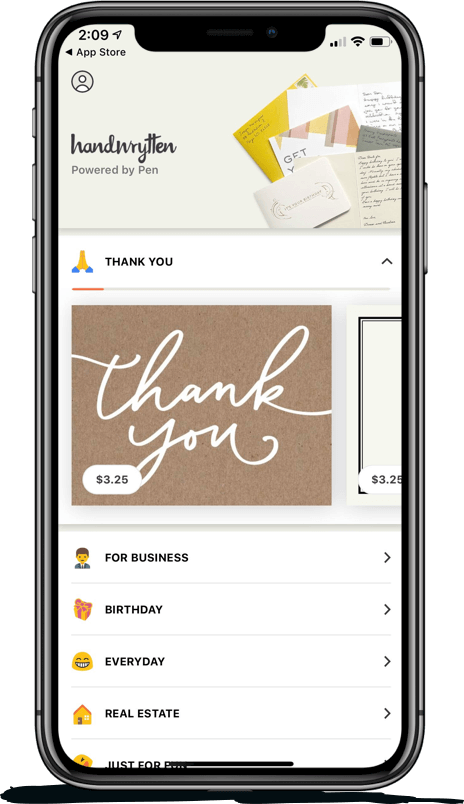
Scale your handwritten outreach, creating positive impressions and long lasting bond.
Sign Up Today!

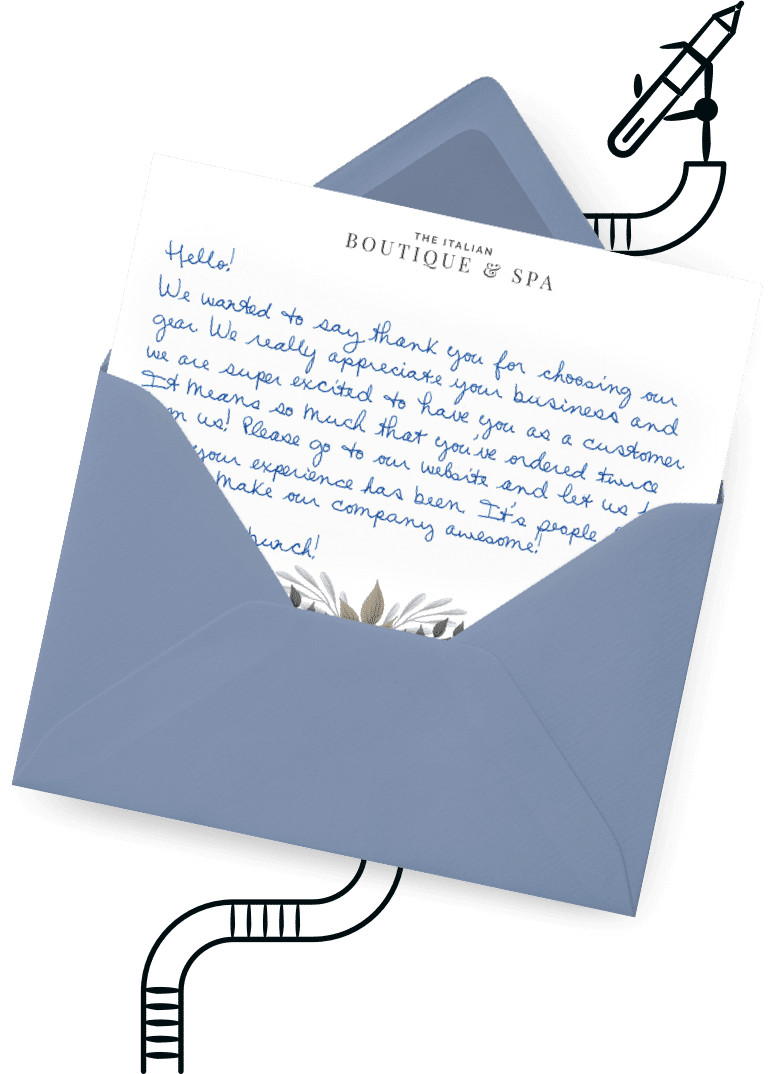

Over 100 designs to choose from or design your own. Our online card customizer makes it simple.
Check Out Our Cards!




Thank you.
