



The agents building the most durable real estate businesses aren’t the ones using the newest tools. They’re the ones using the right ones.
Real estate marketing trends evolve faster than almost any other professional category — driven by technology shifts, consumer behavior changes, and the perpetual competitive pressure of an industry where every agent in a market is competing for the same listings and the same buyers. Staying current with the real estate marketing strategies that actually produce results — rather than those that generate noise — is one of the defining differences between agents who build sustainable businesses and those perpetually reinventing their approach every eighteen months.
This guide covers the proven real estate marketing trends that consistently win clients — the digital strategies that expand reach, the content approaches that build authority, the data tools that sharpen targeting, and the physical outreach methods that create the individual relational impressions that no digital campaign produces at the same depth. Some of these trends are technology-driven. Some are psychology-driven. The most effective agents are deploying all of them as a coordinated system rather than as isolated tactics.
The surface of real estate marketing trends changes constantly — the platforms shift, the algorithms update, the technology improves, the consumer behaviors evolve. But the underlying drivers of real estate business success are remarkably stable: agents win clients by being visible when buyers and sellers are looking, trusted when they make contact, and remembered when the next transaction moment arrives.
The real estate marketing strategies that produce durable results are the ones designed around those three constants — visibility, trust, and presence — rather than around the specific tools available at any given moment. The tools matter and they change. The constants don’t.
With that framework in mind, here are the proven real estate marketing trends producing the strongest results for agents and teams building sustainable client acquisition and retention programs.
Video is no longer a differentiating real estate marketing strategy — it’s a baseline requirement for visibility in most markets. The agents who haven’t built a consistent video presence are operating at a significant disadvantage in the organic reach game, because every major platform — Instagram, YouTube, TikTok, LinkedIn, Facebook — prioritizes video content in its algorithm over static alternatives.
The real estate marketing trend within video that’s producing the strongest results isn’t production quality — it’s consistency and authenticity. A well-lit iPhone video of an agent walking through a neighborhood, sharing honest market observations, or explaining the offer process clearly outperforms a beautifully produced brand video in organic reach and engagement — because the algorithm rewards consistency and the audience rewards authenticity.
The video formats producing the strongest results for agents:
Property walkthroughs. Short, well-shot property walkthrough videos — under two minutes, narrated by the agent with specific callouts to the property’s most distinctive features — perform significantly better than static photo galleries in both engagement and time-on-listing metrics.
Market update videos. Monthly or bi-weekly market update videos — delivered in the agent’s voice, with specific local data, and genuine opinions about what the numbers mean — build the kind of topical authority that attracts serious buyers and sellers over time.
Neighborhood spotlights. Videos that showcase the specific character of neighborhoods — local restaurants, parks, schools, the feel of the streets — attract out-of-area buyers at every stage of the research process and establish the agent as the definitive local expert.
Client story videos. With permission, brief client story videos — before and after, the challenge and the outcome, the specific way the agent helped — provide the social proof that testimonial text never delivers with the same emotional impact.
The practical guidance: Commit to one video format consistently before adding others. An agent who posts a genuine, specific market update video every two weeks for a year will build more authority than one who posts every format once and abandons the practice when early results are modest.
The most underinvested real estate marketing trend in most agent’s digital strategies is local SEO — the specific, intentional optimization of digital presence for the geographic searches that buyers and sellers in a specific market are actually making.
Most agents have a website. Far fewer have a website optimized to rank for the specific local queries that high-intent buyers and sellers in their market are searching. The difference between a website that exists and one that generates organic leads is almost entirely explained by local SEO investment.
The local real estate marketing strategies that drive organic visibility:
Google Business Profile optimization. A fully optimized Google Business Profile — accurate information, high-quality photos updated regularly, genuine reviews actively solicited, and regular posts about market activity — is the single highest-return local SEO investment available to most agents. The agents who appear in the map pack for local real estate searches capture buyer and seller attention at the highest-intent moment in the research process.
Neighborhood and community pages. Dedicated website pages for each neighborhood in an agent’s primary market — with specific information about schools, amenities, price trends, recent sales, and the agent’s personal knowledge of the community — create the topical authority that ranks for the location-specific searches buyers use when they’re serious about a specific area.
Blog content targeting local search intent. Articles that answer the specific questions buyers and sellers in a local market are searching — “What is the average home price in [neighborhood]?”, “How long do homes stay on the market in [city]?”, “Best neighborhoods for families in [market]” — build the sustained organic traffic that paid advertising can never replicate at the same long-term cost.
Review volume and recency. Google’s local algorithm weighs review volume and recency heavily — which means a systematic approach to generating genuine reviews from every satisfied client is both a reputation management strategy and a local SEO strategy simultaneously.
Among the proven real estate marketing trends reshaping how clients choose agents, the shift toward social proof as the primary trust signal may be the most significant. Buyers and sellers increasingly arrive at their agent selection decision having already done extensive research — and that research is dominated by reviews, testimonials, social media presence, and the digital evidence of the agent’s track record.
This real estate marketing trend means that the investment in reputation management — actively generating reviews, showcasing testimonials, building a visible track record of client outcomes — is now as important as the investment in lead generation. An agent generating significant traffic through paid advertising but lacking a strong review profile is losing conversions to competitors with better social proof at the bottom of the funnel.
The real estate marketing strategies that build strong social proof:
Systematic review generation. Every closed transaction should trigger a review request — sent at the moment of highest client satisfaction, which is almost always within a week of closing. A brief, warm, personalized review request — sent as a handwritten card with a QR code linking directly to the Google or Zillow review page — generates significantly higher response rates than an automated email sequence.
Testimonial video collection. Video testimonials from satisfied clients — collected with a simple smartphone recording at or near closing — provide the most emotionally compelling social proof available. A thirty-second genuine client video outperforms any written testimonial in building trust with prospects.
Transaction milestone sharing. Regular social media posts celebrating closings — with client permission and appropriate privacy considerations — build the visible track record that demonstrates sustained market activity and client success.
Artificial intelligence has moved from a future real estate marketing trend to a present practical tool — and the agents building it into their workflows are gaining meaningful efficiency and targeting advantages over those who haven’t.
The most impactful applications of AI in real estate marketing strategies aren’t the most sophisticated ones. They’re the practical tools that reduce the time investment in routine tasks — content creation, data analysis, lead scoring, campaign optimization — while freeing agent time for the high-value relationship work that no AI tool replaces.
The AI real estate marketing tools producing practical results:
Predictive analytics for farm targeting. AI-powered predictive analytics tools analyze property data, ownership patterns, and behavioral signals to identify homeowners most likely to sell within a specific window — allowing agents to concentrate their farming investment on the highest-probability contacts rather than spreading it uniformly across a geographic area.
Content generation assistance. AI writing tools significantly reduce the time required to produce property descriptions, social media captions, email newsletters, and blog content — allowing agents to maintain the content consistency that builds authority without the time investment that consistency historically required.
CRM lead scoring. AI-powered CRM features that score and prioritize leads based on behavioral signals — website activity, email engagement, search patterns — allow agents to concentrate their personal outreach time on the contacts most likely to transact rather than treating every lead in the database identically.
Ad optimization. AI-driven ad platforms on Google, Meta, and other channels optimize campaign performance automatically — adjusting targeting, bidding, and creative based on real-time performance data in ways that manual campaign management can’t match.
Among the proven real estate marketing trends that most agents underinvest in relative to its return, consistent direct mail farming stands out — particularly because the declining volume of physical mail in most residential mailboxes means the competition for physical attention has never been lower at exactly the moment when digital competition for attention has never been higher.
The real estate marketing strategy that produces the strongest direct mail results isn’t the most expensive one — it’s the most consistent one. An agent who sends a genuine, specific, personally relevant piece of mail to every homeowner in a farm neighborhood every month for twelve months builds a level of name recognition and perceived relationship depth that no digital campaign achieves as efficiently.
The direct mail formats producing the strongest results:
Handwritten prospecting notes. Handwritten notes to homeowners in a target farm — produced at scale through Handwrytten’s robotic pen-and-ink technology — consistently generate higher response rates than printed postcards because the format signals individual attention rather than mass marketing. A homeowner who receives a handwritten note feels personally contacted. A homeowner who receives a printed postcard feels marketed to. That distinction drives dramatically different response behaviors.
Just listed and just sold cards. Timely just listed and just sold cards — arriving within days of a transaction in the neighborhood — demonstrate active market presence and create the social proof that sustains farm authority over time.
Market update letters. Monthly or quarterly market update letters — specific to the farm neighborhood, with genuine local data and the agent’s honest interpretation of what the numbers mean — build the topical authority that makes the agent the default resource when a homeowner in the farm is ready to make a move.
Personal anniversary and milestone notes. Handwritten cards sent to homeowners on the anniversary of their purchase date — acknowledging the milestone personally and offering a current market value update — create the kind of individual impression that no printed farming piece achieves.
Of all the real estate marketing trends gaining traction among the highest-performing agents, the resurgence of handwritten outreach as a systematic relationship-building strategy may be the most counterintuitive — and the one producing the most disproportionate returns relative to cost.
In a market where every agent is deploying the same digital channels — the same social media platforms, the same email sequences, the same paid advertising tools — the agent who shows up in a client’s or prospect’s physical mailbox with a genuine, handwritten card occupies a completely uncontested space. No algorithm filters it. No spam folder catches it. No competing notification interrupts it. It arrives in the most personal format available and creates the kind of individual emotional impression that sustains real estate client relationships through the years between transactions.
The real estate marketing strategy built around handwritten outreach works across every phase of the client lifecycle:
Farming and prospecting. Handwritten prospecting notes in target neighborhoods generate response rates that no printed direct mail format approaches — because the format communicates individual attention at a moment when most marketing communicates mass outreach.
Active client relationship. Handwritten notes at key moments in the transaction — offer acceptance, inspection completion, closing day — create relational impressions that sustain loyalty and generate the referral conversations that drive long-term production.
Post-close retention. Handwritten anniversary cards, seasonal check-ins, and milestone acknowledgments keep the agent present in past clients’ awareness through the years between transactions — creating the top-of-mind presence that produces repeat business and referrals without any paid advertising investment.
Sample messages:
Post-close: “Welcome home — officially. It was a genuine privilege to be part of this journey. Please don’t hesitate to reach out for anything, now or years from now.”
Anniversary: “One year ago today we closed on [address] — and we’ve thought about you often since. We hope the first year has been everything you were hoping for. We’re always here.”
Farm prospecting: “Hi [Name] — I’ve been working with several families in [neighborhood] and wanted to introduce myself personally. I’m your local real estate resource for anything market-related — no pressure, just a genuine hello.”
Handwrytten’s robotic pen-and-ink technology makes this systematic — producing genuinely handwritten notes in real pen on real paper, personalized for each individual recipient, triggered automatically through CRM integrations, and mailed without any manual effort from the agent or team.
Among the real estate marketing strategies that produce the highest return on relationship investment, strategic partnerships with complementary local businesses represent one of the most underleveraged opportunities available to most agents. A mortgage professional, a home inspector, a title company, an interior designer, a local contractor — each of these relationships represents a referral source whose client base is almost perfectly aligned with the agent’s target audience.
The agents building the most robust strategic partnership networks are the ones investing in those relationships with the same deliberateness they bring to client relationships — showing up at partnership touchpoints with genuine personal acknowledgment, handwritten appreciation notes, and the kind of consistent individual presence that sustains referral relationships over time.
The strategic partnership touchpoints that sustain referral activity:
Handwritten thank-you notes after referrals. A genuine handwritten thank-you card arriving immediately after a partner’s referral communicates appreciation in a format that sustains the referral relationship more reliably than any verbal acknowledgment.
Partner milestone acknowledgments. Handwritten cards acknowledging a partner’s business milestone — a company anniversary, a significant transaction, a new team member — communicate ongoing investment in the relationship that sustains reciprocal referral behavior.
Quarterly appreciation notes. No-occasion appreciation cards sent to key referral partners quarterly communicate the consistent individual acknowledgment that keeps the relationship warm through the periods between active referrals.
Despite the rise of social media and the proliferation of other digital channels, email remains one of the most cost-effective real estate marketing strategies for maintaining consistent presence with a warm audience — when deployed with the specificity and value delivery that modern email audiences require.
The real estate marketing trend within email that’s producing the strongest results isn’t higher volume or more sophisticated automation — it’s higher relevance and more genuine personal voice. An email newsletter that reads like it was written by a specific person with specific opinions about the local market outperforms a polished branded email that reads like it was produced by a marketing department.
The email real estate marketing strategies that work:
Hyper-local market updates. Monthly market updates specific to the agent’s primary market — with genuine interpretation of what the numbers mean, not just data reporting — build the topical authority that makes the agent the go-to resource when subscribers are ready to make a move.
Personal story and perspective. Occasional emails that share the agent’s genuine perspective on the market, a transaction experience, or a local development — written in personal voice rather than professional voice — build the authentic individual connection that sustains subscriber engagement over time.
Segmented outreach. Separate email streams for buyers, sellers, past clients, and prospects — each delivering content relevant to the specific stage and needs of each segment — produce significantly stronger engagement than undifferentiated broadcast emails.
The most effective real estate marketing strategy isn’t built on any single trend — it’s built on the systematic integration of multiple channels working together to create visibility, build trust, and maintain presence at every stage of the client relationship lifecycle.
Digital channels — video, SEO, social proof, paid advertising — create the visibility that puts the agent in front of buyers and sellers at the right moments in their research process. Data and AI tools sharpen the efficiency and targeting of that investment. Email sustains warm audience presence over time.
And the physical outreach program — handwritten cards at every meaningful relationship moment, deployed consistently through Handwrytten’s automated mailings platform — creates the individual relational impressions that sustain loyalty, generate referrals, and produce the repeat business that makes a real estate business genuinely sustainable rather than perpetually dependent on new lead generation.
Which real estate marketing trends produce the fastest results?
Paid advertising and handwritten prospecting outreach both produce relatively fast results — paid advertising because it generates immediate visibility, and handwritten prospecting because it produces higher response rates than any other cold outreach format. For sustainable long-term results, SEO and consistent video production produce the strongest compound returns over time.
How much should real estate agents invest in marketing?
Industry benchmarks suggest 10 to 15% of gross commission income as a reasonable marketing investment for agents in competitive markets. The specific allocation across channels should be driven by which real estate marketing strategies are producing measurable results in the specific local market.
Is direct mail still effective for real estate marketing?
Yes — and increasingly so as digital competition intensifies. The declining volume of physical mail in residential mailboxes means direct mail has never faced less competition for physical attention, at exactly the moment when digital attention is at its most contested. Handwritten direct mail specifically produces response rates that printed alternatives rarely match.
How do handwritten cards fit into a modern real estate marketing strategy?
As the relationship layer that sustains the client connections that digital channels create. Digital marketing generates leads and builds awareness. Handwritten cards create the individual relational impressions — at closing, at anniversaries, at seasonal moments, in prospecting contexts — that convert leads into loyal clients and loyal clients into consistent referral sources.
Can real estate marketing be automated without losing authenticity?
Yes — when the automation produces genuinely handwritten cards with individually personalized messages. Handwrytten’s platform automates the logistics while preserving the physical and relational quality of genuine handwritten outreach. The automation handles consistency and scale. The genuine handwriting handles the impression.
Real estate marketing trends will keep evolving — the platforms will shift, the algorithms will change, the tools will improve. But the agents who build durable businesses will always be the ones whose marketing creates genuine individual connections at every meaningful moment in every important relationship.
The trends change. The constants don’t. Build your marketing strategy around the constants — and use the best available tools, physical and digital, to deliver them consistently.
Start Sending → handwrytten.com
Editor’s note: This article was revised in June 2026


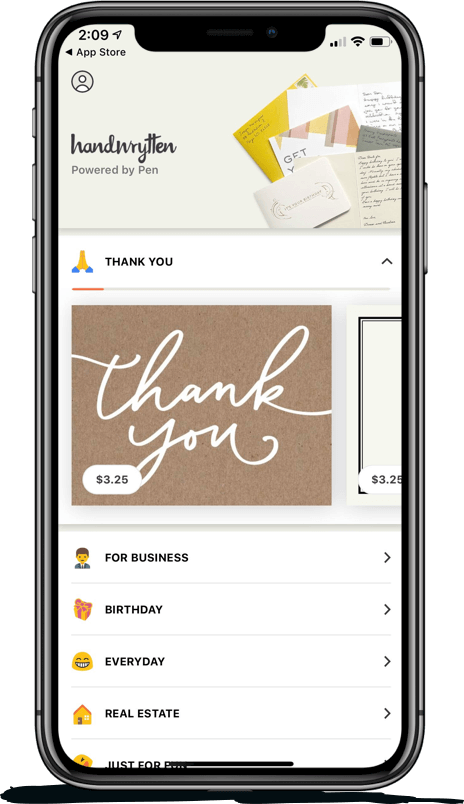
Scale your handwritten outreach, creating positive impressions and long lasting bond.
Sign Up Today!



Over 100 designs to choose from or design your own. Our online card customizer makes it simple.
Check Out Our Cards!




Thank you.
