



The first line of a letter sets the tone for everything that follows. Get it right and the reader is already on your side.
Letter salutations are the opening and closing gestures of any written correspondence — and the elements most frequently underestimated in their impact. Most people treat letter salutations as formalities to be dispatched quickly before getting to the substance of the letter. In reality, the salutation is the first thing a recipient reads and the last thing they see — which means it shapes the initial impression the letter creates and the final feeling it leaves behind.
A letter salutation that gets the tone, formality level, and recipient’s title right communicates something before the body of the letter is even read: that the sender is careful, respectful, and genuinely attentive to the person they’re addressing. A letter salutation that gets any of these elements wrong — too casual for the context, too formal for the relationship, incorrectly using a title or name — creates an immediate friction that the most well-crafted letter body struggles to overcome.
This guide covers every dimension of letter salutations — the openings that work for every professional context, the closings that match every relationship type and tone, the specific situations that require specific approaches, and the common mistakes that undermine otherwise excellent correspondence.
The psychology of first and last impressions applies to letters as clearly as it does to in-person interactions. Research on the primacy and recency effect — the consistent finding that people remember best what they encountered first and last — explains why letter salutations carry disproportionate weight relative to their length.
A recipient who reads a well-calibrated opening salutation that addresses them correctly and establishes the appropriate tone approaches the body of the letter with a quality of receptivity that a poorly chosen salutation never creates. And a closing salutation that matches the warmth and formality of the relationship sends the recipient away with exactly the feeling the sender intended — professional, personal, grateful, or formal — rather than a vague sense that something was slightly off.
For handwritten correspondence specifically — the format that carries the highest emotional weight of any letter type — the salutation sets up everything that follows. A genuine handwritten letter that opens with the recipient’s correct name and title, in a greeting calibrated to the specific relationship, creates an immediate impression of individual attention and genuine care that generic printed correspondence rarely achieves.

The most effective opening letter salutations are the specific ones — those that address the recipient by name and establish the relationship’s appropriate level of formality from the first word.
The standard professional opening:
“Dear [Title] [Last Name],”
This is the baseline professional letter salutation for most business correspondence — appropriate for first contacts, formal requests, professional introductions, and any context where the relationship is professional rather than personal.
Dear Ms. Johnson,
Dear Mr. Rodriguez,
Dear Dr. Patel,
For recipients with professional titles:
Certain professions carry titles that should be used in letter salutations regardless of personal familiarity:
Dear Judge Harrison,
Dear Professor Williams,
Dear Senator Chen,
Dear Reverend Thompson,
Dear Captain Martinez,
The rule is straightforward: if the recipient holds a title that is conventionally used in direct address — medical, academic, judicial, military, religious, or political — use it in your letter salutation. Using a professional title communicates respect for both the person and the role.
For medical and doctoral recipients:
Dear Dr. Smith,
Dear Dr. and Mrs. Williams, (when addressing a couple where one holds a doctorate)
Dear Drs. Johnson and Martinez, (when addressing multiple people with doctorates)
For recipients whose gender is unknown or who use non-binary pronouns:
The most respectful approach when a recipient’s preferred form of address is unclear is to use their full name without a gendered title:
Dear Blake Mayer,
Dear Jordan Thompson,
Dear Alex Chen,
This approach is broadly appropriate, professionally inclusive, and eliminates the risk of misaddressing someone in a way that could undermine the letter’s reception before the first sentence is read.
A note on Ms., Mrs., and Miss:
Unless you are certain of a recipient’s preference, default to Ms. — it is appropriate regardless of marital status and avoids the assumption that Mrs. or Miss can create. When a woman has indicated her preferred title, honor it consistently throughout all correspondence.
Letter salutations for correspondence addressed to multiple recipients require specific handling depending on the relationships involved:
Two recipients at the same organization:
Dear Ms. Johnson and Mr. Rodriguez,
Dear Dr. Patel and Professor Chen,
A married couple sharing a surname:
Dear Mr. and Mrs. Thompson,
Dear Dr. and Mr. Williams, (when the wife holds a doctorate)
Dear Mr. and Dr. Martinez, (when the husband holds a doctorate)
A married couple with different surnames:
Dear Ms. Johnson and Mr. Rodriguez,
Three or more recipients:
Dear Ms. Johnson, Mr. Rodriguez, and Dr. Patel,
For correspondence addressed to a large group where individual names would be impractical, use a group salutation appropriate to the context — covered in the section below.
The most professionally sound approach when a recipient’s name is unavailable is to research until you find it — a LinkedIn search, a company website, a phone call to the organization’s front desk. A letter addressed to a specific named individual almost always performs better than one addressed generically.
When a specific name genuinely cannot be found, these letter salutations provide appropriate alternatives:
For general professional correspondence:
To Whom It May Concern,
This is the most formal of the generic letter salutations — appropriate for references, formal complaints, and correspondence where the recipient is genuinely unknown and no more specific alternative applies.
For job application correspondence:
Dear Hiring Manager,
Dear Recruiting Team,
Dear [Department] Team,
Avoid “To Whom It May Concern” in job applications when a more specific alternative is available — it signals that the applicant didn’t research the organization, which is a poor first impression in a competitive context.
For department-specific correspondence:
Dear Human Resources Department,
Dear Customer Service Team,
Dear Accounts Payable Department,
For gender-specific contexts where the name is unknown:
Dear Sir, (when confident the recipient is male)
Dear Madam, (when confident the recipient is female)
Dear Sir or Madam, (when gender is uncertain)
For correspondence that falls between formal professional and personal — a note to a colleague you know well, a thank you to a professional contact with whom you have a warm relationship, or a business letter to a long-term client — these semi-formal letter salutations strike the right balance:
Hi [First Name],
Hello [First Name],
Good morning [First Name],
Greetings [First Name],
These openings are appropriate when the relationship has moved past formal address but the correspondence is still professional in nature. They communicate warmth without presuming intimacy — which is precisely the tone most business thank you notes, follow-up letters, and check-in correspondence should strike.
The closing letter salutation is the final impression a letter creates — and its calibration to the tone of the correspondence and the nature of the relationship is just as important as the opening.
These closings are appropriate for formal professional correspondence — job applications, official requests, formal business proposals, and any correspondence where maintaining professional distance is important:
Sincerely,
The gold standard of formal closing letter salutations — appropriate for virtually any professional context where warmth isn’t specifically called for. Sincerely communicates genuine intent without presuming relationship depth. When in doubt, this is the right choice.
Sincerely yours,
A slightly more personal version of Sincerely — appropriate for formal correspondence with recipients you’ve had some previous interaction with.
Respectfully,
Appropriate for correspondence to authority figures — judges, elected officials, senior executives, or anyone the correspondence is specifically deferring to. Respectfully communicates the appropriate level of professional deference without being obsequious.
Respectfully yours,
A warmer version of Respectfully — appropriate for formal correspondence with established professional relationships.
Yours truly,
A formal but slightly warmer closing — appropriate for professional correspondence where a small degree of personal connection is appropriate.
These closings work well for professional correspondence with established relationships — client letters, follow-up correspondence, thank you notes to professional contacts, and any context where professional warmth is appropriate:
Warm regards,
One of the most versatile and widely appropriate semi-formal closing letter salutations — communicates genuine warmth while maintaining professional distance. Appropriate for most business correspondence once a relationship has been established.
Kind regards,
Slightly more formal than Warm regards but still communicating personal care — appropriate for professional correspondence where warmth is welcome but the relationship is relatively new.
Best regards,
A widely used semi-formal closing that works across most professional contexts — communicates genuine positive sentiment without implying personal familiarity.
With appreciation,
Particularly appropriate for thank you letters and correspondence acknowledging a specific contribution or favor — communicates genuine gratitude in the closing that reinforces the letter’s central message.
With gratitude,
Similar to With appreciation — appropriate for correspondence whose primary purpose is expressing genuine thanks.
Thank you,
One of the most effective closing letter salutations for thank you correspondence — direct, genuine, and reinforcing the letter’s central message with a clean final note.
These closings are appropriate for correspondence with established personal relationships — clients you’ve worked with for years, colleagues who have become genuine friends, or any professional contact with whom genuine personal warmth exists:
Warmly,
A single word that communicates genuine personal care — appropriate for correspondence to people you genuinely like and with whom warmth is natural and welcome.
With warmth,
A slightly fuller version of Warmly — communicates genuine personal care in correspondence where a single word feels insufficient but full affection would be excessive.
With appreciation and warm regards,
Combining appreciation and warmth — appropriate for letters to long-term clients, valued colleagues, or anyone whose relationship warrants acknowledging both the professional and personal dimensions.
All the best,
A warm, informal closing that works across a wide range of relationship types — communicates genuine positive sentiment without requiring the same level of personal warmth as Warmly or Fondly.
Take care,
Appropriate for correspondence with people whose wellbeing you genuinely care about — communicates personal concern that reinforces the warmth of the relationship.
Certain closing letter salutations are inappropriate in professional contexts — and using them communicates a failure to calibrate tone to relationship that can undermine otherwise excellent correspondence:
Love, / With love, — Reserve entirely for personal correspondence with intimate relationships. Using either in a professional context communicates a misreading of the relationship that recipients consistently find uncomfortable.
XOXO — Appropriate only for very close personal relationships. Never appropriate in any professional context.
Cheers, — Appropriate in very casual correspondence between colleagues with established informal relationships. Inappropriate for formal correspondence, correspondence to senior figures, or any first contact.
Your friend, — Appropriate only for correspondence to genuine close friends. Using it in professional contexts where the friendship hasn’t been established creates an uncomfortable presumption of intimacy.
Later, / Talk soon, — Too casual for any written correspondence beyond the most informal notes to close colleagues.
Opening: Dear [Hiring Manager’s Name], — research the specific name whenever possible. Dear Hiring Manager, when the name is genuinely unavailable.
Closing: Sincerely, or Respectfully, — formal closings that communicate professional seriousness appropriate to the application context.
Opening: Dear [Name], for formal professional thank you letters. Hi [Name], for warmer thank you correspondence with established contacts.
Closing: With gratitude, / With appreciation, / Thank you, — closings that reinforce the letter’s central message.
Opening: Dear [Manager’s Name], — use the formal name regardless of relationship depth. A resignation letter is a professional document with potential legal implications and should be treated with appropriate formality.
Closing: Respectfully, or Sincerely, — formal closings that communicate professional respect for the role and the relationship regardless of the circumstances of the departure.
Opening: Dear [Donor Name], for individual donors. Dear [Foundation/Organization Name] Team, when addressing organizations.
Closing: With gratitude, or Sincerely, — closings that communicate genuine appreciation for the recipient’s consideration.
Opening: Dear [Donor Name], — always personalized, never generic.
Closing: With deep gratitude, or With sincere appreciation, — closings that communicate the depth of appreciation appropriate to the significance of the gift.
Opening: Dear [Name], — formal and specific.
Closing: Warm regards, or Best regards, — semi-formal closings appropriate for new professional relationships.
Opening: Calibrated to relationship depth — Dear [Name], for newer relationships, Hi [Name], for established ones.
Closing: Warm regards, or Warmly, for established client relationships — communicating the genuine personal care that sustains long-term client loyalty.
Handwritten correspondence — whether a personal note, a business thank you card, or a formal letter — deserves particular attention to letter salutations because the physical format amplifies every element of tone and personal care.
A handwritten letter that opens with the recipient’s correct name and title, in a greeting calibrated to the specific relationship, creates an immediate impression of genuine individual attention. A handwritten closing that matches the warmth of the relationship and the message of the letter completes the communication with exactly the feeling the sender intended.
For businesses using Handwrytten’s robotic pen-and-ink technology to send genuinely handwritten correspondence at scale — real pen, real paper, real ink — the salutation choices apply just as they do to manually written letters. Dynamic personalization fields ensure every card opens with the correct name and title for each individual recipient, and closing signatures are produced in the sender’s own handwriting for the authentic final impression that matters most.
What is the most appropriate letter salutation for a formal business letter?
Dear [Title] [Last Name], followed by a comma is the standard for formal business correspondence. Dear Ms. Johnson, or Dear Dr. Patel, — specific, correctly titled, and appropriately formal.
What should I use when I don’t know the recipient’s gender?
Use the recipient’s full name without a gendered title: Dear Blake Mayer, — this is inclusive, professional, and eliminates the risk of misaddressing the recipient.
Is it appropriate to use first names in business letter salutations?
In established professional relationships where first-name address is the norm of the relationship, yes. In first contacts, formal correspondence, or any context where the relationship’s formality level is unclear, default to title and last name.
What’s the difference between “Sincerely” and “Regards” as closing salutations?
Sincerely is slightly more formal and personal — communicating genuine intent. Regards and its variations (Best regards, Kind regards, Warm regards) are semi-formal and communicate professional warmth at varying degrees of intensity. Both are appropriate for most business correspondence — the choice depends on the specific tone and relationship the letter is calibrated for.
Should the closing salutation match the formality of the opening?
Yes — a letter that opens formally and closes casually creates a tonal inconsistency that recipients notice and that can undermine the letter’s overall impression. Calibrate both opening and closing salutations to the same formality level for coherent, professional correspondence.
Is “To Whom It May Concern” still appropriate?
It remains appropriate for formal correspondence where the recipient is genuinely unknown — formal complaints, reference letters addressed to unknown future readers, and similar contexts. For most other situations, a more specific salutation is preferable and almost always available with a small amount of research.
Letter salutations are small — a line at the beginning, a line at the end. But they establish tone, communicate respect, and create the first and last impressions that shape how everything between them is received. Getting them right is one of the simplest and most impactful investments in correspondence quality available.
Whether you’re writing a formal business proposal, a warm client thank you, a genuine handwritten note, or any correspondence in between — the right letter salutations open every door and close every conversation on exactly the right note.
Start Sending → handwrytten.com
Editor’s note: This article was revised in May 2026


Scale your handwritten outreach, creating positive impressions and long lasting bond.
Sign Up Today!

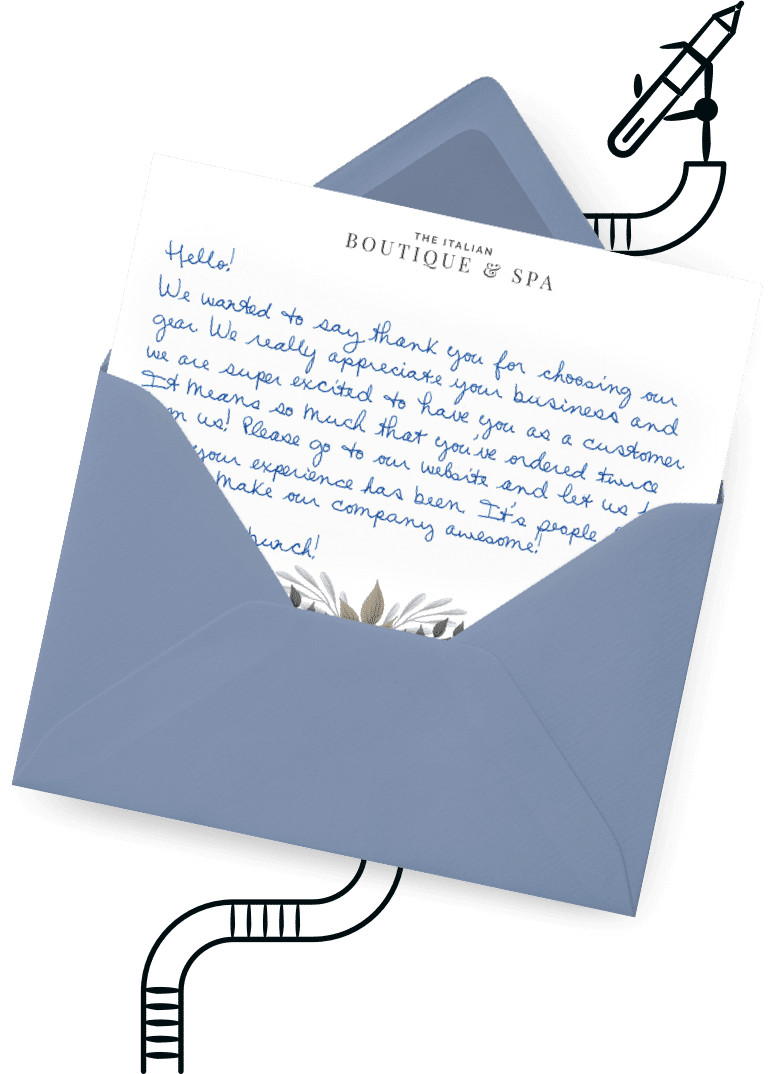

Over 100 designs to choose from or design your own. Our online card customizer makes it simple.
Check Out Our Cards!




Thank you.
