



The budgets that get cut are the ones nobody can defend. Here’s how to make handwritten outreach impossible to cut.
Personalization ROI is the argument that wins budget conversations — and as Q4 planning gets underway, the marketing and sales leaders who can quantify what their most personal, most human outreach actually produced are the ones who walk into 2027 with their programs intact and their budgets protected.
The challenge is that handwritten outreach — one of the highest-performing personalization tools available — is also one of the least measured. Most organizations that use it know intuitively that it works. Clients respond differently. Retention improves. Referrals increase. But when the budget conversation arrives and every line item needs to justify itself with data, intuition isn’t enough.
This article gives you the framework to build the personalization ROI case for handwritten outreach — the metrics to track, the data to gather, the arguments to make, and the positioning that turns a line item that might feel discretionary into one that’s clearly essential.
Budget conversations respond to outcomes, not inputs. Telling a CFO or a CMO that handwritten outreach feels more personal than email is not a budget argument. Telling them that clients who received handwritten outreach renewed at a 23% higher rate than those who didn’t — that’s a budget argument.
Personalization ROI reframes the conversation from cost to return. It shifts the question from “why are we spending money on cards?” to “what would it cost us to stop?” And that reframe changes everything about how the program is perceived, protected, and funded going into 2027.
The businesses that invest in measuring their handwritten outreach programs in 2026 — that connect the dots between a card sent and a client retained, a note delivered and a referral generated, a milestone acknowledged and a renewal closed — are the ones that enter Q4 planning with a compelling, data-backed personalization ROI story that protects their programs when every other discretionary line item is under pressure.
Not all metrics are created equal in a budget conversation. These are the ones that carry the most weight when making the personalization ROI argument for handwritten outreach.
The most powerful personalization ROI metric available is the retention rate differential between clients who received handwritten outreach and those who didn’t. Most organizations already have the retention data — what they’re missing is the segmentation that reveals whether handwritten outreach correlates with better retention outcomes.
If your CRM tracks which clients received handwritten cards and you can pull retention rates by cohort, the comparison almost always tells a compelling story. Clients who feel genuinely appreciated — who received a personal, physical acknowledgment at a meaningful moment — cancel less, renew more, and stay longer than those who experienced only digital communication.
That retention differential, translated into average contract value and lifetime customer value, is the financial foundation of a personalization ROI argument that any budget conversation can be built around.
Referrals are one of the highest-value, lowest-cost acquisition channels available to most businesses — and handwritten outreach is one of the most reliable drivers of referral activity. When a client receives a handwritten note that makes them feel genuinely valued, the emotional response that follows frequently expresses itself as advocacy: a mention to a colleague, a recommendation to a friend, a social share, a review.
Track referral attribution in your CRM. Flag the clients who referred new business in 2026 and look at whether those clients had received handwritten outreach in the preceding 90 days. The correlation won’t be perfect — referrals have multiple causes — but the pattern is almost always there, and it’s a powerful addition to a personalization ROI presentation.
If you’re using handwritten outreach as part of a prospecting or re-engagement campaign, response rate comparison is one of the cleaner personalization ROI metrics available. Take the same prospect list and compare response rates from handwritten card campaigns against email sequences targeting the same segment.
The differential consistently favors handwritten outreach — often significantly. That comparison, expressed as a cost-per-response calculation, frequently demonstrates that handwritten outreach generates better outcomes per dollar spent than digital alternatives even when the per-unit cost is higher.
If your organization runs NPS surveys or post-interaction satisfaction reviews, look for correlation between clients who received handwritten outreach and their survey scores. Clients who feel personally acknowledged tend to rate their overall experience higher — and those satisfaction scores are frequently traceable to specific touchpoints if your survey timing is mapped to your outreach calendar.
NPS improvement is a metric that resonates at the executive level — and connecting it to a specific, scalable program makes the personalization ROI case in a language that budget decision-makers understand.
If you’ve used handwritten outreach as part of a dormant client re-engagement campaign in 2026, the revenue generated from clients who reactivated following that outreach is among the most direct personalization ROI metrics available. The card triggered the conversation. The conversation generated revenue. The revenue justifies the program.
Segment your re-engaged clients by outreach method and calculate the revenue attributable to handwritten outreach versus digital re-engagement efforts. The comparison is frequently striking enough to stand alone as a budget justification.
Data is the foundation. Presentation is what gets the budget approved. Here’s how to structure the personalization ROI case for handwritten outreach in a way that lands with budget decision-makers.
The worst way to open a budget conversation about handwritten outreach is to talk about handwritten outreach. The best way is to talk about what it produced.
“Our handwritten outreach program contributed to a 19% improvement in client retention among the accounts it reached — which, at our average contract value, represents approximately $[X] in retained revenue.”
That’s a budget conversation opener. “We send handwritten cards to clients” is not. Lead with the personalization ROI number, then explain the mechanism that produced it.
Every budget conversation comes down to comparative value. Position handwritten outreach against the digital alternatives it complements or replaces — email campaigns, retargeting ads, automated re-engagement sequences — and express the comparison in cost-per-outcome terms.
If a handwritten re-engagement campaign costs $8 per card and generates a 12% response rate, the cost per response is approximately $67. If an email re-engagement sequence costs $2 per contact and generates a 2% response rate, the cost per response is $100. The handwritten outreach is more expensive per unit and significantly cheaper per outcome — and that calculation is the core of a compelling personalization ROI argument.
The most powerful budget argument isn’t “here’s what this program costs.” It’s “here’s what it would cost us to cut it.” If your retention data shows that clients who received handwritten outreach renewed at a significantly higher rate than those who didn’t, the question becomes: what is the expected churn increase if the program is eliminated?
Expressed as projected revenue at risk, the cost of cutting a handwritten outreach program frequently dwarfs the cost of maintaining it. That reframe — from discretionary spend to retention infrastructure — is what makes personalization ROI arguments stick in budget conversations.
A budget conversation that only defends existing spend is a defensive conversation. A budget conversation that presents a scaling opportunity is an offensive one — and offensive conversations are easier to win.
Show what a modest increase in handwritten outreach investment would produce in 2027 based on 2026 performance data. If the program reached 500 clients in 2026 and produced measurable retention improvements, what would reaching 1,000 clients in 2027 produce? The personalization ROI math scales linearly — and that projection gives budget decision-makers a reason to increase the investment rather than merely protect it.
The goal of the personalization ROI conversation isn’t just to survive the budget process — it’s to emerge from it with handwritten outreach recognized as an essential, high-performing program rather than a discretionary nice-to-have.
That positioning requires connecting handwritten outreach to the business outcomes that matter most to your organization’s leadership. In most organizations, those outcomes are some combination of retention, acquisition cost, lifetime customer value, and revenue growth. The personalization ROI framework connects each of these to the specific mechanism of handwritten outreach — and when that connection is made clearly and supported with data, the program stops looking like a marketing expense and starts looking like a revenue protection strategy.
A few positioning principles that help:
Frame it as infrastructure, not campaign. Campaigns are temporary. Infrastructure is permanent. Position handwritten outreach not as a seasonal initiative but as the relationship infrastructure that supports every other revenue-generating program in the organization.
Connect it to your highest-value client segment. The personalization ROI argument is most compelling when it’s anchored to your most valuable relationships. If your top 20% of clients generate 80% of revenue, showing that handwritten outreach disproportionately improves retention among that segment makes the budget case almost unassailable.
Tie it to existing strategic priorities. If your organization’s 2027 priorities include customer experience improvement, retention rate growth, or NPS improvement, handwritten outreach should be positioned as a proven contributor to those priorities — not a separate initiative that competes with them for budget.
The practical challenge with building a personalization ROI case is that it requires measurement infrastructure — and most handwritten outreach programs that run manually don’t have it. When cards are sent by hand, there’s no systematic way to track which clients received them, when, or what happened afterward.
Handwrytten solves that problem. Using robotic pen-and-ink technology that produces genuinely handwritten cards — real pen, real paper, real ink — at any volume, Handwrytten’s platform integrates with Salesforce, HubSpot, Zapier, and other CRM platforms to create a complete record of every handwritten outreach touchpoint. Every card sent is logged. Every recipient is tracked. Every campaign is associated with the contact records that allow downstream retention, referral, and revenue data to be connected back to the outreach that preceded it.
QR codes and personalized URLs embedded in cards create direct response tracking — connecting physical mail to digital engagement and allowing individual card performance to be measured in real time. Campaign-specific promo codes attribute revenue directly to handwritten outreach programs. And the platform’s reporting tools make it straightforward to pull the cohort comparisons and response rate analyses that a personalization ROI presentation requires.
This is the infrastructure that turns handwritten outreach from a felt sense into a measured program — and a measured program is one that can be defended, scaled, and protected in any budget conversation.
For marketing and sales leaders preparing to make the personalization ROI case before Q4 planning closes, here’s a practical framework for building the presentation:
Step 1 — Pull your 2026 handwritten outreach data. From Handwrytten’s platform or your CRM, identify every client or prospect who received handwritten outreach in 2026. This is your treatment cohort.
Step 2 — Build your control cohort. Identify a comparable group of clients or prospects who did not receive handwritten outreach in 2026 — similar in size, industry, contract value, or relationship stage. This is your baseline for comparison.
Step 3 — Compare key metrics across cohorts. Retention rate, renewal rate, referral activity, NPS scores, and revenue per client across treatment versus control. The differential is your personalization ROI story.
Step 4 — Calculate the financial value of the differential. If treatment cohort clients retained at 87% versus 74% for the control cohort, and your average contract value is $25,000, the retention differential represents $[X] in protected revenue. That’s your headline number.
Step 5 — Model the 2027 scaling opportunity. Based on 2026 performance data, project what a 25%, 50%, or 100% increase in handwritten outreach reach would produce in 2027 retention improvement and revenue protection. Present this as the investment case, not just the defense case.
Step 6 — Present the cost of elimination. Show what the expected retention impact would be if the program were cut entirely. Expressed as projected revenue at risk, this reframes the budget conversation from “should we spend this?” to “can we afford not to?”
How do I measure personalization ROI if I don’t have historical data to compare? Start building the measurement infrastructure now. Use Handwrytten’s CRM integrations to log every handwritten outreach touchpoint going forward, and segment your contact records by outreach receipt. Even six months of clean data — Q3 and Q4 2026 — will give you enough to build a compelling personalization ROI comparison for the 2027 budget conversation.
What’s the most persuasive personalization ROI metric for a budget presentation? Retention rate differential tied to revenue impact. It’s the metric that most directly connects handwritten outreach to business outcomes in financial terms that budget decision-makers understand and respond to. Lead with this number and build the rest of the presentation around it.
How do I build a control cohort if everyone received handwritten outreach? Look at historical data from before the program launched, or segment by geography, business unit, or campaign timing to create natural comparison groups. If the program is genuinely universal, use industry benchmark data on average retention rates as your baseline — the differential between your retention performance and industry average is still a meaningful personalization ROI signal.
Can Handwrytten’s platform provide the reporting data I need for a budget presentation? Yes. Handwrytten’s platform logs every card sent, integrates with CRM systems to associate outreach with contact records, and supports QR code and PURL tracking for direct response measurement. The data needed to build a personalization ROI case is available within the platform for any organization running campaigns through Handwrytten.
How far in advance should I start building the personalization ROI case for 2027 budget planning? Now. Most organizations begin Q4 budget planning in October or November — which means the data gathering, cohort analysis, and presentation preparation needs to be underway in September at the latest. The personalization ROI case that wins a 2027 budget is built from 2026 data, and that data needs to be clean, segmented, and analyzed before the budget conversation begins.
The budgets that get protected aren’t the ones that feel good — they’re the ones that prove their value in terms leadership understands. Personalization ROI is the language that translates handwritten outreach from a relationship investment into a revenue strategy — and the organizations that make that translation clearly and compellingly before Q4 planning closes are the ones that enter 2027 with their programs not just intact, but scaled.
The data is there. The argument is there. The window to make it is closing.
Start Sending → handwrytten.com


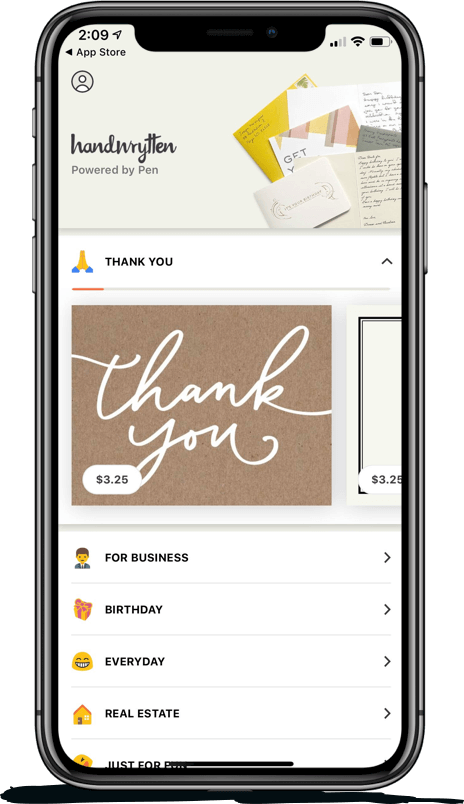
Scale your handwritten outreach, creating positive impressions and long lasting bond.
Sign Up Today!



Over 100 designs to choose from or design your own. Our online card customizer makes it simple.
Check Out Our Cards!




Thank you.
