



Gratitude expressed generically is appreciated briefly. Gratitude expressed specifically is remembered for years.
Thanksgiving notes are one of the simplest and most meaningful gestures available to anyone who wants to acknowledge the people who make their life better — and one of the most consistently underdelivered. The impulse behind them is almost always genuine: to reach out to the people who matter, to say what doesn’t always get said in the ordinary course of daily life, and to use the natural pause that Thanksgiving creates to express appreciation that’s been felt but rarely spoken.
The gap between that impulse and what actually gets sent is where most Thanksgiving notes lose their impact. A text that says “Happy Thanksgiving!” communicates warmth briefly and disappears. A group message sent to everyone in a phone contact list communicates efficiency rather than individual care. A social media post directed at no one in particular communicates the performance of gratitude rather than the real thing.
A handwritten Thanksgiving note — arriving in someone’s physical mailbox, written in real ink on real paper, addressed specifically to the person receiving it — communicates something none of those digital alternatives can: that this specific person was worth a specific, individual gesture. That’s the difference between a Thanksgiving note that gets read, appreciated, and kept — and one that disappears without leaving much impression at all.
This guide covers Thanksgiving notes for every relationship in your life — family, friends, neighbors, mentors, teachers, and the people who show up in ways that often go unacknowledged. What to write, how to make it specific enough to land, and how to send something genuinely worth receiving.
The psychological case for Thanksgiving notes is well-established — and the mechanism is straightforward. Gratitude expressed in a physical, personal format creates a stronger emotional impression than gratitude expressed digitally, for the same reason that all physical communication carries more weight than its digital equivalent: it requires more effort, and the effort is visible to the recipient.
When someone receives a handwritten Thanksgiving note, they understand intuitively that the sender took time specifically for them. That understanding — of individual effort directed at a specific person — triggers a quality of appreciation that a text message or a social media comment simply cannot generate. The note gets read carefully. It often gets kept. And the feeling it creates — of being genuinely seen and specifically appreciated — is one of the most meaningful gifts one person can give another.
Thanksgiving is the perfect moment for this gesture because the holiday’s entire cultural meaning is built around gratitude. There’s no awkwardness in expressing appreciation at Thanksgiving — no commercial pressure, no obligation to reciprocate with a gift, no expectation of anything in return. It’s a moment that asks simply: who in your life are you grateful for? And a handwritten Thanksgiving note is the most personal way to answer that question for the specific people who deserve to hear it.
Family relationships are the ones where genuine appreciation is most frequently felt and least frequently expressed — because familiarity breeds an assumption that the people closest to us already know how we feel. Thanksgiving notes to family members that say what’s usually left unsaid create moments of genuine connection that routine communication almost never generates.
The most impactful Thanksgiving notes for family are the ones that reference something specific — a quality, a gesture, a moment from the past year — rather than expressing generic seasonal warmth. One real detail communicates that the sender was paying attention in a way that no amount of heartfelt but generic language can replicate.
For parents:
“This Thanksgiving, I wanted to reach out personally to say what doesn’t always get said in the day-to-day: I’m genuinely grateful for you. The way you [specific quality or gesture] has shaped who I am more than you probably know. Thank you — and wishing you a wonderful Thanksgiving.”
“I don’t say this enough — but everything you’ve done and everything you continue to do is something I’m genuinely grateful for. This Thanksgiving felt like exactly the right moment to make sure you know that. I love you.”
For siblings:
“Happy Thanksgiving — and a genuine thank-you for [specific thing they did or quality they bring]. Having you in my life is something I don’t take for granted, even when the day-to-day doesn’t always make that obvious. Grateful for you.”
For grandparents:
“This Thanksgiving, I’ve been thinking about all the ways you’ve shaped my life — and I wanted to reach out personally to say thank you. Your [specific quality — wisdom, warmth, generosity] is something I carry with me. Wishing you a wonderful holiday.”
For children (from parents):
“Watching you grow this year has been one of the greatest privileges of my life. This Thanksgiving, I want you to know how proud I am of who you’re becoming — not just what you achieve, but who you are. I love you more than this note can hold.”
For extended family:
“We don’t always get the chance to say this to each other — but I’m genuinely grateful for the family we are. This Thanksgiving felt like the right moment to reach out personally and say so. Wishing you a wonderful holiday.”
Friendships are the relationships most likely to be taken for granted — not because they’re less valued but because their informal nature means the expressions of appreciation that more formal relationships receive rarely happen. A Thanksgiving note to a close friend that says something real — something that acknowledges the specific quality of the friendship or a specific moment from the year — creates a moment of genuine connection that most friendships rarely experience.
For a longtime friend:
“Happy Thanksgiving, [Name] — this year I’ve been particularly grateful for your friendship, and I wanted to say so directly rather than just feeling it quietly. The way you [specific quality — show up, listen, make me laugh] is something I don’t take for granted. Grateful for you.”
For a friend who supported you through something difficult:
“This Thanksgiving, I’m thinking about the people who showed up for me this year — and you’re at the top of that list. What you did during [specific period or situation] made a real difference, and I wanted to make sure you knew that. Thank you. Happy Thanksgiving.”
For a friend you don’t see often:
“We don’t see each other as often as either of us would like — but this Thanksgiving I’ve been thinking about how much your friendship means to me regardless of the distance. Grateful for you. Hoping this finds you well and wishing you a wonderful holiday.”
For a new friend:
“This Thanksgiving I’m grateful for a lot of things — and getting to know you this year is genuinely one of them. Wishing you a wonderful holiday and looking forward to more time together in the year ahead.”
Neighbors and community members — the people who make the immediate environment of daily life warmer, safer, and more connected — are among the most frequently overlooked recipients of genuine appreciation. A Thanksgiving note to a neighbor who has been kind, helpful, or simply a consistent positive presence communicates something most neighbors never receive from each other: specific, individual acknowledgment of what their presence contributes.
For a helpful neighbor:
“This Thanksgiving, I wanted to reach out personally to say how grateful I am for you as a neighbor. The way you [specific thing — helped with something, looked out for the neighborhood, made the street feel like a community] is something I genuinely appreciate. Happy Thanksgiving.”
For a neighbor you want to reconnect with:
“Happy Thanksgiving, [Name] — the holiday felt like a good moment to reach out and say that I’m grateful to have you as a neighbor. Hope your day is warm and wonderful.”
For a community volunteer or local leader:
“The work you do for this community often goes unacknowledged in the way it deserves — and Thanksgiving felt like exactly the right moment to change that for at least one person. Thank you for everything you contribute. Happy Thanksgiving.”
Teachers and mentors are the people whose influence on a life is often only fully appreciated years after the fact — which makes Thanksgiving notes to these figures particularly meaningful. A note that arrives from a former student or mentee expressing specific gratitude for what that person’s guidance produced creates an impact that most teachers and mentors never experience receiving.
For a current or former teacher:
“This Thanksgiving, I’ve been thinking about the people who shaped who I am — and you’re one of them. [Specific thing they taught or modeled] has stayed with me in ways I’m only now fully understanding. Thank you for everything you gave to your students. Happy Thanksgiving.”
For a mentor:
“This Thanksgiving I’m grateful for a lot of things — and your guidance is genuinely one of the most significant. The way you [specific advice, approach, or support] changed how I think about [specific area] in ways that continue to matter. Thank you. Wishing you a wonderful holiday.”
For a coach:
“Happy Thanksgiving, [Name] — I’ve been thinking about the people who pushed me to be better, and you’re at the top of that list. What you gave to your athletes went well beyond [the sport] — and I wanted to make sure you knew that at least one of them remembers it with genuine gratitude.”
Some of the most meaningful Thanksgiving notes aren’t sent to the people with the most obvious relationship category — they’re sent to the people who showed up in a specific way during a specific moment of the past year. A colleague who went out of their way during a difficult project. A neighbor who helped during an emergency. A friend of a friend who offered unexpected kindness.
These Thanksgiving appreciation messages acknowledge something most people never acknowledge: the specific moments of generosity that happen outside of formal relationships and that too easily pass without the acknowledgment they deserve.
For someone who showed unexpected kindness:
“This Thanksgiving, I keep thinking about [specific moment of kindness] — and how much it mattered at the time. I don’t know if you realize how significant that gesture was, but I wanted to make sure you heard it directly: thank you. It made a real difference. Happy Thanksgiving.”
For a colleague who went above and beyond:
“Happy Thanksgiving, [Name] — I’ve been thinking about [specific contribution or moment from the work year] and wanted to reach out personally to say how much I appreciated it. It went above and beyond what was required, and it didn’t go unnoticed. Thank you.”
For a healthcare provider or caregiver:
“This Thanksgiving, I’m particularly grateful for the care you provided during [specific period]. The work you do matters more than a standard thank-you can express — and I wanted to reach out personally to say so. Thank you. Happy Thanksgiving.”
The difference between a Thanksgiving note that gets read, kept, and remembered and one that gets appreciated briefly and forgotten comes down to a few specific qualities:
Specificity. The most impactful Thanksgiving appreciation messages reference something real — a specific quality, a specific gesture, a specific moment from the year. Generic warmth is appreciated. Specific acknowledgment is remembered. Before writing any Thanksgiving note, identify one real thing about this person or this relationship worth naming specifically.
Directness. Thanksgiving notes that bury the genuine sentiment under seasonal pleasantries and elaborate preambles take longer to read and land less powerfully than notes that say the real thing immediately. Open with the genuine appreciation. Let the specificity carry the emotional weight.
Brevity. Three to five sentences of genuine, specific appreciation outperform a page of warm but general sentiment every time. The handwritten format is intimate by nature — it should feel like a personal message, not a formal letter. Trust the format to carry emotional weight and keep the message tight.
No agenda. The Thanksgiving notes that create the strongest impressions are the ones that exist purely to express appreciation — no follow-up request, no reciprocal expectation, no commercial content of any kind. A note that stands entirely on its own as a complete gesture of genuine appreciation is the most memorable kind.
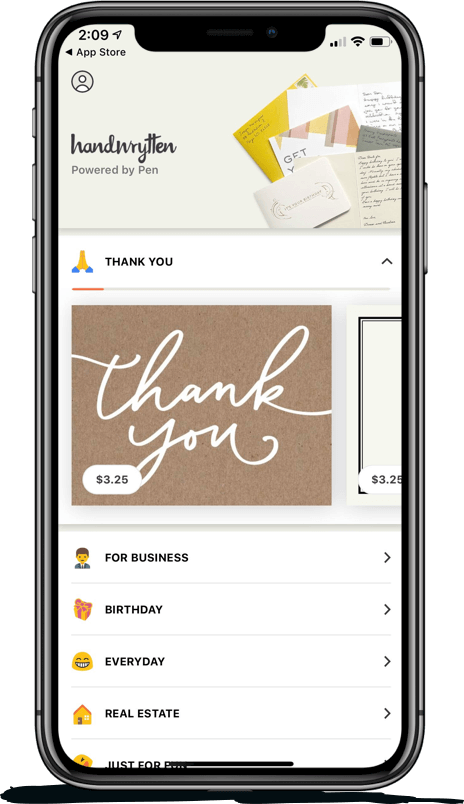
For individuals sending a handful of Thanksgiving notes each year, the manual approach is entirely manageable. For anyone looking to send Thanksgiving appreciation messages to a larger group — or who wants to ensure every note arrives in the week before Thanksgiving without the pressure of writing and mailing everything manually — Handwrytten’s platform makes the process simple without sacrificing the authentic quality that makes handwritten Thanksgiving notes meaningful.
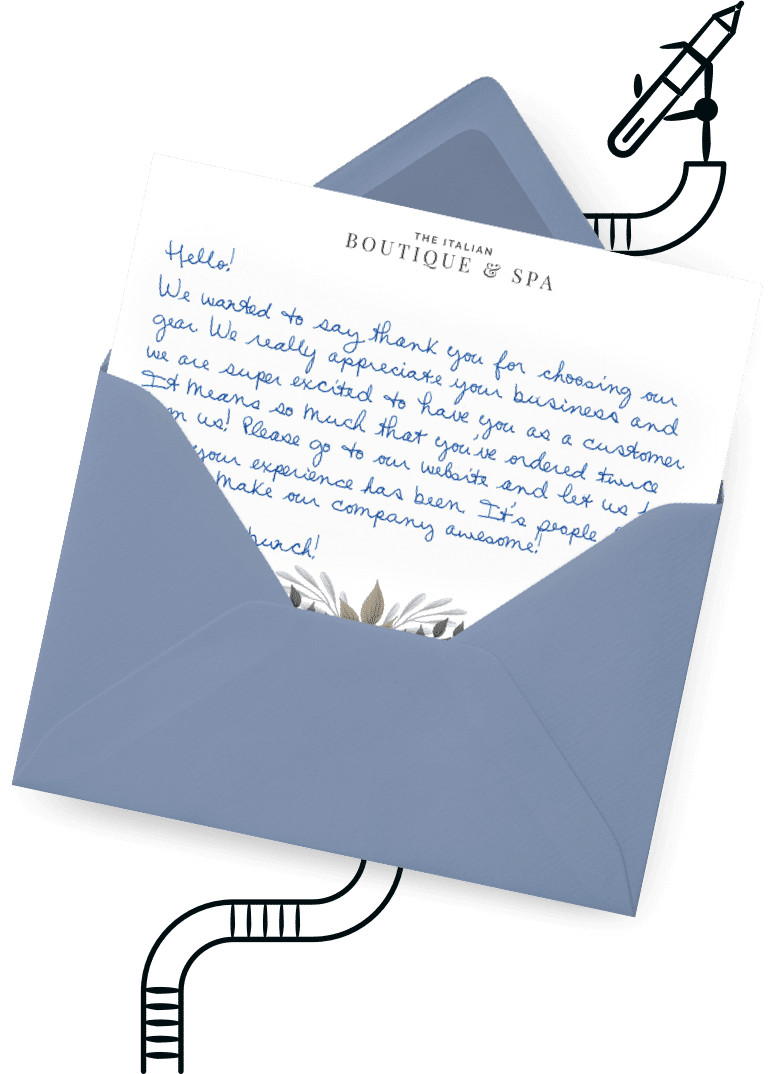
Using robotic pen-and-ink technology that produces genuinely handwritten notes — real pen, real paper, real ink — Handwrytten allows anyone to send personalized Thanksgiving notes at any volume, each one written in authentic handwriting and personalized for the individual recipient. Choose from a range of card designs, select a handwriting style that matches the tone of your messages, and let Handwrytten handle the production, addressing, and mailing.
For the best results, submit your Thanksgiving notes by mid-October — giving Handwrytten’s one-to-two business day production window plus standard delivery time enough runway to ensure every card arrives in the week before Thanksgiving, when the seasonal relevance is highest and the impression it creates is strongest.
When should Thanksgiving notes be sent?
Aim for arrival in the week before Thanksgiving — close enough to the holiday to feel seasonally relevant, early enough to arrive before the holiday’s final chaotic days. Submit your Handwrytten order by mid-October to ensure comfortable delivery in this window.
How long should a Thanksgiving note be?
Three to five sentences is the ideal length for most Thanksgiving notes — long enough to express genuine appreciation, short enough to feel personal rather than formal. One specific detail is worth more than multiple paragraphs of warm but generic language.
Is it appropriate to send Thanksgiving notes to people you haven’t been in touch with recently?
Yes — and Thanksgiving is one of the most natural contexts for re-engaging relationships that have drifted. A warm, genuine Thanksgiving note carrying no agenda is one of the most graceful ways to reach out to someone you’ve lost touch with. The holiday provides natural permission for the gesture without any awkwardness.
Should Thanksgiving notes be handwritten or is digital acceptable?
Handwritten Thanksgiving notes create a significantly stronger and more lasting impression than digital alternatives — because the physical format communicates individual effort and genuine care in a way that a text or email cannot replicate. If the goal is to create a Thanksgiving appreciation message worth remembering, handwritten is the format worth choosing.
What if you don’t know exactly what to write?
Start with the specific thing you’re most grateful for about this person or this relationship — one real detail — and let the rest follow naturally from there. The most impactful Thanksgiving notes aren’t the most eloquent ones. They’re the most genuine ones.
Thanksgiving notes done right are one of the most meaningful gifts you can give the people in your life — not because they cost much or take long, but because they communicate something that daily life rarely makes space for: that this specific person, in this specific relationship, is genuinely seen and specifically appreciated.
Write something real. Send it in handwriting. Let it arrive before the holiday.
That’s all it takes to make a Thanksgiving note genuinely unforgettable.
Start Sending → handwrytten.com


Scale your handwritten outreach, creating positive impressions and long lasting bond.
Sign Up Today!


Over 100 designs to choose from or design your own. Our online card customizer makes it simple.
Check Out Our Cards!




Thank you.
