


November does not kill deals. Silence does.
A November pipeline stall is one of the most predictable events in B2B sales and one of the most mismanaged. Every year, the same thing happens: October closes strong, activity is high, conversations are progressing, and then November arrives and the replies stop coming. Decision-makers get busy. Budget conversations get deferred to January. Prospects who were engaged in October suddenly need more time. And most salespeople respond to this predictable slowdown the same way: they wait, they send a few follow-up emails that go unanswered, and they tell themselves that December will be different.
December is not different. The deals that stall in November and receive no deliberate intervention before December are the deals that get pushed to Q1, rediscovered in February, and either restarted from scratch or lost entirely to a competitor who stayed present when everyone else went quiet.
The November pipeline stall is not an inevitability. It is a predictable pattern with specific causes and specific solutions. The businesses that understand both consistently close more Q4 business than their competitors not because they have better products or lower prices but because they stay present in a format that creates individual impressions when every other salesperson has moved to passive follow-up and crossed their fingers for January.
This guide covers exactly what to do when your November pipeline goes quiet — the specific types of stall, the specific interventions each requires, and how handwritten outreach creates the pattern interruption that reopens conversations when digital follow-up has stopped producing results.
Quick Answer: A B2B pipeline stall in November is almost always caused by one of three things: decision-maker availability, budget cycle timing, or competing organizational priorities. Each requires a different intervention. The most effective pattern interruption for any November stall is a genuine handwritten card arriving in a physical format no one else is using, with a message calibrated to the specific reason the deal went quiet, and a soft ask that keeps the door open without creating pressure.
Understanding why November creates pipeline stalls is the first step toward intervening effectively. The November slowdown is not random. It follows a consistent pattern driven by three structural factors that converge in the same four-week window every year.
Decision-maker availability collapses. November contains Thanksgiving, multiple school breaks, and the beginning of the holiday travel season. Decision-makers who were available and engaged in October become genuinely difficult to reach — not because they have lost interest but because their calendars have filled with obligations that have nothing to do with your deal. The reply that is not coming is not necessarily a no. It is often a person who has fourteen things demanding their attention and your follow-up email sitting in a queue.
Budget conversations move to January. For organizations operating on calendar-year budgets, November is when Q4 spending decisions become final and Q1 planning begins. A prospect who was genuinely interested in October may find themselves in a November budget freeze where no new commitments can be made until January approvals are complete. This is not a lost deal. It is a deal with a different timeline — and the salesperson who stays present and personal through November is the one whose name comes up first when January budgets open.
Competing priorities dominate. November brings Q4 board meetings, annual planning cycles, performance reviews, year-end audits, and the operational demands of closing out a fiscal year. Every organization your prospects work in is running multiple high-priority processes simultaneously — and your deal, however genuinely interesting it may be, is competing for attention with internal deadlines that cannot be deferred.
Each of these factors requires a different intervention. The mistake most salespeople make is treating all November stalls the same way — sending the same passive follow-up email regardless of why the deal went quiet — rather than diagnosing the specific cause and responding with the specific approach that addresses it.
What it looks like: A prospect who was responsive in October has gone quiet without explanation. Emails are being read but not replied to. The last conversation was positive but follow-up has produced no response.
What is actually happening: The prospect is genuinely busy and your follow-up is landing in a managed queue that gets processed reactively rather than proactively. This is not a buying signal problem. It is an attention problem.
What it requires: A pattern interruption that arrives outside the email inbox — in a format that commands attention rather than competing for it. The availability stall does not need a better email. It needs a different channel.
What to do: A genuine handwritten card arriving on the prospect’s desk creates exactly the pattern interruption the availability stall requires. It arrives in a format they are not managing reactively, it communicates individual investment in a way that a follow-up email never achieves, and it gives the prospect something to respond to that does not feel like another item in an inbox queue.
What it looks like: A prospect has explicitly or implicitly communicated that timing is the issue. Phrases like “we are revisiting this in January,” “our budget is locked until Q1,” or “let us reconnect after the new year” are the signals.
What is actually happening: The deal is real. The interest is genuine. The timing is wrong for a November close, and the prospect is managing their internal constraints honestly. This is not a lost deal. It is a Q1 deal that needs to survive November and December without losing momentum.
What it requires: Relationship maintenance that keeps your name present and positively associated through the budget freeze without creating commercial pressure that makes the relationship feel transactional. The goal is to be the first name that comes up when the budget opens — which requires staying in contact in a format that communicates individual investment rather than pipeline management.
What to do: A handwritten card arriving in the third week of November — warm, personal, completely free of any commercial pressure — communicates that you value the relationship independent of the transaction. It keeps you present through the budget freeze in a way that a series of “just checking in” emails never achieves. When January arrives and the budget opens, the prospect who received a genuine handwritten card in November has a different relationship with you than the one who received four unanswered emails.
What it looks like: A prospect has communicated genuine interest but the deal keeps getting deprioritized in favor of internal projects, other vendor evaluations, or organizational changes that have shifted their focus. Every conversation ends positively but no forward motion follows.
What is actually happening: Your deal is real but it is not urgent. The prospect is interested but not compelled to move — which means in a November environment full of competing organizational priorities, your deal gets pushed to the back of a queue that only gets shorter when something creates genuine urgency.
What it requires: A reason to re-engage that creates a specific, time-limited reason to have a conversation without manufacturing artificial urgency that feels like a sales tactic. The goal is to give the prospect a genuine reason to reprioritize a conversation before December closes the Q4 window.
What to do: A handwritten card that references something specific about the prospect’s organization — a recent development, a shared industry moment, a specific challenge you have been thinking about — signals that you have been paying attention and creates a natural conversation opener that does not feel like a follow-up.
The common thread across all three types of B2B pipeline stall is the need for a pattern interruption — something that arrives in a format different from every other touchpoint the prospect is receiving, creates a genuine individual impression, and gives them a reason to re-engage that does not feel like the same follow-up they have been ignoring.
A genuine handwritten card is the most effective pattern interruption available for any November pipeline stall because it operates in a completely different environment from every other sales communication. Email is processed efficiently and deleted. LinkedIn messages are filtered through professional context. Phone calls are screened. A handwritten card arrives in a physical mailbox, gets picked up and held, and creates an immediate impression of individual investment that no digital alternative achieves.
The physical format communicates something before the card is even opened: someone took specific, deliberate, individual action to reach out to this specific person. That communication of genuine individual investment rather than automated pipeline management is what creates the impression that reopens conversations when every other format has stopped working.
Handwrytten’s robotic pen-and-ink technology produces genuinely handwritten cards — real pen, real paper, real ink — that create this impression authentically at any volume. For sales teams managing November pipeline stalls across dozens or hundreds of accounts simultaneously, Handwrytten’s CRM integrations with Salesforce, HubSpot, and Zapier allow handwritten outreach to be triggered automatically from pipeline stage data — producing and mailing personalized handwritten cards for every stalled deal without any manual effort from the sales team.
“[Name] — I know November is one of the busiest months of the year and I have no doubt your inbox reflects that. I wanted to reach out in a format that felt more personal than another follow-up email to say: the conversation we started is one I am genuinely interested in continuing whenever the timing works for you. No pressure on my end — just wanted to make sure you knew the door is open.”
“[Name] — I have been thinking about our conversation from October and did not want November to slip by without reaching out personally. I know Q4 gets complicated quickly. Whenever the dust settles on your end, I would love to pick up where we left off. I will follow up after the holiday but wanted to send something that felt more like a genuine hello than a calendar nudge.”
“[Name] — thank you for being straightforward about the January timeline. I genuinely appreciate it. I wanted to reach out with something more personal than an email to say: I understand, and I will be here when the timing is right. In the meantime, I have been thinking about [specific aspect of their situation] and wanted to share a thought when we connect in January. Looking forward to picking this up in the new year.”
“[Name] — I know Q1 is the right timing for this conversation and I am not writing to push that timeline. I just wanted to make sure you had something more than a calendar reminder from me before the end of the year — a genuine note from someone who is looking forward to the conversation we are going to have in January and who is confident it will be worth the wait.”
“[Name] — I have been following [specific development at their organization or in their industry] and it got me thinking about our conversation earlier this fall. I know things have been moving quickly on your end and I did not want to add to the inbox noise. But I did want to reach out personally with something I think is genuinely relevant to what you are working through. Would love fifteen minutes whenever the schedule allows.”
“[Name] — I realize our conversation has been competing with about fifteen other priorities on your end — which is completely understandable in Q4. I wanted to reach out in a format that felt less like pipeline management and more like a genuine check-in from someone who is still thinking about the problem you described and believes there is a real conversation worth having. Whenever the right window opens, I am here.”
The two weeks between mid-November and Thanksgiving represent the last viable window for Q4 deal movement before December’s competing pressures make meaningful progress nearly impossible. Every stalled deal in your pipeline needs a specific intervention in this window — not a passive follow-up but a deliberate, calibrated outreach that creates a specific reason to re-engage before the year ends.
Week one of the final November window:
Audit every stalled deal and categorize by stall type. Every deal gets a handwritten card submitted to Handwrytten this week — timed to arrive in the final week before Thanksgiving. Messages are calibrated to the specific stall type: availability, budget, or priority. No generic follow-up, no mass email, no automated sequence. Every card is personalized for the specific prospect and the specific deal.
Week two of the final November window:
Follow up on the handwritten card with a single email or LinkedIn message referencing it: “I sent you something last week — hope it arrived.” This two-touch sequence — physical card followed by a brief digital reference — produces significantly higher response rates than either touchpoint alone. The card creates the impression. The digital follow-up activates it.
Thanksgiving week:
Send a genuine Thanksgiving appreciation card to every active prospect in your pipeline — not a commercial message, not a deal push, just a warm seasonal acknowledgment that keeps your name present through the holiday in a format that communicates individual care rather than sales pressure.
For sales teams managing large pipelines, manually identifying and intervening on every November stall is operationally unrealistic. Handwrytten’s CRM integrations allow November pipeline re-engagement to be systematized — triggering handwritten outreach automatically based on the deal stage data that identifies stalled accounts.
Pipeline stall trigger: Any deal that has remained in the same stage for more than fourteen days in October or November automatically triggers a handwritten re-engagement card — personalized with the prospect’s name and deal context, produced and mailed within one to two business days, without any manual action from the sales team.
Thanksgiving appreciation trigger: Any active deal in the pipeline as of the week before Thanksgiving automatically triggers a warm seasonal handwritten card — creating a consistent pre-holiday touchpoint for every warm prospect without requiring the sales team to manage individual sends.
January follow-up trigger: Any deal marked as revisiting in January or moved to a deferred stage in November automatically triggers a handwritten re-engagement card in the first week of January — ensuring every deferred Q4 deal receives an immediate individual touchpoint when the new year begins.
Configured in your CRM before November arrives, these triggers produce consistent, individually timed handwritten outreach for every stalled pipeline deal without adding operational burden to a sales team already managing Q4 pressure.
Why does the November pipeline stall happen every year?
Because three structural factors converge simultaneously every November: decision-maker availability collapses due to holiday obligations, budget cycles create Q4 spending freezes, and organizational priorities shift to year-end processes. These factors are predictable and consistent — which means the businesses that plan interventions before November arrives consistently outperform those that respond reactively after the stall begins.
Is a November pipeline stall a sign that a deal is lost?
Usually not. Most November stalls are timing and availability issues rather than buying signal problems. The deals that are genuinely lost in November are a minority of the deals that go quiet — but they all look the same from the outside, which is why diagnosis before intervention matters. The most reliable signal of a real loss is explicit communication from the prospect. Silence is almost always something else.
Why does a handwritten card work better than email for November pipeline re-engagement?
Because it arrives in a different environment, creates a different kind of attention, and communicates a different signal. Email is processed in a managed queue where your follow-up competes with everything else in the inbox. A handwritten card arrives in a physical mailbox, gets picked up individually, and communicates genuine personal investment before it is opened. In a month when every other touchpoint is digital and every other salesperson is sending the same follow-up email, a genuine handwritten card creates a category-of-one impression.
How quickly should a handwritten card be submitted to ensure November delivery?
Handwrytten produces and mails cards within one to two business days of the order. For delivery in the first week of November, submit by late October. For the Thanksgiving window, submit by the first week of November. Account for USPS volume increases in late November when planning delivery timing.
What should a November pipeline re-engagement card NOT say?
Avoid urgency language — “before the end of Q4,” “closing this month,” “last chance” — that communicates commercial pressure rather than individual care. Avoid generic follow-up language that makes clear the card is pipeline management rather than genuine outreach. Avoid making the card about your timeline rather than their situation. The most effective November pipeline cards are warm, specific, and completely free of any urgency that would feel manipulative in a month when everyone already has too much on their plate.
Can November pipeline re-engagement be automated through Salesforce or HubSpot?
Yes. Handwrytten’s native integrations with Salesforce and HubSpot allow pipeline stage data to trigger handwritten card sends automatically — producing personalized outreach for every stalled deal based on the CRM conditions you define. The automation handles the volume. The genuine handwriting handles the impression.
November does not kill deals. Silence does. And the silence that settles over a B2B pipeline in November is almost always broken not by a better email but by something that arrives in a format nobody else is using, communicates individual investment in a way that no digital alternative achieves, and gives the prospect a specific, non-pressured reason to remember that there is a conversation worth having before the year ends.
The businesses that understand this are already configuring their November pipeline interventions in October. The ones that do not are already waiting for January.
Comparing handwritten card providers for your sales outreach? See our best handwritten card service comparison for 2026.
Start Sending → handwrytten.com


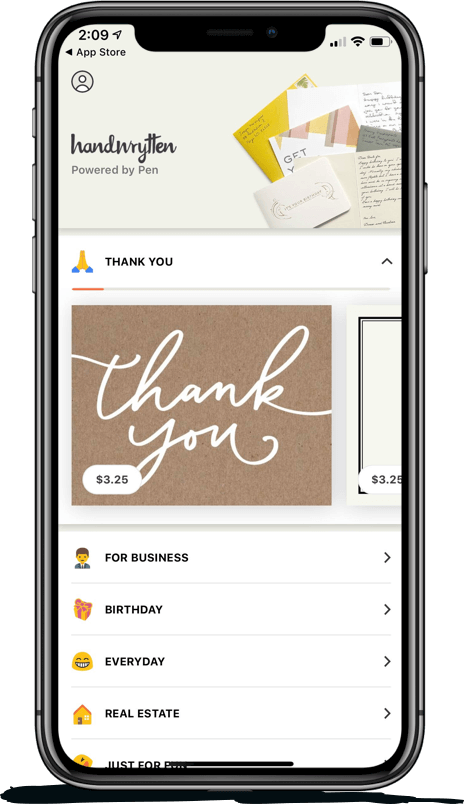
Scale your handwritten outreach, creating positive impressions and long lasting bond.
Sign Up Today!

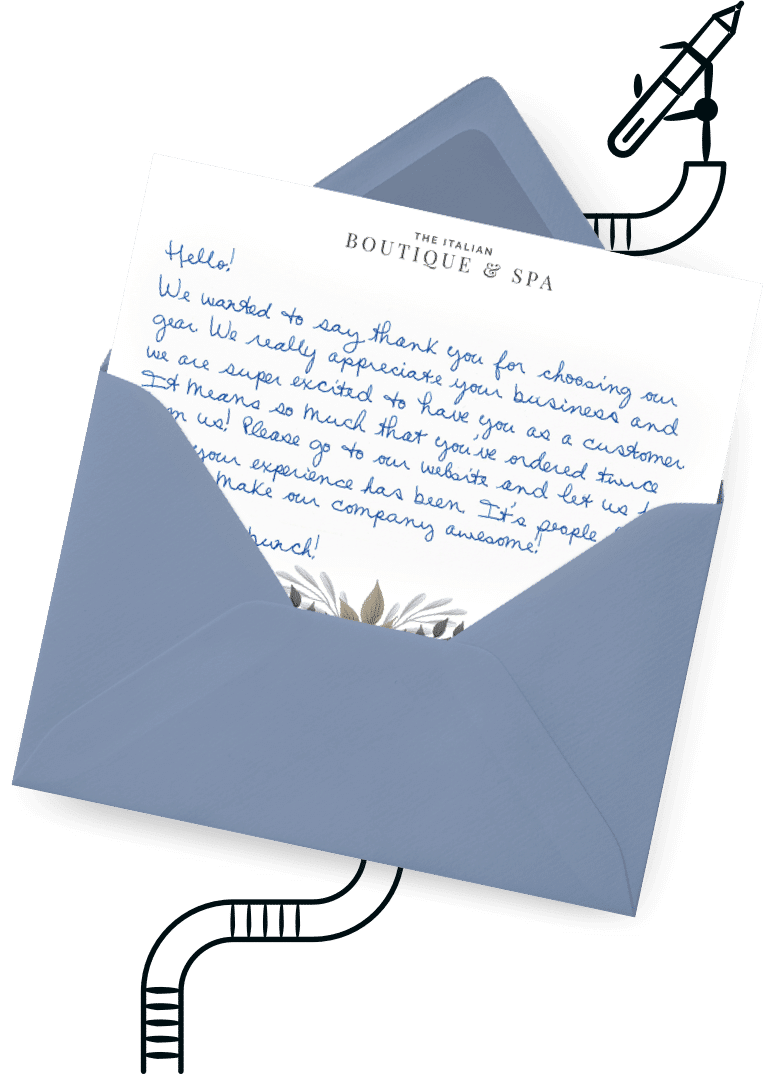

Over 100 designs to choose from or design your own. Our online card customizer makes it simple.
Check Out Our Cards!


Thank you.
