


The biggest lie in business communication is that you have to choose between scale and authenticity. You don’t.
The gap between intention and execution is where most relationship-building programs fail. Not because the organization stopped caring, but because the manual effort required to sustain genuine personal outreach at scale simply isn’t compatible with everything else on the operational calendar. A sales team managing a hundred active relationships can’t hand-write a hundred birthday cards, a hundred anniversary notes, and a hundred seasonal acknowledgments every year without automated mailings infrastructure supporting the effort. The cards stop going out. The relationships drift. The loyalty that should have been sustained quietly erodes.
Handwrytten’s automated mailings platform closes that gap — making it possible to send genuinely handwritten, specifically personalized cards to every relationship at every meaningful moment, automatically, without any manual writing effort from your team. This guide covers exactly how automated mailings work, when to deploy them, and how to build a program that sustains every relationship that matters without sacrificing the personal quality that makes handwritten outreach effective in the first place.
The intuitive concern about automated mailings is that automation and authenticity are in tension — that a card triggered by a CRM event somehow communicates less genuine care than one written by hand at a specific moment of intentional acknowledgment. This concern is understandable but largely misplaced — and understanding why is the key to building an automated mailings program that actually works.
The impression a handwritten card creates is determined primarily by two things: the physical format and the message content. A card produced in genuine pen-and-ink handwriting — real pen, real paper, real ink — creates an authentic physical impression regardless of whether a human being or a robotic writing instrument held the pen. And a message that references something specific and real about the recipient — their name, their milestone, their specific relationship with the sender — creates an authentic relational impression regardless of whether it was written in the moment or configured in a template weeks earlier.
What communicates inauthenticity in direct mail isn’t automation — it’s genericness. A printed form letter with a stamped signature communicates inauthenticity because it looks generic. A genuinely handwritten card with a personalized message communicates genuine care because it looks and feels personal — whether that card was written by a human being in a quiet moment of reflection or produced by Handwrytten’s robotic pen-and-ink technology triggered automatically by a CRM event.
The organizations that build the most effective automated mailings programs are the ones that invest their human judgment in the message templates and personalization strategy — and then let the automation handle the execution, timing, and logistics that human capacity can’t sustain reliably at scale.
Handwrytten’s automated mailings platform is built around four core components that work together to produce genuinely handwritten cards at any volume, personalized for each individual recipient, and delivered at the exact right moment without any manual effort from your team.
Genuine robotic pen-and-ink handwriting. Every card produced through Handwrytten’s automated mailings platform is written by a real pen — held by a robotic writing instrument that produces authentic handwriting with the natural variation in line weight, letter formation, and ink flow that recipients recognize as genuinely human. This is real handwriting on real paper, not a printed font designed to simulate it.
Dynamic personalization fields. Automated mailings that feel personal require personalization that goes beyond the recipient’s name. Handwrytten’s dynamic fields pull any data point from your CRM or contact database — names, milestone dates, purchase history, relationship context, specific details — into each card automatically, producing the individual quality that makes the difference between a pleasant card and a memorable one.
CRM and platform integrations. Handwrytten integrates natively with Salesforce, HubSpot, Shopify, Zapier, and other platforms — allowing automated mailings to be triggered automatically by any event in your existing systems. A new client added to your CRM triggers a welcome card. A birthday field in your contact database triggers an annual birthday card. A purchase event in Shopify triggers a post-purchase thank-you. The automation runs in the background of your existing workflows without requiring any new operational infrastructure.
Complete fulfillment handling. Handwrytten handles every element of the physical fulfillment — writing, addressing, stamping, and mailing every card produced through the automated mailings program. Your team configures the system. Handwrytten handles everything that happens after.
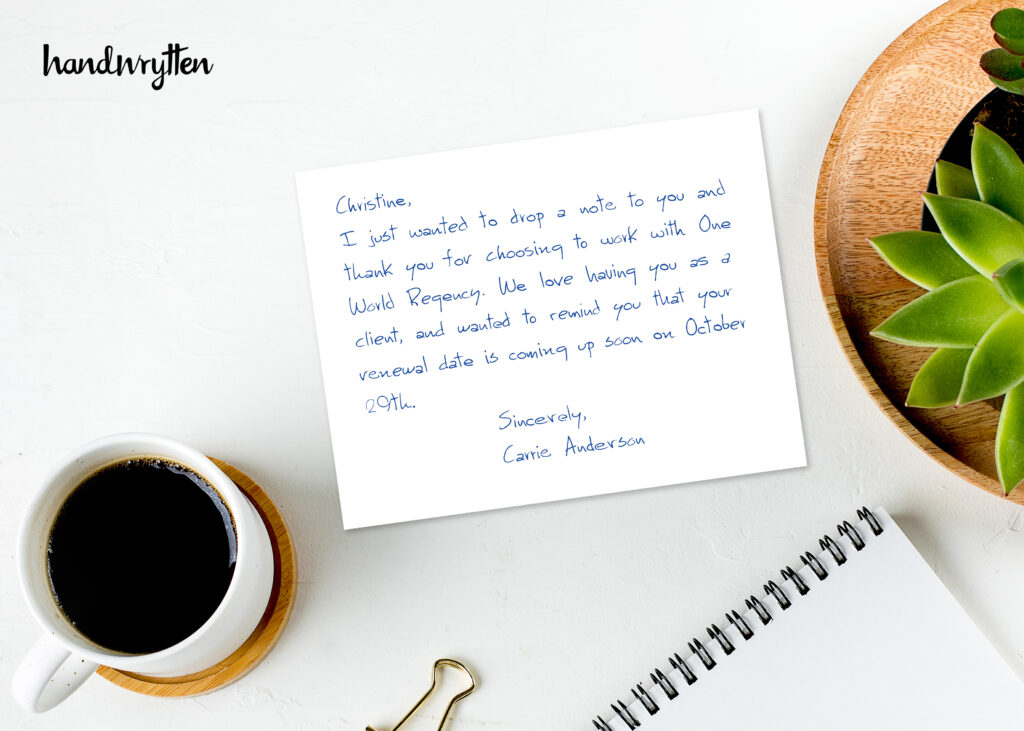
Birthday and anniversary automated mailings are the foundation of any consistent relationship-building program — because they represent the highest-impact, most personally significant touchpoints in any relationship calendar, and the ones most reliably missed when managed manually.
A client, customer, or employee who receives a genuine handwritten birthday card — arriving in their physical mailbox on or near their birthday, in real pen-and-ink handwriting, with a message that references the relationship specifically — experiences the kind of individual acknowledgment that almost no competitor is delivering. For businesses with large contact databases, birthday automated mailings represent thousands of high-impact personal touchpoints per year that would be entirely impractical to execute manually.
Sample birthday automated mailing messages:
“Happy Birthday, [Name] — we wanted to make sure this one didn’t get lost in the notification pile. From everyone at [Company], wishing you a wonderful year ahead filled with everything you deserve.”
“[Name] — birthdays are worth more than a Facebook reminder. Happy Birthday from our whole team. We hope this year is the best one yet.”
“Happy Birthday, [Name]. We’re grateful you were born — and more specifically, that you chose to work with us. Wishing you a genuinely wonderful day and a remarkable year ahead.”
Sample anniversary automated mailing messages:
“Happy [X]-year anniversary, [Name] — [X] years of partnership is something worth marking with more than an automated email. Thank you for the continued trust. Here’s to everything the next year brings.”
“One year ago today you joined the [Company] family — and we’re so glad you did. Happy anniversary, and thank you for everything you’ve brought to this relationship.”
Seasonal automated mailings — configured once and deployed automatically at the same time each year — ensure that every client, customer, and employee in your database receives a genuine, personal handwritten card at every major seasonal moment without any annual planning effort from your team.
The most effective seasonal automated mailings are the ones that arrive in the quiet windows between the obvious holiday season — a Thanksgiving card that arrives before the December rush, a Valentine’s Day acknowledgment in February, a spring check-in in April — because these unexpected seasonal moments create stronger impressions precisely because so few competitors are showing up in them.
Sample seasonal automated mailing messages:
“Happy Thanksgiving, [Name] — before the holiday season gets busy, we wanted to take a moment to say thank you. For your trust, your partnership, and the relationship we’ve built. Wishing you a wonderful holiday with everyone you love.”
“Happy Valentine’s Day from our team to yours, [Name]. We’re glad you chose us — and we’re committed to earning that choice every single day. Wishing you a wonderful day.”
“Spring is here — and with it, a genuine note from people who think about the relationships that make this work meaningful. You’re one of them, [Name]. Hoping this season brings you everything the last one set up for you.”
For e-commerce and retail businesses, post-purchase automated mailings are among the highest-return touchpoints available — because they arrive at the exact moment of peak positive emotion, when a customer has just made a decision they feel good about and is most attuned to how the brand they chose is treating them.
A genuine handwritten thank-you card arriving three to five days after a purchase — produced automatically through Shopify or another e-commerce integration — creates a brand moment that no digital confirmation email produces. It generates social sharing, drives repeat purchase behavior, and creates the kind of organic word-of-mouth that sustains customer acquisition costs at manageable levels.
Sample post-purchase automated mailing messages:
“Thank you for your order, [Name] — we genuinely appreciate the trust that comes with it. We hope [product] brings everything you were hoping for when you ordered it. We’re here for anything you need.”
“[Name] — your order is on its way, and so is this note. Thank you for choosing us. Your support means more than a standard shipping confirmation can express. We hope to earn your trust again.”
“Welcome to the [Brand] community, [Name]. Thank you for your first order — we don’t take it for granted, and we’re committed to making sure you’re thrilled with everything you receive from us.”
Automated mailings in the sales prospecting context produce response rates that email sequences targeting the same audience rarely approach — because the physical format bypasses every filtering mechanism that reduces digital outreach effectiveness and arrives in a channel that no competitor’s email campaign ever reaches.
A multi-step automated mailings sequence for sales prospects — an introductory note, a follow-up value-sharing card, and a re-engagement touchpoint — maintains warm presence in a prospect’s awareness through the extended consideration period that most B2B sales cycles require.
Sample prospect automated mailing messages:
“[Name] — I wanted to introduce myself in a format that might actually get read. I’m [Name] at [Company], and I think there’s a genuine conversation worth having about [specific value]. No pressure — just a note from someone who believes in showing up differently. Reach out whenever the timing feels right.”
“Following up on my earlier note, [Name] — I wanted to share something I thought might be genuinely useful: [specific resource or insight]. No agenda beyond delivering value to someone whose business I’ve been following with genuine interest. Hope it’s helpful.”
Automated mailings triggered by CRM inactivity flags — clients who haven’t engaged in 90 days, customers who haven’t purchased in six months, donors who haven’t given in a year — represent some of the highest-return use cases available, because they reach contacts at the exact moment when a genuine personal gesture can reverse the drift before it becomes departure.
Sample re-engagement automated mailing messages:
“[Name] — it’s been a while, and we wanted to reach out personally rather than through another automated email. We miss working more closely with you and wanted to make sure you knew the door is always open. No pressure, no pitch — just a genuine note from people who value the relationship.”
“We’ve been thinking about you, [Name] — and wanted to reach out personally to say that whatever brought you to us in the first place still exists here. We’d love to reconnect whenever the timing feels right.”
The most sophisticated application of Handwrytten’s automated mailings platform is the multi-step sequence — a coordinated series of handwritten touchpoints spread across weeks or months, designed to nurture a specific relationship arc from initial contact through deepening loyalty or from dormancy through re-engagement.
A well-designed multi-step automated mailings sequence combines handwritten cards at the highest-impact moments with digital touchpoints at the informational ones — creating a complete relationship program that operates entirely in the background while your team focuses on delivery.
Example multi-step client onboarding sequence:
Step 1 — Day 1 (new client CRM trigger): Handwritten welcome card expressing genuine appreciation for the new relationship.
Step 2 — Day 30 (automated date trigger): Handwritten 30-day check-in card expressing ongoing interest in the client’s experience.
Step 3 — Day 90 (automated date trigger): Handwritten appreciation card acknowledging the first quarter of the relationship.
Step 4 — Day 365 (anniversary trigger): Handwritten first-anniversary card marking the milestone and expressing genuine gratitude for the year.
Example donor stewardship multi-step sequence:
Step 1 — Day 1 (first gift trigger): Handwritten first-gift acknowledgment card.
Step 2 — Day 30 (automated date trigger): Handwritten impact update card.
Step 3 — Day 180 (six-month trigger): Handwritten mid-year appreciation card.
Step 4 — Day 365 (anniversary trigger): Handwritten first-giving-anniversary card.
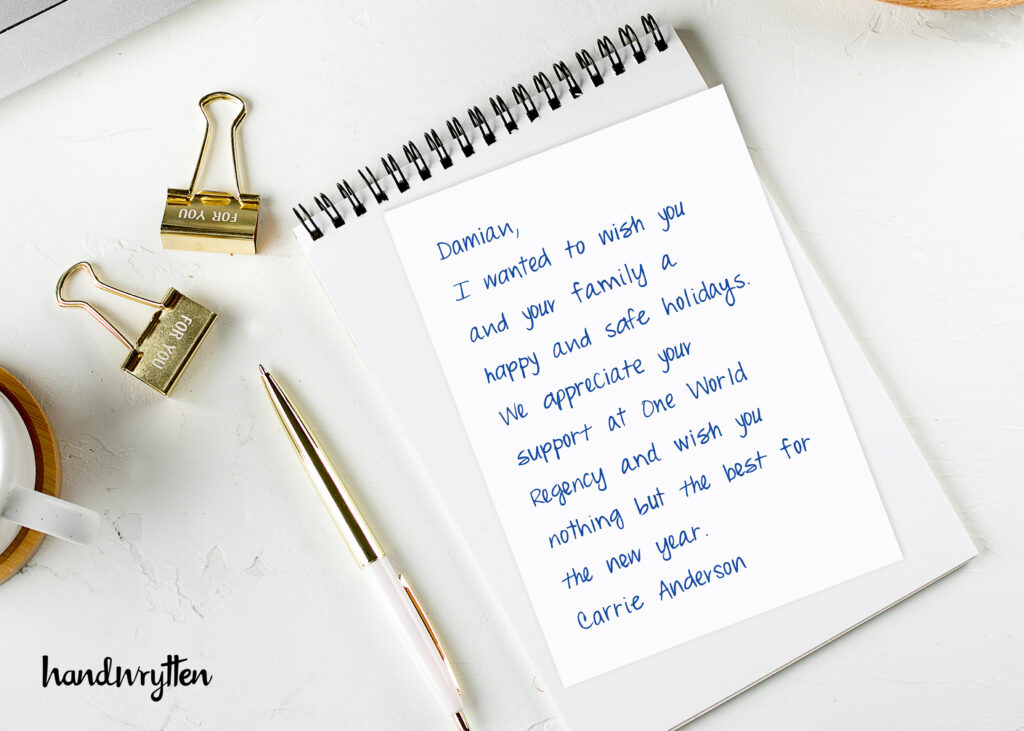
Building an effective automated mailings program requires deliberate decisions in four areas — and getting each one right is what separates programs that produce measurable relationship outcomes from those that produce occasional pleasant moments.
Trigger identification. Every automated mailing needs a trigger — the specific event that initiates the card. Map your key relationship moments to specific data points in your CRM: new contact added, birthday field, purchase date, inactivity flag, milestone date. The quality of your trigger mapping determines the relevance and timing of every automated handwritten mail piece your program produces.
Message template development. Invest the human judgment required to develop message templates that feel genuine rather than generic — specific enough to communicate individual attention, flexible enough to be personalized automatically through dynamic fields. The template is where the authenticity lives. The automation is what delivers it consistently.
Personalization field configuration. Map the dynamic fields in your message templates to the corresponding data points in your CRM — ensuring every card pulls the specific information that makes each piece feel individually written. At minimum, every automated mailing should include the recipient’s name. Ideally, it should include at least one relationship-specific detail that demonstrates individual knowledge.
Campaign calendar planning. Plan your full automated mailings calendar — birthday campaigns, seasonal touchpoints, milestone sequences, re-engagement triggers — so every relationship type is covered at every meaningful moment throughout the year. A complete calendar ensures no relationship drifts through the gaps between campaigns.
Setting up automated mailings through Handwrytten’s platform is designed to be operationally simple — requiring a one-time configuration investment that produces ongoing automated outreach indefinitely.
Step 1 — Choose your card. Browse Handwrytten’s card collection or upload a custom design with your organization’s branding, logo, and stationery preferences. Branded automated handwritten mail ensures every piece feels like a coherent extension of your organization’s identity.
Step 2 — Write your message. Craft the message template for each campaign — using dynamic fields for personalization elements and calibrating the tone to the specific relationship moment the campaign addresses. Handwrytten’s platform supports multiple message templates for different campaigns simultaneously.
Step 3 — Configure your mailing list. Connect your CRM, upload your contact list, or integrate with Handwrytten’s API to pull recipient data automatically. Birthday and anniversary campaigns can pull date fields from your CRM to trigger cards on the exact right day every year.
Step 4 — Set your triggers and schedule. Define the events that trigger each campaign — a CRM event, a specific date, a purchase action, an inactivity flag — and set the timing parameters for each automated mailing. Configure once. The program runs indefinitely.
Step 5 — Let Handwrytten handle the rest. Handwrytten’s platform handles every element of physical fulfillment — writing each card in genuine robotic pen-and-ink handwriting, addressing envelopes, applying postage, and mailing every piece to its recipient. Your team’s involvement ends at the configuration step.
Automated mailings programs produce measurable outcomes — and measuring them is what builds the business case for sustained program investment and optimization.
Response rate tracking. Include trackable QR codes, unique phone numbers, or personalized URLs in automated mailings to create direct attribution for physical outreach engagement.
Retention rate comparison. Compare retention rates among contacts who received automated handwritten mail against those who received only digital communication. The differential is almost always significant — and expressing it in lifetime value terms provides the most compelling business case.
Referral attribution. Track the source of new client or customer acquisitions and flag referrals from contacts who received automated mailings. The correlation between consistent handwritten outreach and referral activity is consistently measurable in organizations that track it.
Campaign-specific conversion. For prospect nurturing and re-engagement campaigns, track conversion rates among contacts who received the automated mailings sequence against control groups who received only digital outreach. The comparison almost always favors the physical channel.
Can automated mailings really feel as personal as manually written cards?
Yes — when the message is personalized with specific individual details and the card is produced in genuine handwriting rather than a printed font. The impression a handwritten card creates is determined by its physical format and message specificity, not by whether a human being or a robotic writing instrument held the pen. Handwrytten’s robotic pen-and-ink technology produces genuine handwriting — real pen, real ink — that recipients consistently report feeling as authentically personal.
How many automated mailing campaigns can run simultaneously?
There’s no limit. Handwrytten’s platform supports multiple simultaneous campaigns for different audience segments, relationship types, and trigger events — allowing organizations to run birthday campaigns, seasonal touchpoints, prospect nurturing sequences, and re-engagement programs concurrently without any additional management overhead.
Can automated mailings be sent internationally?
Yes. Handwrytten supports international mailing — allowing automated mailings programs to reach clients, customers, donors, and employees anywhere in the world with the same genuine handwritten quality as domestic sends.
What CRM platforms does Handwrytten integrate with for automated mailings?
Handwrytten integrates natively with Salesforce, HubSpot, Shopify, Zapier, and other platforms — and supports API integration for custom CRM environments. The integration pulls contact data, trigger events, and personalization fields automatically from your existing systems.
How quickly does Handwrytten produce and mail automated handwritten cards?
Cards are produced and mailed within one to two business days of the trigger event — ensuring every automated mailing arrives in the optimal window relative to the relationship moment it’s acknowledging.
Automated mailings and personal authenticity aren’t in tension — they’re complementary. The automation handles the consistency and scale that human capacity can’t sustain. The genuine handwriting handles the impression that digital alternatives can’t create. The personalization handles the individual quality that generic outreach can never achieve.
The result is a relationship-building program that runs quietly in the background of every business operation — reaching every contact at every meaningful moment, in genuine handwriting, with messages that communicate individual care — without requiring anyone to lift a pen.
That’s not losing the personal touch. That’s the only way to deliver it consistently at scale.
Start Sending → handwrytten.com
Editor’s note: This article was revised in June 2026


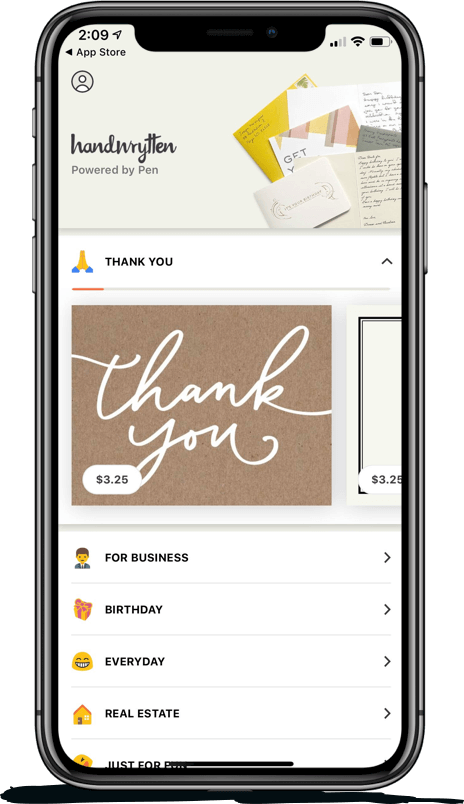
Scale your handwritten outreach, creating positive impressions and long lasting bond.
Sign Up Today!

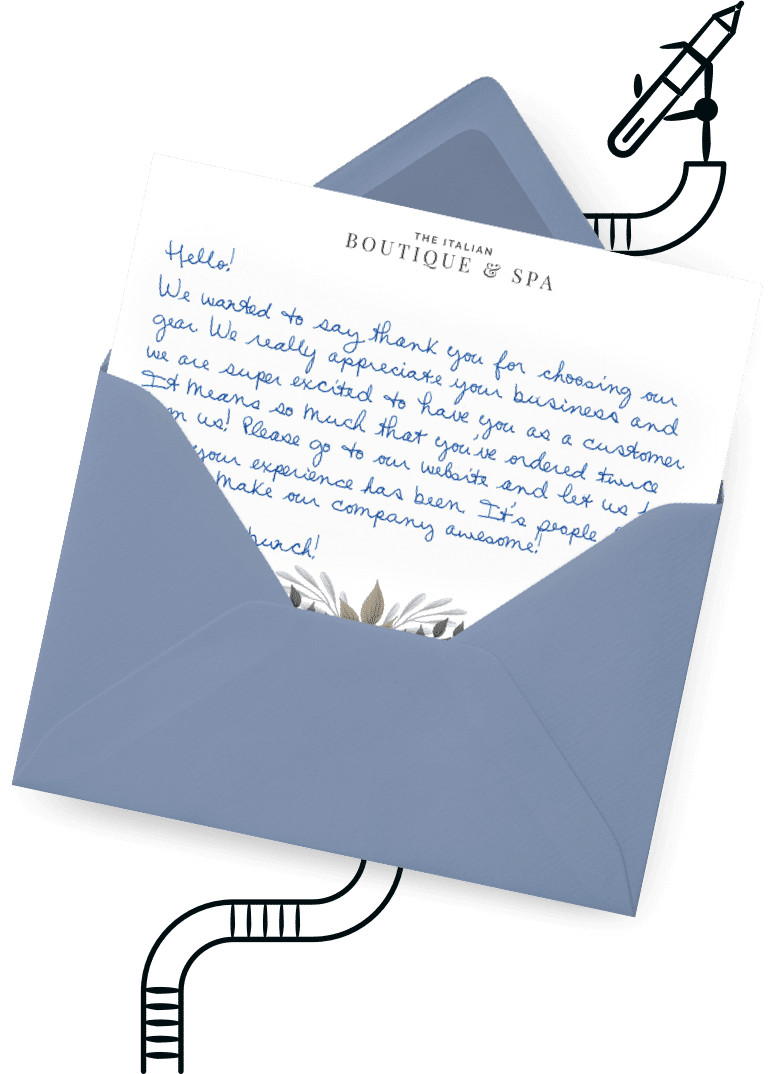

Over 100 designs to choose from or design your own. Our online card customizer makes it simple.
Check Out Our Cards!




Thank you.
