



The organizations that send the best holiday cards aren’t the ones with the most time. They’re the ones with the best system.
Company holiday cards are one of the highest-return relationship investments of the entire business calendar — and one of the most consistently mismanaged. The intention is always good. The execution is where things fall apart: cards ordered too late, messages that feel generic, address lists that haven’t been updated since last year, and a scramble in the final week of November that produces something rushed rather than something memorable.
The result is that holiday cards for business — which should communicate genuine care and strengthen the relationships that sustain a company — become a stressful annual obligation that never quite delivers the impression they were meant to create.
This guide fixes that. It covers every step of the company holiday card process — from defining your purpose and choosing your design through personalizing your messages, managing your list, and timing your delivery — with the practical framework that turns a chaotic annual scramble into a smooth, systematic process that produces cards worth receiving.
Before the how, the why. In a business communication landscape dominated by digital channels — email campaigns, social media posts, automated sequences — a physical, handwritten company holiday card arrives as something genuinely different. It occupies a space that no digital message occupies: the recipient’s physical environment, held in their hands, commanding their full attention without competition from notifications or inbox noise.
Holiday cards for business that feel personal — that arrive in real handwriting, reference something specific about the relationship, and communicate genuine appreciation rather than seasonal obligation — create exactly the kind of emotional impression that builds client loyalty, deepens employee engagement, and generates the referral activity that sustains growth.
The problem has never been the concept. It’s always been the execution. And the execution problem is entirely solvable with the right system.
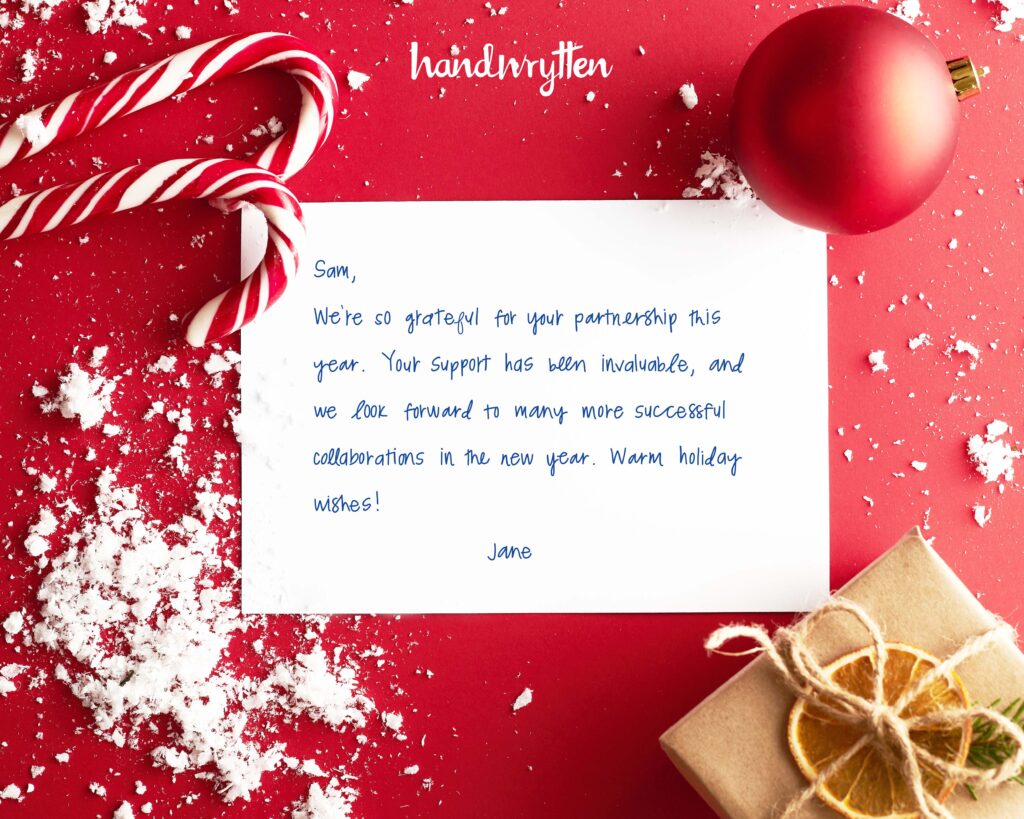
The most common reason company holiday cards feel generic is that they were created without a clear sense of what they were supposed to accomplish. Before choosing a design, writing a message, or building a list, define what you want your holiday cards for business to do.
Who is receiving them? Clients, employees, prospects, partners, and vendors each represent a different relationship and a different communication objective. A company holiday card to a long-term client should feel different from one to a new prospect. An employee holiday card should feel different from one to a vendor. Mixing audiences into a single message produces a message that resonates with nobody.
What tone fits your brand? The holiday season gives companies more latitude for warmth and personality than standard business communication — but that latitude should still be anchored in your brand’s actual identity. A professional services firm and a consumer brand have different versions of appropriate seasonal warmth. Know which one you are and design to it.
What do you want the recipient to feel? Appreciated. Seen. Warm toward your brand. Connected to the relationship. These are the emotional outcomes that company holiday cards produce when they’re done well — and keeping them front of mind through every decision that follows keeps the process focused on what actually matters.
Company holiday cards that feel like they could have come from any business create a generic impression. Cards that reflect your specific brand identity — in color, typography, tone, and visual style — reinforce the relationship between the recipient and your organization specifically.
Use your brand colors. A holiday card that incorporates your brand’s color palette feels like an extension of your identity rather than a seasonal departure from it. Subtle incorporation of brand colors creates a visual connection that reinforces recognition without overwhelming the seasonal warmth of the card itself.
Match the design to your brand personality. A minimalist, professional brand should produce a clean, elegant company holiday card — simple typography, restrained color, high-quality paper. A creative or consumer-facing brand has more latitude for playful illustration, bold color, and seasonal imagery. Neither is wrong — but mismatching design style to brand identity produces a card that feels off before it’s read.
Invest in quality materials. The physical quality of a holiday card for business communicates something before a single word is read. High-quality cardstock, a well-printed design, and a properly addressed envelope signal that the organization behind the card takes its relationships seriously. Cheap production undermines every other investment in the card’s content.
Branded stationery through Handwrytten. Handwrytten’s platform supports fully custom branded stationery — your logo, your colors, your visual identity — ensuring every company holiday card looks like it came from your organization specifically rather than from a generic card service.
This is the step that separates company holiday cards that create lasting impressions from ones that get glanced at and recycled. Personalization isn’t just addressing the recipient by name — though that’s the foundation. It’s incorporating specific details that communicate genuine individual attention: a reference to a shared experience, an acknowledgment of a specific contribution or milestone, a message that could only have been written for this person.
Use the recipient’s name. This is the minimum baseline for holiday cards for business that feel personal rather than mass-produced. A card addressed to “Dear Valued Client” communicates that the sender didn’t think the relationship was worth a moment’s individual attention.
Reference something specific. For key clients and high-priority relationships, one specific detail — a project you worked on together, a milestone they reached, a moment in the relationship that stands out — elevates a pleasant company holiday card into a genuinely memorable one.
Write in real handwriting. The format of a handwritten card communicates effort and individual attention in a way that a printed message cannot. Handwrytten’s robotic pen-and-ink technology produces genuinely handwritten company holiday cards — real pen, real paper, real ink — personalized with each recipient’s name and a message tailored to their specific relationship with your organization.
Sample messages for client holiday cards:
“Dear [Name] — we’re genuinely grateful for your partnership this year. Your trust in us means more than a standard year-end message can express, and we’re looking forward to everything ahead in the new year. Wishing you and yours a wonderful holiday season.”
“[Name] — [specific project or milestone] was a highlight of our year, and working with you was a big part of why. Thank you for your continued partnership. Happy holidays and happy new year.”
Sample messages for employee holiday cards:
“Dear [Name] — as the year closes, I wanted to make sure you know how much your work and your presence on this team have meant. What you bring to this organization is genuinely valued. Wishing you a restful, joyful holiday season.”
“[Name] — your dedication this year has been exceptional, and I didn’t want the holiday season to pass without saying so directly. Thank you for everything. Happy holidays.”
Sample messages for prospect holiday cards:
“Dear [Name] — wishing you and your team a wonderful holiday season. We’ve appreciated getting to know [Company] this year and look forward to staying connected in the new year.”
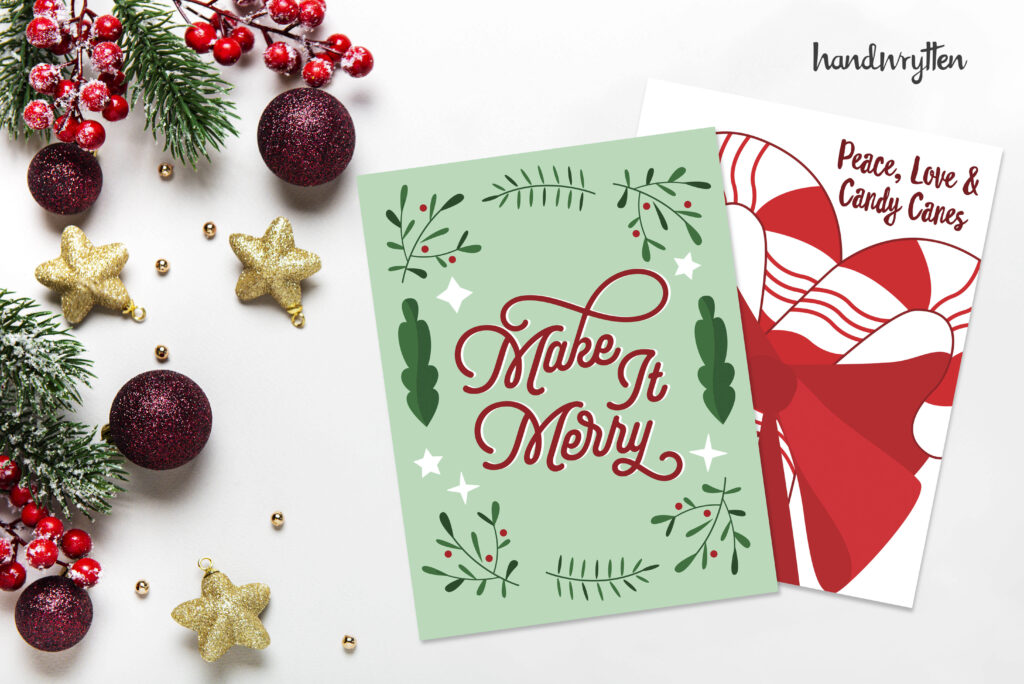
A company holiday card program is only as effective as the list it runs on. An outdated address list produces returned mail, missed relationships, and wasted investment — and the embarrassment of a card arriving at an address a client left two years ago.
Audit your list before every holiday season. Pull your full recipient list in October and review it for accuracy. Flag addresses that haven’t been verified recently, contacts who have changed roles or organizations, and relationships that have ended. Remove the latter and update the former before a single card is ordered.
Use address verification tools. Handwrytten’s Request an Address feature allows you to collect updated mailing addresses directly from contacts before your campaign launches — eliminating the most common and most avoidable cause of holiday card delivery failure.
Segment your list by relationship type. Clients, employees, prospects, and partners should be in separate segments with separate messages — because the right company holiday card for each group is different, and a single generic message sent to all four produces a message that fits none of them properly.
Build the list early. Address list work is the most time-consuming part of the company holiday card process for most organizations — and the most frequently left until the last minute. Starting in October rather than late November eliminates the single most common source of holiday card stress.
Timing determines whether company holiday cards arrive as a thoughtful seasonal gesture or as an afterthought that missed its window. The optimal delivery window for most business holiday cards is the first or second week of December — early enough to arrive before the holiday break, late enough to feel genuinely seasonal rather than premature.
Work backward from your target delivery date. Standard delivery adds three to five business days to Handwrytten’s one-to-two business day production window. A card that needs to arrive by December 10th should be submitted by the end of November — which means list finalization, message approval, and design sign-off need to happen in mid to late November at the latest.
A practical company holiday card timeline:
Early November: Define audience segments, select card designs, draft message templates for each segment.
Mid-November: Finalize and clean your mailing list, confirm addresses, approve personalization details.
Late November: Submit your campaign through Handwrytten. Schedule delivery for the first or second week of December.
Early December: Cards arrive. Relationships strengthened.
For Thanksgiving cards specifically — an increasingly effective holiday cards for business strategy — the timeline shifts earlier. Thanksgiving cards should be submitted in the first week of November to arrive in the week before the holiday, occupying a space that most competitors haven’t yet begun thinking about.
The largest source of company holiday card stress for growing organizations isn’t the design or the message — it’s the operational reality of managing a large-scale personalized mailing campaign while everything else in Q4 is also competing for attention.
Handwrytten’s CRM integrations with Salesforce, HubSpot, Shopify, Zapier, and other platforms allow company holiday card campaigns to be configured in advance and executed automatically — pulling recipient data, personalizing each card, writing, addressing, stamping, and mailing every piece without any manual effort from your team beyond the initial setup.
For organizations managing hundreds or thousands of holiday card relationships simultaneously, this automation is what makes consistency possible. Every client receives a card. Every employee receives a card. Every prospect on the priority list receives a card. None of them slip through because someone ran out of time in the final week of November.
And because Handwrytten’s robotic pen-and-ink technology produces genuinely handwritten cards rather than printed simulations, every card in a campaign of ten thousand looks and feels as personal as one written by hand — because the writing process itself is genuine.
When should company holiday cards be sent? The first or second week of December is the optimal delivery window for most holiday cards for business. Submit your Handwrytten campaign by late November to account for production and delivery time. For Thanksgiving cards, submit in the first week of November.
How personalized should company holiday cards be? As personalized as your relationship data allows. At minimum, use the recipient’s name. For key clients, employees, and high-priority relationships, include one specific reference to the relationship — a project, a milestone, a shared experience. The more specific the message, the stronger the impression the company holiday card creates.
Can company holiday cards be sent at scale without losing personal quality? Yes. Handwrytten’s platform produces genuinely handwritten holiday cards for business at any volume — each one personalized with real pen on real paper — through CRM integrations that automate the entire process while preserving the authentic handwriting quality that makes the gesture meaningful.
Is it better to send Thanksgiving cards or Christmas cards for business? Both serve different purposes and both are effective. Thanksgiving cards arrive before the holiday noise peaks and occupy an almost entirely uncontested space in the recipient’s mailbox. Christmas and holiday cards carry more seasonal weight and broader cultural resonance. Organizations that send both — a Thanksgiving card in late November followed by a holiday card in early December — create two meaningful touchpoints in a six-week window that significantly outperforms a single card sent in either period alone.
What should company holiday card messages focus on? Genuine appreciation and specific acknowledgment — not promotional content. Company holiday cards that include product offers, discount codes, or sales messaging undermine the relational warmth the gesture was designed to create. The message should focus entirely on the recipient: gratitude for the relationship, acknowledgment of the year, and warm wishes for the season ahead.
Company holiday cards done well aren’t a stressful annual obligation — they’re one of the highest-return relationship investments in the business calendar. The organizations that send the ones worth receiving aren’t working harder than everyone else. They’re working earlier, with a clearer system, and with a platform that handles the execution so the focus can stay on what actually matters: the relationships behind every card.
Start early. Personalize genuinely. Send on time. The rest takes care of itself.
Start Sending → handwrytten.com
Editor’s note: This article was revised in June 2026


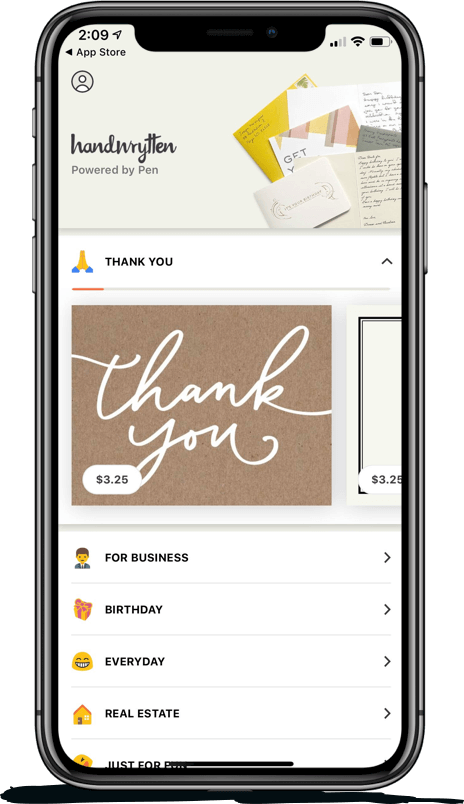
Scale your handwritten outreach, creating positive impressions and long lasting bond.
Sign Up Today!

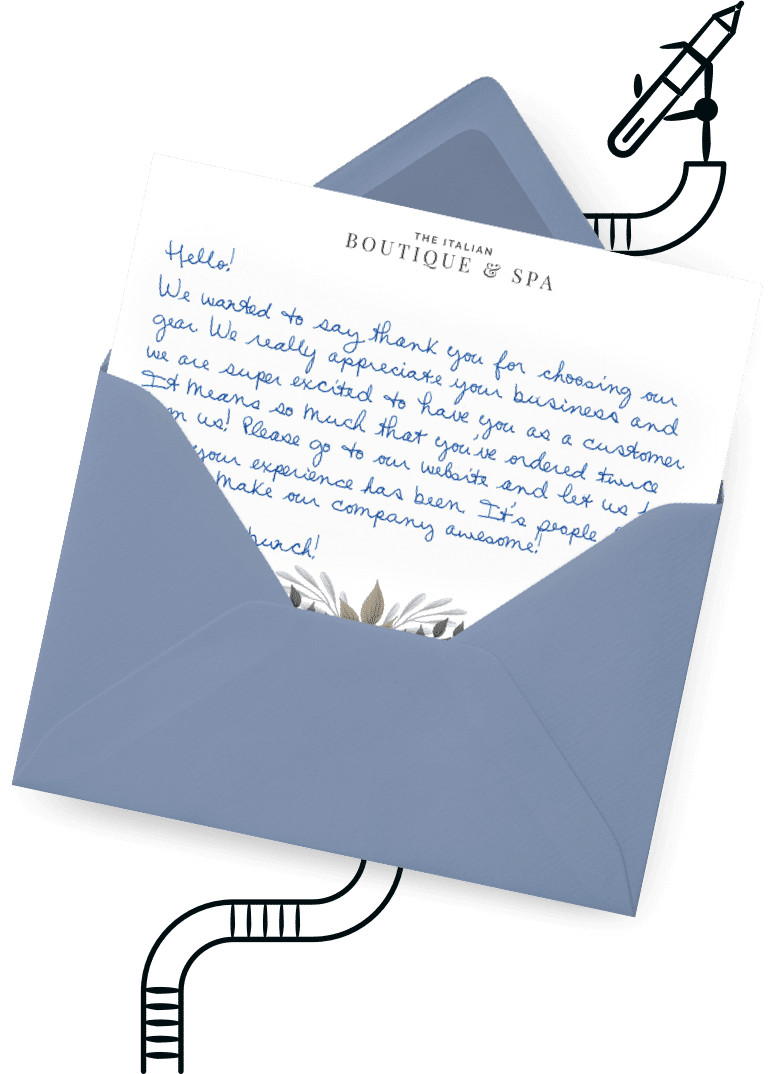

Over 100 designs to choose from or design your own. Our online card customizer makes it simple.
Check Out Our Cards!




Thank you.
