



Most businesses focus on acquiring new clients. The ones that grow fastest focus on what happens after.
Handwritten card touchpoints are the most underleveraged tool in the post-acquisition sales funnel — and the ones that produce the highest return when deployed at the right moments. Acquiring a new client is expensive. Converting that new client into a repeat buyer and an active referral source is where the real return on that acquisition investment is generated — and yet most organizations invest almost nothing in the specific communication touchpoints that make that conversion happen reliably.
The gap between a client who buys once and a client who buys repeatedly and refers others isn’t primarily a product quality gap. It’s a relationship gap. Clients who feel genuinely appreciated, specifically acknowledged, and personally valued by the businesses they work with behave fundamentally differently from those who feel like transactions — they stay longer, spend more, and recommend more actively. The handwritten card touchpoints that create that felt sense of genuine appreciation are the mechanism behind that behavioral difference.
This guide covers the three critical handwritten card touchpoints that close the loop from new client to repeat buyer to active referral source — what to send at each moment, why it works, and how to build the system that delivers these touchpoints consistently at any scale.
Before the three touchpoints, the mechanism. Why do handwritten card touchpoints specifically — rather than email sequences, digital follow-ups, or automated text messages — produce the referral outcomes that other post-acquisition communication approaches consistently fail to generate?
Because referrals are driven by emotion, not information. A client refers someone they know to a business not because they received a well-timed follow-up email or a satisfaction survey, but because they feel something specific about the organization — a felt sense of genuine appreciation, of being individually valued, of being in a relationship with a business that treats them as a person rather than a revenue source. Digital communication, however sophisticated, struggles to create that felt sense reliably. A handwritten card creates it almost automatically — because the physical format communicates individual effort and genuine care before a single word is read.
The referral touchpoints that work are the ones that create emotional impressions at the specific moments when clients are most attuned to how they feel about the businesses they work with. Those moments are predictable. And handwritten card touchpoints at those moments produce referral behavior that no digital sequence can replicate with the same reliability.
The first and most critical of the handwritten card touchpoints is the one that arrives immediately after a new client’s first purchase or first engagement — before the relationship has fully settled, when the client is still forming their impression of what kind of organization they’ve chosen to work with.
Most businesses handle this moment with a transactional confirmation: a receipt, a contract, an onboarding email. These communications are necessary and expected — and they communicate nothing about the relationship beyond the mechanics of the transaction. The client who receives only these communications after their first purchase arrives at their second decision — whether to buy again, whether to recommend this business — with a baseline that’s neutral at best.
A handwritten welcome card arriving two to three days after the first purchase — warm, specific, and completely free of commercial content — changes that baseline entirely. It arrives as the first unexpected gesture the client has received from this organization, in a physical format that signals individual attention, and it creates an emotional anchor that shapes every subsequent interaction.
The post-purchase period is when a new client is most likely to mention their purchase to others — and when the quality of the impression your organization has made determines whether that mention is positive, neutral, or absent. A client who received a handwritten welcome card after their first purchase has a specific, memorable story to tell: “I ordered from them last week and they actually sent me a handwritten note.” That story, shared in casual conversation, is the most organic referral touchpoint available — and it’s created by a card that costs a few dollars and takes minutes to configure.
For a product purchase:
“[Name] — thank you for your first order. We don’t take it for granted, and we’re genuinely invested in making sure you’re thrilled with what you receive. If there’s ever anything we can do to make your experience better, we’re always here. Thank you for choosing us.”
For a service engagement:
“[Name] — thank you for the trust you’ve placed in us. We’re genuinely excited about working together and committed to delivering something that reflects the care you put into this decision. Looking forward to what we build.”
For a subscription or recurring service:
“Welcome — and thank you for making us part of your regular routine. We’re committed to earning that recurring trust every single time. Genuinely glad to have you with us.”
For a high-value or considered purchase:
“[Name] — we know this was a significant decision, and we want you to know how seriously we take the trust that represents. Our commitment is to make sure you look back on this decision as one of the best you’ve made. Thank you.”
Send within 48 hours. The post-purchase welcome card is most impactful when it arrives while the positive feelings of the new purchase are still fresh. A card that arrives two weeks after purchase loses most of its emotional relevance.
Reference the specific purchase. One specific detail — the product they ordered, the service they engaged, the specific goal they mentioned — elevates a warm welcome card into a genuinely memorable handwritten card touchpoint.
Automate through CRM. Handwrytten’s integrations with Shopify, Salesforce, HubSpot, and other platforms allow post-purchase welcome cards to trigger automatically when a new order or contract is logged — so every new client receives a handwritten card without any manual effort from your team.
The second of the three handwritten card touchpoints arrives approximately 30 days after the initial purchase or engagement — at the moment when the initial excitement of a new purchase has settled and the client is forming their longer-term impression of the relationship.
Most organizations go entirely silent between the initial onboarding and the next commercial touchpoint — a renewal reminder, an upsell opportunity, or a routine check-in call driven by sales calendar rather than genuine relationship investment. That silence communicates exactly what it sounds like: that the organization’s engagement with the client was primarily driven by the acquisition, and that now the client is simply expected to continue without further individual attention.
A handwritten 30-day check-in card breaks that silence in the most personal format available. It arrives not as a commercial touchpoint but as a genuine expression of ongoing interest in the client’s experience — asking not what they can buy next but how their experience has been so far. That distinction is felt clearly by the client, and it creates the kind of continued relational warmth that sustains the relationship through the critical early period when clients are most likely to drift.
The 30-day mark is when clients are most likely to be asked by friends and colleagues how their new service or product is working out — and when the quality of the relationship they’ve experienced to date determines whether they recommend enthusiastically, neutrally, or not at all. A client who has received a post-purchase welcome card and a 30-day check-in card from the same organization has experienced two genuine, personal, agenda-free gestures of individual attention — which creates a referral narrative that’s genuinely compelling to share.
The referral touchpoints that work are the ones that give clients something worth talking about. Two handwritten cards in 30 days — each one personal, specific, and carrying no commercial agenda — give clients exactly that.
For a product-based business:
“[Name] — it’s been about a month since your first order, and we wanted to reach out personally to check in. We hope everything has been exactly what you were hoping for. If there’s anything we can do to make your experience even better, we’re always here — please don’t hesitate to reach out.”
For a service-based business:
“[Name] — a month in, and we wanted to check in personally to make sure everything is going well. We’re genuinely invested in your success and want to make sure the experience has matched your expectations. Please reach out anytime — we’re always here.”
For a subscription service:
“[Name] — you’ve been with us for a month now, and we wanted to reach out personally to say how much we appreciate your continued trust. Hope everything has been working exactly as you’d hoped. If there’s anything we can do better, we genuinely want to know.”
Make it a genuine check-in, not a survey request. A 30-day card that’s primarily about soliciting a review or completing a satisfaction survey has converted a relationship touchpoint into a commercial one. Keep the 30-day handwritten card touchpoint focused entirely on the client’s experience — any feedback or review request belongs in a separate communication.
Keep it brief. The 30-day check-in card is most effective when it’s short — two to three sentences of genuine interest in the client’s experience. Brevity communicates confidence and ease in the relationship.
The third and most strategically important of the handwritten card touchpoints arrives at the moment when a client has experienced enough of the relationship to have formed a genuinely positive impression — typically 60 to 90 days after the initial purchase — and when that impression is most likely to express itself as active referral behavior if gently activated.
Most organizations approach referral activation through direct asks — formal referral programs, automated review request sequences, or explicit solicitations in renewal conversations. These approaches can work, but they activate the transactional reciprocity mechanism rather than the emotional one — and transactional referrals carry less social proof weight than organic ones because the referred prospect can sense the incentive behind them.
The referral activation card works differently. It arrives not as a referral request but as a pure expression of genuine appreciation — a handwritten card acknowledging the client’s loyalty, expressing specific gratitude for the relationship, and communicating nothing that could be read as a commercial ask. The referral behavior that follows is organic — triggered by the reciprocity effect that genuine, unexpected appreciation reliably produces — rather than transactional.
The psychology behind this handwritten card touchpoint is the reciprocity effect — the well-documented human tendency to want to return a genuine kindness when one has been received. A client who receives a genuinely appreciative card at 60 to 90 days — carrying no commercial agenda, no referral ask, no promotional content — experiences a felt sense of gratitude that seeks expression through advocacy. The most natural way for a satisfied client to reciprocate genuine appreciation from a business they already trust is to send that business someone they know.
This is the referral touchpoint that most organizations never deploy — because it requires the confidence to send something genuinely generous with no immediate commercial return attached. But the return comes. It comes in the form of organic referral conversations, enthusiastic word-of-mouth recommendations, and the kind of social proof that no formal referral program can manufacture as authentically.
Pure appreciation — no ask:
“[Name] — we’re now a few months into working together, and we wanted to reach out personally to say how much we appreciate the trust you’ve continued to place in us. Working with clients like you is exactly why we do what we do. Thank you — genuinely.”
Acknowledging the relationship specifically:
“[Name] — the relationship we’ve built over the past few months has been one we’re genuinely grateful for. Your commitment, your trust, and the way you engage with what we do makes a real difference on our end. Thank you for being the kind of client that makes this work worthwhile.”
With a gentle, low-pressure referral mention:
“[Name] — we’re so grateful for everything about working with you. If you ever know someone who could benefit from what we do the way you have, we’d be honored to extend the same care to them. But either way — thank you. Genuinely.”
For a long-term client milestone:
“[Name] — [X months] of working together. We don’t take that for granted, and we wanted to make sure you knew that directly. Thank you for the trust you’ve continued to place in us. We’re committed to earning it every single day.”
Lead with appreciation, not the ask. The referral activation card is most effective when it’s 90% genuine appreciation and at most 10% gentle referral mention — and only if that mention feels completely natural in the context of the relationship. If the card feels primarily like a referral solicitation, it loses the emotional quality that makes the touchpoint work.
Time it to a milestone. The 60 to 90-day window is a strong default, but the referral activation card is most impactful when it arrives at a specific milestone — the completion of a first project, the achievement of a result the client was working toward, a loyalty threshold reached. Milestone-specific handwritten card touchpoints feel more personally considered than time-based ones.
Follow up within two weeks. The referral activation card creates an opening. A brief, warm follow-up email or call two weeks after expected delivery — referencing the card and expressing genuine interest in the relationship — captures the goodwill it created and moves the conversation forward naturally.
The three handwritten card touchpoints outlined above produce their strongest results when they run as a systematic sequence rather than as sporadic individual gestures. A single handwritten card is a nice moment. Three handwritten card touchpoints delivered consistently at the right intervals — to every new client, without exception — is a referral generation system.
Building that system requires three things:
Trigger mapping. Define the specific events that initiate each touchpoint — a new purchase, a 30-day anniversary, a 60 to 90-day milestone — and ensure those events are tracked in your CRM or order management system. The trigger is what makes the system automatic rather than dependent on anyone remembering to send a card.
Message templates by touchpoint. Prepare message frameworks for each of the three handwritten card touchpoints — specific enough to feel genuine, flexible enough to be personalized for individual recipients. The template handles the structure; the personalization fields handle the individual detail that makes each card feel written for this person specifically.
Automation infrastructure. Handwrytten’s CRM integrations with Salesforce, HubSpot, Shopify, Zapier, and other platforms allow all three referral touchpoints to be triggered automatically — each card produced with real pen on real paper using Handwrytten’s robotic pen-and-ink technology, personalized with the recipient’s name and a message tailored to the specific touchpoint, and mailed without any manual effort from your team.
Once the system is configured, it runs in the background — reaching every new client at every critical moment, creating the relational impressions that convert one-time buyers into loyal advocates, without requiring any ongoing manual effort from your team.
The referral outcomes produced by a systematic handwritten card touchpoints program are measurable — and measuring them is what builds the business case for scaling the investment.
Referral attribution rate. Track the source of every new client acquisition and flag referrals from clients who received the three-touchpoint sequence. The correlation between handwritten card touchpoints and referral activity is almost always clear — and expressing it as a percentage of new client acquisition provides a compelling ROI argument.
Repeat purchase rate by cohort. Compare the repeat purchase rate of clients who received the three-touchpoint sequence against those who received only standard follow-up. The differential demonstrates the retention value of the handwritten card touchpoints program independent of its referral impact.
Response rate to touchpoint 3. Track responses — emails, calls, social mentions, direct referrals — in the two to four weeks following the referral activation card. This is the most direct measure of the touchpoint’s commercial impact and the clearest signal of whether the message and timing are calibrated correctly.
Net Promoter Score differential. If your organization runs NPS surveys, segment scores by whether clients received the handwritten card touchpoints sequence. Clients who received all three touchpoints consistently score higher — and that NPS differential translates directly into the referral activity the score is designed to predict.
Why do handwritten card touchpoints work better than email sequences for generating referrals?
Because referrals are driven by emotional impression rather than information delivery — and handwritten cards create stronger emotional impressions than digital alternatives. A client who receives three genuinely personal, physically delivered handwritten cards in their first 90 days has experienced something most businesses never deliver: consistent, individual, agenda-free acknowledgment of the relationship. That experience is what generates organic referral behavior.
Can all three handwritten card touchpoints be automated?
Yes. Handwrytten’s platform integrates with CRM and order management systems to trigger each touchpoint automatically based on purchase date, 30-day anniversary, and 60 to 90-day milestone events. Each card is produced with real pen on real paper, personalized for the individual recipient, without any manual effort from your team.
Should the referral activation card include an explicit referral ask?
Only very lightly — and only if it feels completely natural in the context of the specific relationship. The most effective referral activation cards contain 90% genuine appreciation and at most a brief, low-pressure mention of openness to referrals. Cards that feel primarily like referral solicitations lose the emotional quality that makes the touchpoint work.
How long does it take for the handwritten card touchpoints program to produce measurable referral results?
Most organizations see measurable referral activity increases within 60 to 90 days of implementing a consistent three-touchpoint program — with the impact compounding as the program reaches a larger percentage of the active client base. Track referral attribution from the program’s launch date to establish a clean baseline for measuring impact.
Can the three-touchpoint system work for any type of business?
Yes — the specific messages and timing may need calibration for different industries and relationship types, but the underlying mechanism works across virtually every business context where client relationships drive revenue. E-commerce, professional services, real estate, financial services, healthcare, nonprofits, and B2B organizations all see strong results from systematic handwritten card touchpoints programs.
The distance from zero to referral isn’t as long as most businesses think. It’s three cards, three moments, and the willingness to treat new clients as individuals worth genuine individual attention from the very first day of the relationship.
The clients who refer are the ones who felt something specific about the business they’re recommending. Handwritten card touchpoints are what create that feeling — consistently, systematically, and at the scale that modern businesses require.
Start Sending → handwrytten.com


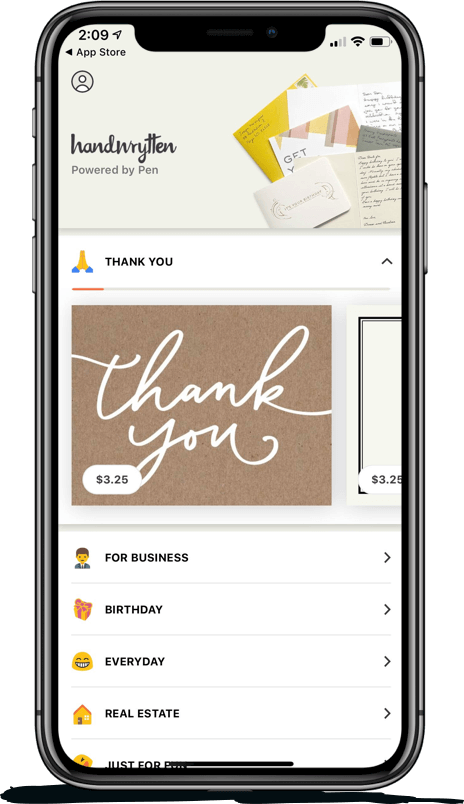
Scale your handwritten outreach, creating positive impressions and long lasting bond.
Sign Up Today!



Over 100 designs to choose from or design your own. Our online card customizer makes it simple.
Check Out Our Cards!




Thank you.
